
Teaching
Hell: Hades, the place of the dead
HAY-deez
Where the King James "hell" translates Hades, it means the world of the departed, which the Old Testament calls Sheol, not the fire of final judgment. Christ holds its keys, and at the end it gives up its dead.
- Greek
- Hadēs, "the unseen place"; in the Old Testament, Sheol
- Where
- Matthew 11:23; Matthew 16:18; Luke 10:15; Luke 16:23; Acts 2:27–31; Revelation 1:18; Revelation 6:8; Revelation 20:13–14
- Not the same as
- Gehenna, the final hell
What the word means
The Old Testament speaks of Sheol, the place beneath where everyone goes at death, where Jacob expected to go down to his son (Genesis 37:35) and where the dead cannot praise God (Psalms 6:5). When the Old Testament was put into Greek, Sheol became Hades, and that is the word the New Testament writers use. The King James Version writes "hell" for it, which can mislead: Hades is the waiting place of the dead, while Gehenna is the place of punishment after the judgment. See Hell.
In the New Testament
Jesus said Capernaum, exalted to heaven, would be thrust down to Hades (Matthew 11:23). He promised that "the gates of hell", the power of death that locks people away, would not prevail against his church (Matthew 16:18). In his story the rich man died "and in hell he lift up his eyes, being in torments", while Lazarus rested in Abraham's bosom, with a great gulf between them (Luke 16:22–26): Hades is not a sleep, and the dead are already either comforted or in anguish. Peter showed from Psalm 16 that Christ's soul was not left in Hades nor his body left to decay, because God raised him (Acts 2:27–31).
Christ's victory
The risen Lord says, "I have the keys of hell and of death" (Revelation 1:18): he has been there and come out, and death's door now answers to him. For the believer, to be "absent from the body" is to be "present with the Lord" (2 Corinthians 5:8), in paradise with Christ (Luke 23:43). At the end of the age, death and Hades surrender their dead to be judged and are themselves thrown into the lake of fire; death itself dies (Revelation 20:13–14; 1 Corinthians 15:26).
Key verses
- Luke 16:23
And in hell he lift up his eyes, being in torments, and seeth Abraham afar off, and Lazarus in his bosom.
- Acts 2:27–31
Because thou wilt not leave my soul in hell, neither wilt thou suffer thine Holy One to see corruption. Thou hast made known to me the ways of life; thou shalt make me full of joy with thy countenance. Men and brethren, let me freely speak unto you of the patriarch David, that he is both dead and buried, and his sepulchre is with us unto this day. …
- Revelation 1:18
I am he that liveth, and was dead; and, behold, I am alive for evermore, Amen; and have the keys of hell and of death.
- Revelation 20:13–14
And the sea gave up the dead which were in it; and death and hell delivered up the dead which were in them: and they were judged every man according to their works. And death and hell were cast into the lake of fire. This is the second death.
Read next
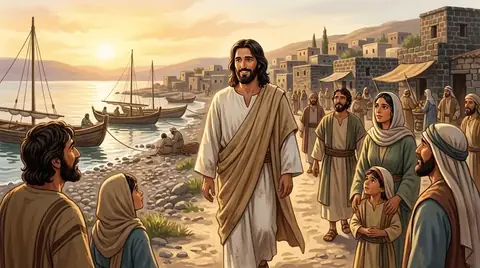 PlaceCapernaumA fishing town on the north shore of the Sea of Galilee that Jesus made his home. He taught in its synagogue and did…
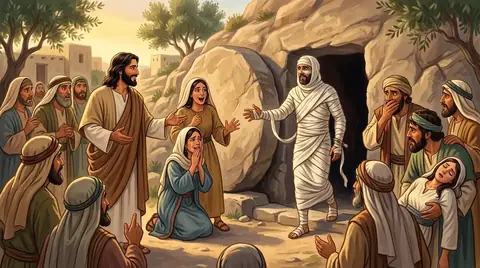 PersonLazarusThe brother of Mary and Martha whom Jesus called out of the tomb after four days. A poor beggar of the same name…
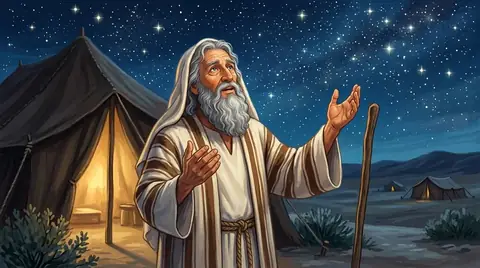 PersonAbrahamThe man God called out of Ur to a land he had never seen, promising him a people and a blessing for the whole world. He…
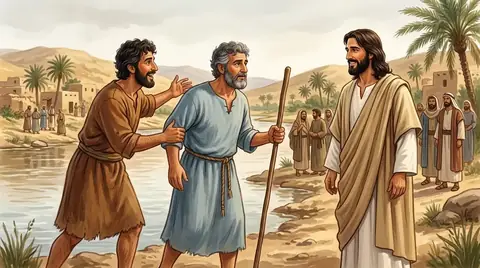 PersonPeterA Galilean fisherman who became the leader of the twelve apostles. Bold and impulsive, he confessed Jesus as the…
 Teaching · HeavenParadiseThe Persians' word for a king's walled park or garden. The Bible applies it to the garden of Eden, and later to where…
Written for this app in its own words, from the Bible, with the facts checked against Bible dictionaries and encyclopedias: Easton's, Smith's, Fausset's, ISBE, Holman, the New Bible Dictionary, Vine's and the Thompson Chain topics.
