
Custom
Head
The head stood for the whole person and for honour. Heads were anointed, covered or shaved, lifted up or bowed, and Christ is called the head of his church.
- See also
- Christ the head, Anointing, Nazarite
Customs
Oil was poured on the head to anoint priests and kings, and to welcome a guest (Exodus 29:7; Psalms 23:5). A cleansed leper had oil put on his head by the priest (Leviticus 14:18, 29). In grief people put dust or ashes on their heads or covered them (2 Samuel 13:19; 2 Samuel 15:30). The Nazarite let his hair grow and shaved his head when his vow was ended, and Paul paid the costs of four men who did so (Numbers 6:18; Acts 21:24). Isaiah warned that God would strike the proud women of Zion with scabs on their heads (Isaiah 3:17).
What it meant
To "lift up the head" was to be honoured or freed (Genesis 40:13; Psalms 3:3). To heap coals of fire on an enemy's head was to shame him with kindness (Proverbs 25:22). Paul uses the head for authority and life: "the head of every man is Christ" (1 Corinthians 11:3), and Christ is "the head over all things to the church, which is his body" (Ephesians 1:22–23).
Key verses
- Psalms 23:5
Thou preparest a table before me in the presence of mine enemies: thou anointest my head with oil; my cup runneth over.
- Leviticus 14:18
And the remnant of the oil that is in the priest’s hand he shall pour upon the head of him that is to be cleansed: and the priest shall make an atonement for him before the Lord.
- Acts 21:24
Them take, and purify thyself with them, and be at charges with them, that they may shave their heads: and all may know that those things, whereof they were informed concerning thee, are nothing; but that thou thyself also walkest orderly, and keepest the law.
- Psalms 3:3
But thou, O Lord, art a shield for me; my glory, and the lifter up of mine head.
- Ephesians 1:22–23
And hath put all things under his feet, and gave him to be the head over all things to the church, Which is his body, the fulness of him that filleth all in all.
Read next
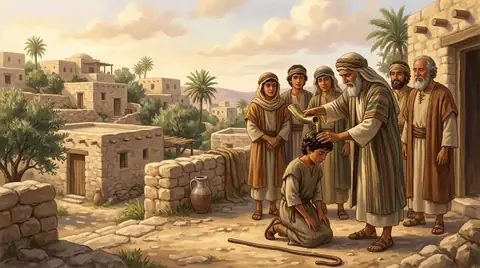 Custom · WorshipAnointingPouring or rubbing oil on a person or thing to mark it as God's own. Priests, kings and prophets received it; "Messiah"…
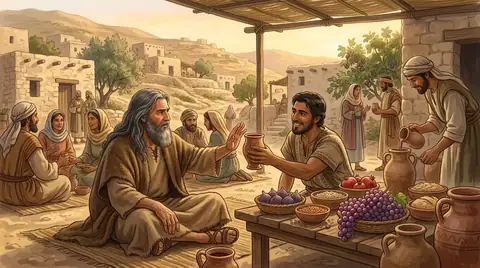 Custom · VowThe NaziriteA man or woman who vowed to belong wholly to God, for a set time or for life, drinking no wine, never cutting their…
Written for this app in its own words, from the Bible, with the facts checked against Bible dictionaries and encyclopedias: Easton's, Smith's, Fausset's, ISBE, Holman, the New Bible Dictionary, Vine's and the Thompson Chain topics.
