
Thing · Daily life
Handkerchief
Also called a napkin or kerchief
A small cloth for wiping the face, also used to wrap money or to cover the face of the dead. Cloths that had touched Paul carried healing to the sick at Ephesus.
- Greek
- Soudarion, a sweat-cloth
- Where
- Luke 19:20; John 11:44; John 20:7; Acts 19:12
What it was
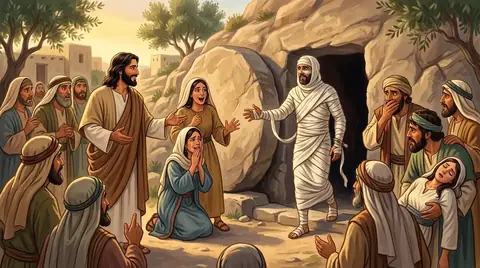
The Greek word means a cloth for wiping away sweat, and the King James Version gives it as "handkerchief" once and "napkin" three times. The timid servant in Jesus' parable wrapped his master's money in such a cloth and hid it instead of using it (Luke 19:20). The face of the dead was bound with one: Lazarus came out of the tomb with his face wrapped in a napkin (John 11:44), and in Jesus' empty tomb Peter saw the cloth that had covered his head folded up by itself, apart from the linen wrappings. No thief had been there; the body had simply gone (John 20:7).
At Ephesus
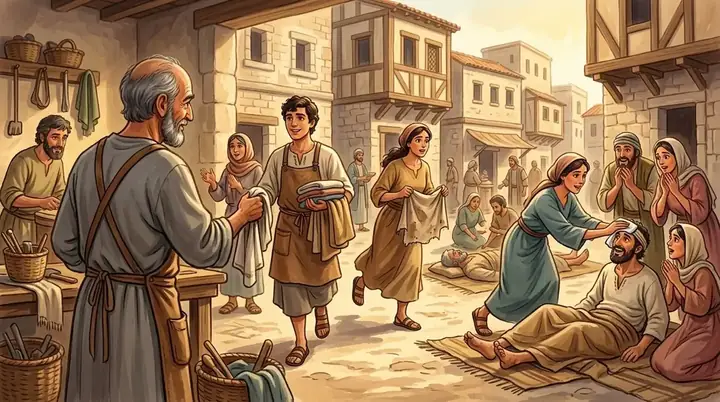
In Ephesus God did unusual miracles through Paul. People took handkerchiefs and work aprons that had touched his skin to the sick, and the diseases left them and evil spirits went out (Acts 19:11–12). The power was God's, not the cloth's, as the seven sons of Sceva found when they tried to use Jesus' name as a charm (Acts 19:13–16).
Key verses
- Acts 19:11–12
And God wrought special miracles by the hands of Paul: So that from his body were brought unto the sick handkerchiefs or aprons, and the diseases departed from them, and the evil spirits went out of them.
- John 20:7
And the napkin, that was about his head, not lying with the linen clothes, but wrapped together in a place by itself.
- Luke 19:20
And another came, saying, Lord, behold, here is thy pound, which I have kept laid up in a napkin:
- John 11:44
And he that was dead came forth, bound hand and foot with graveclothes: and his face was bound about with a napkin. Jesus saith unto them, Loose him, and let him go.
Read next
 PersonLazarusThe brother of Mary and Martha whom Jesus called out of the tomb after four days. A poor beggar of the same name…
 PersonPeterA Galilean fisherman who became the leader of the twelve apostles. Bold and impulsive, he confessed Jesus as the…
 Place · CityEphesusThe great port and temple city of western Asia Minor where Paul preached for three years, a riot broke out over the…
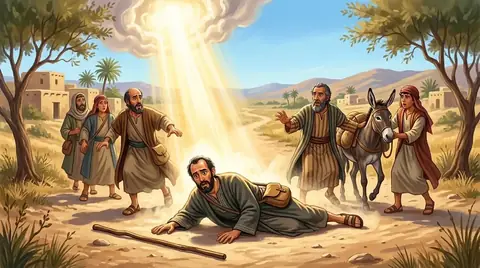 PersonPaulA Pharisee who hated the church until the risen Jesus met him on the road to Damascus. He became the apostle to the…
Written for this app in its own words, from the Bible, with the facts checked against Bible dictionaries and encyclopedias: Easton's, Smith's, Fausset's, ISBE, Holman, the New Bible Dictionary, Vine's and the Thompson Chain topics.
