
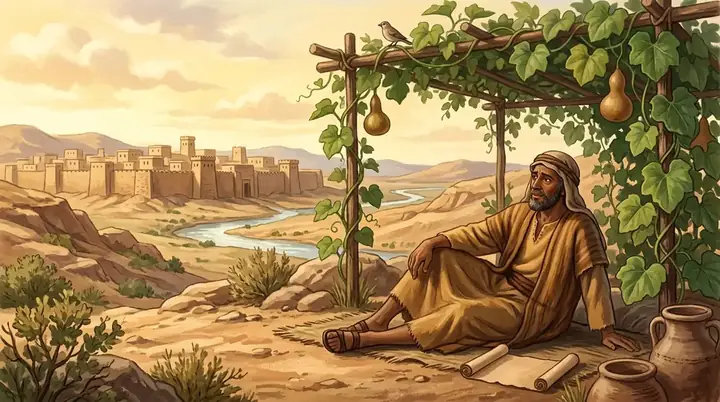
Plant
Gourd
Two plants in the Bible: the fast-growing plant that shaded Jonah and withered overnight, and the poisonous wild gourds that got into the prophets' stew at Gilgal.
- Jonah's gourd
- Jonah 4:6–10; the Hebrew word kikayon comes only here
- Wild gourds
- 2 Kings 4:39–41; probably the bitter colocynth
Jonah's gourd
Jonah sat outside Nineveh sulking because God had spared the city. God made a plant spring up over his shelter to shade him, and Jonah was very glad of it. At dawn a worm attacked it, it withered, and the hot east wind left Jonah begging to die. God's reply is the point of the book: you pity a plant you never grew, "and should not I spare Nineveh?" (Jonah 4:6–11). Which plant it was isn't certain. Many think of the castor-oil plant, with huge leaves and quick growth; others a climbing gourd of the kind still trained over huts for shade in that region.
Wild gourds
In a famine, one of the sons of the prophets went looking for herbs and came back with a lapful of wild gourds, which he sliced into the stew. The men tasted it and cried, "there is death in the pot". Elisha threw in some flour and the stew was made harmless (2 Kings 4:38–41). The plant was most likely the colocynth, a wild cucumber-like vine of the desert whose round fruit looks tempting but is bitter and poisonous.
Key verses
- Jonah 4:6–11
And the Lord God prepared a gourd, and made it to come up over Jonah, that it might be a shadow over his head, to deliver him from his grief. So Jonah was exceeding glad of the gourd. But God prepared a worm when the morning rose the next day, and it smote the gourd that it withered. And it came to pass, when the sun did arise, that God prepared a vehement east wind; and the sun beat upon the head of Jonah, that he fainted, and wished in himself to die, and said, It is better for me to die than to live. …
- 2 Kings 4:38–41
And Elisha came again to Gilgal: and there was a dearth in the land; and the sons of the prophets were sitting before him: and he said unto his servant, Set on the great pot, and seethe pottage for the sons of the prophets. And one went out into the field to gather herbs, and found a wild vine, and gathered thereof wild gourds his lap full, and came and shred them into the pot of pottage: for they knew them not. So they poured out for the men to eat. And it came to pass, as they were eating of the pottage, that they cried out, and said, O thou man of God, there is death in the pot. And they could not eat thereof. …
Read next
 PersonJonahThe prophet who ran from God's call to preach at Nineveh, was swallowed by a great fish, and then sulked when the city…
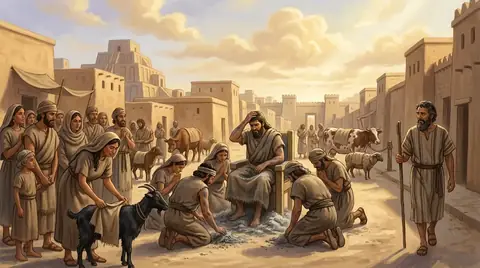 Place · CityNinevehThe last and greatest capital of Assyria, on the Tigris. Jonah preached there and the whole city repented; a century…
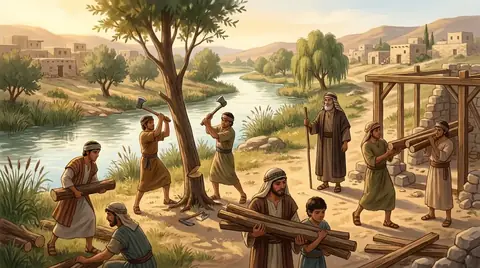 GroupThe sons of the prophetsBands of prophets who lived, learned and worshipped together under a master such as Samuel, Elijah or Elisha. "Sons"…
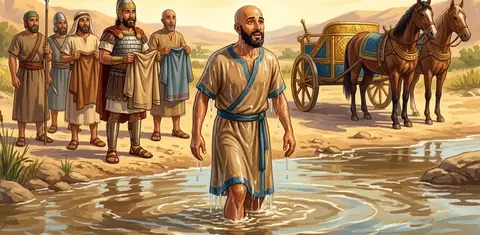 PersonElishaElijah's successor, a farmer's son who asked for a double share of his master's spirit and received it. His long…
Written for this app in its own words, from the Bible, with the facts checked against Bible dictionaries and encyclopedias: Easton's, Smith's, Fausset's, ISBE, Holman, the New Bible Dictionary, Vine's and the Thompson Chain topics.
