
Custom · War
Garrison
A military post of soldiers stationed in a conquered land to hold it down. The Philistines kept garrisons in Israel in Saul's day, and Jonathan's attacks on them began the war of freedom.
- Where
- 1 Samuel 13:3; 1 Samuel 14:1–15; 2 Samuel 8:6; 2 Samuel 23:14; 2 Corinthians 11:32
In the Bible
When Saul became king the Philistines ruled much of Israel from garrisons planted in its towns, and had even taken away the smiths so that no Israelite could make a sword (1 Samuel 13:19–22). Jonathan struck first, destroying the garrison at Geba (1 Samuel 13:3). Then, with only his armour-bearer, he climbed the cliff to the Philistine outpost at Michmash, saying "there is no restraint to the LORD to save by many or by few", killed twenty men, and set off a panic that turned into Israel's victory (1 Samuel 14:1–23). A Philistine garrison still held Bethlehem years later, when three of David's men broke through it to fetch him water from the well (2 Samuel 23:14–16).
As king, David turned the tables, putting garrisons of his own in Syria at Damascus and throughout Edom, so that those lands served him (2 Samuel 8:6; 2 Samuel 8:14). In the New Testament Paul recalls how the governor of Damascus "kept the city with a garrison" to catch him, and he escaped over the wall in a basket (2 Corinthians 11:32–33).
What it meant
A garrison was the daily face of foreign rule. Jonathan's faith was that a few with God were more than enough against it.
Key verses
- 1 Samuel 13:3
And Jonathan smote the garrison of the Philistines that was in Geba, and the Philistines heard of it. And Saul blew the trumpet throughout all the land, saying, Let the Hebrews hear.
- 1 Samuel 14:6
And Jonathan said to the young man that bare his armour, Come, and let us go over unto the garrison of these uncircumcised: it may be that the Lord will work for us: for there is no restraint to the Lord to save by many or by few.
- 2 Samuel 8:6
Then David put garrisons in Syria of Damascus: and the Syrians became servants to David, and brought gifts. And the Lord preserved David whithersoever he went.
- 2 Corinthians 11:32–33
In Damascus the governor under Aretas the king kept the city of the Damascenes with a garrison, desirous to apprehend me: And through a window in a basket was I let down by the wall, and escaped his hands.
Read next
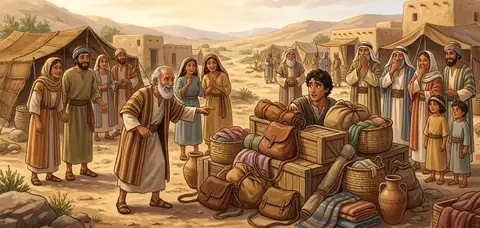 Person · KingSaulIsrael's first king, a tall Benjamite chosen when the people demanded a king like the nations. He began humbly and won…NationThe PhilistinesA warlike people from over the sea, settled in five cities on the coastal plain to the south-west of Israel. With iron…
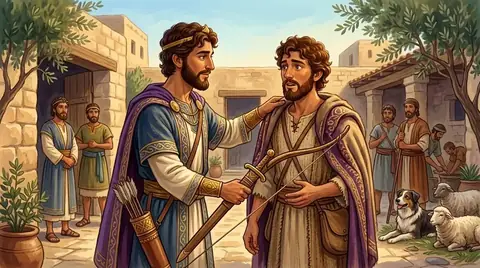 PersonJonathanSaul's eldest son and David's closest friend. A brave soldier who climbed a cliff to rout the Philistines, he gave up…
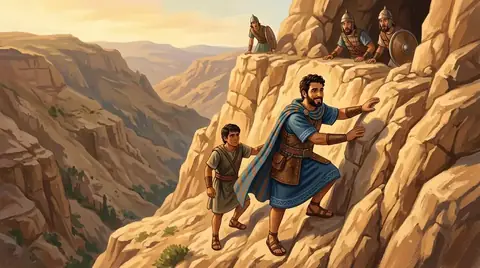 Place · TownGebaA priests' town in Benjamin on the northern edge of Judah, facing Michmash across a deep ravine. Jonathan's attack on…Place · TownMichmashA town of Benjamin on the edge of a deep ravine, about 7 miles north-east of Jerusalem. Here Jonathan and his…
 PlaceBethlehemA small town in the hills of Judah, five miles south of Jerusalem. It was the home of Ruth and Boaz, the birthplace of…
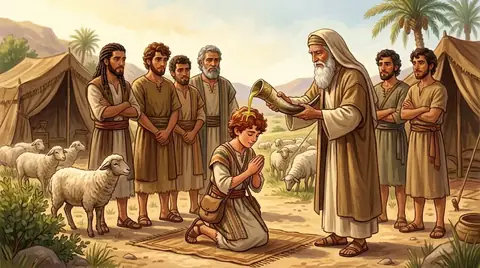 Person · KingDavidThe shepherd boy who killed Goliath and became Israel's greatest king, "a man after God's own heart". He wrote many…
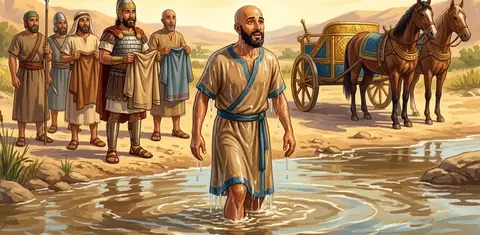 Place · NationSyriaThe land north and north-east of Israel, called Aram in Hebrew, with its capital at Damascus. Its kings were Israel's…
Written for this app in its own words, from the Bible, with the facts checked against Bible dictionaries and encyclopedias: Easton's, Smith's, Fausset's, ISBE, Holman, the New Bible Dictionary, Vine's and the Thompson Chain topics.
