
Teaching
Faith
Trusting God and taking him at his word
Believing God and resting on him: taking his word as true and trusting Jesus Christ to save. The Bible says we are put right with God by faith, not by what we do, and that real faith shows itself in action.
- Defined
- "The substance of things hoped for, the evidence of things not seen" (Hebrews 11:1)
- Key text
- "The just shall live by his faith" (Habakkuk 2:4), quoted three times in the New Testament
- Examples
- Abraham, Moses, Rahab, the centurion, the bleeding woman (Mark 5:34)
What it is
Faith is trust. It believes that what God says is true because God says it, and then acts on it. Hebrews describes it as being sure of what we hope for and certain of what we cannot see (Hebrews 11:1). It is not a feeling and not a leap in the dark; it rests on God's character and promises. "Without faith it is impossible to please him", because coming to God means believing that he is there and that he rewards those who seek him (Hebrews 11:6).
In the Old Testament
Abraham "believed in the LORD; and he counted it to him for righteousness" (Genesis 15:6): the first clear statement that a person is put right with God by trusting him. Habakkuk learned, as the Babylonians marched on Judah, that "the just shall live by his faith" (Habakkuk 2:4). Hebrews 11 walks through the Old Testament naming people who acted on God's word before they saw the result: Noah building a boat on dry land, Abraham leaving home, Moses choosing suffering with God's people over Egypt's riches, Rahab hiding the spies.
In Jesus
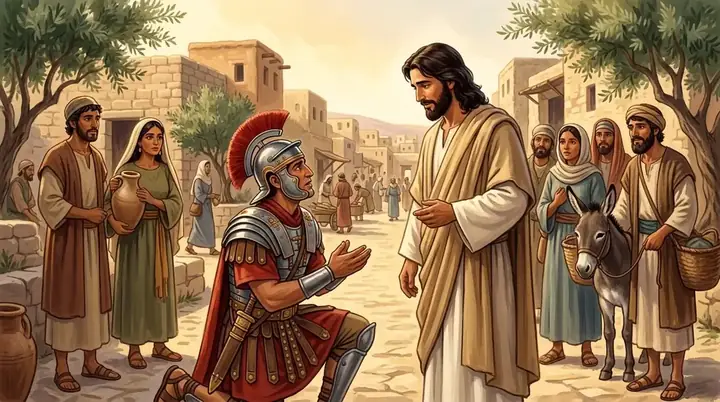
Jesus looked for faith and praised it wherever he found it. He was amazed at the Roman centurion's trust (Matthew 8:10), told the bleeding woman "thy faith hath made thee whole" (Mark 5:34), and said that faith as small as a mustard seed can move mountains (Matthew 17:20). He was gentle with weak faith: when a father cried, "Lord, I believe; help thou mine unbelief", he healed the boy (Mark 9:24). He asked only that people trust him. "Believe on the Lord Jesus Christ, and thou shalt be saved" (Acts 16:31).
Faith and works
Paul insists that a person is justified "by faith without the deeds of the law" (Romans 3:28; Galatians 2:16), a gift of God and not something earned (Ephesians 2:8–9). James insists that "faith without works is dead" (James 2:26). They agree: faith alone saves, but the faith that saves is never alone. Trust in Christ produces obedience, as a living tree produces fruit. Martin Luther called it a busy, active thing.
For us
Faith grows by hearing God's word (Romans 10:17). It is a shield against the devil's attacks (Ephesians 6:16), it is tested and purified by trouble (1 Peter 1:7), and it can be kept to the end: "I have fought a good fight, I have finished my course, I have kept the faith" (2 Timothy 4:7). "The faith" also means the body of truth believers hold, which Jude tells us to contend for (Jude 1:3).
Key verses
- Hebrews 11:1
Now faith is the substance of things hoped for, the evidence of things not seen.
- Genesis 15:6
And he believed in the Lord; and he counted it to him for righteousness.
- Habakkuk 2:4
Behold, his soul which is lifted up is not upright in him: but the just shall live by his faith.
- Romans 3:28
Therefore we conclude that a man is justified by faith without the deeds of the law.
- Ephesians 2:8–9
For by grace are ye saved through faith; and that not of yourselves: it is the gift of God: Not of works, lest any man should boast.
- James 2:17
Even so faith, if it hath not works, is dead, being alone.
Read next
 PersonAbrahamThe man God called out of Ur to a land he had never seen, promising him a people and a blessing for the whole world. He…
 PersonMosesThe man God used to bring Israel out of Egypt, give them his Law at Sinai, and lead them for forty years in the…
 PersonRahabA woman of Jericho who hid Joshua's two spies because she believed in Israel's God. She and her family were spared when…
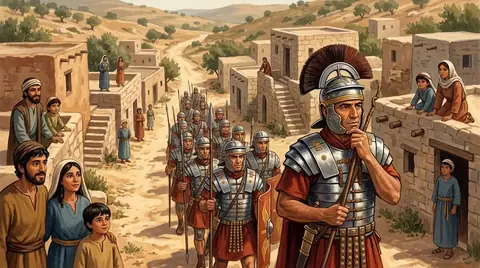 Group · RomeCenturionsRoman army officers, each commanding roughly a hundred men. Every centurion in the New Testament is shown in a good…
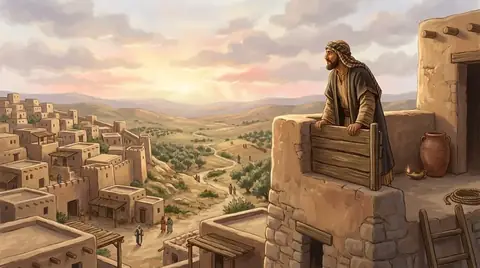 PersonHabakkukA prophet of Judah who wrote the book that bears his name. He asked God hard questions about evil and suffering, and…
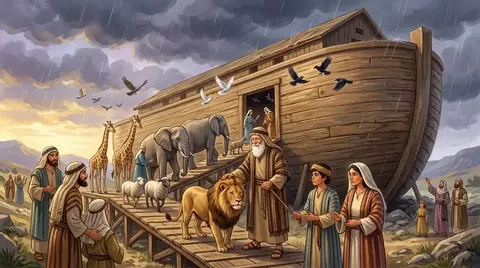 PersonNoahThe one righteous man of his age. God told him to build an ark, and through it saved him, his family and the animals…
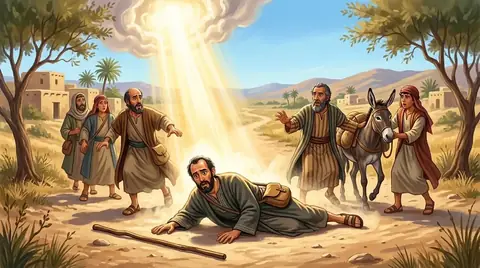 PersonPaulA Pharisee who hated the church until the risen Jesus met him on the road to Damascus. He became the apostle to the…
 Person · ApostleJamesThe fisherman son of Zebedee, brother of John and one of Jesus' three closest disciples. Jesus called the brothers…
Written for this app in its own words, from the Bible, with the facts checked against Bible dictionaries and encyclopedias: Easton's, Smith's, Fausset's, ISBE, Holman, the New Bible Dictionary, Vine's and the Thompson Chain topics.
