
Topic
Evil for Good
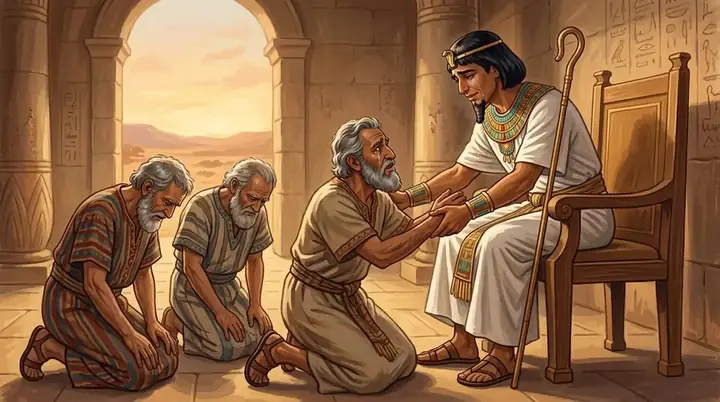
Repaying kindness with harm. Saul tried to kill David who had served him, Nabal insulted the man who had protected his flocks, and Proverbs warns that evil will not leave the house of such a man.
- Proverbs
- "Whoso rewardeth evil for good, evil shall not depart from his house" (Proverbs 17:13)
- Instances
- Saul to David; Nabal to David; David to Uriah
David guarded Nabal's shepherds in the wilderness, and when he asked for food Nabal sent his men away with insults. "He hath requited me evil for good", David said (1 Samuel 25:21). Saul owed his throne's safety to David, yet tried again and again to kill him (1 Samuel 19:1–10). Even David fell into the same sin: he had loyal Uriah killed to hide his own adultery (2 Samuel 11). Israel complained against Moses, who had led them out of slavery (Exodus 16:2–3).
The psalmists felt this pain deeply: "for my love they are my adversaries" (Psalms 109:4–5; Psalms 35:12). Jesus knew it most of all. The answer the Bible gives is the opposite: to return good for evil (Romans 12:17–21).
Key verses
- Proverbs 17:13
Whoso rewardeth evil for good, evil shall not depart from his house.
- 1 Samuel 25:21
Now David had said, Surely in vain have I kept all that this fellow hath in the wilderness, so that nothing was missed of all that pertained unto him: and he hath requited me evil for good.
- Psalms 35:12
They rewarded me evil for good to the spoiling of my soul.
- Psalms 109:4–5
For my love they are my adversaries: but I give myself unto prayer. And they have rewarded me evil for good, and hatred for my love.
- Romans 12:17
Recompense to no man evil for evil. Provide things honest in the sight of all men.
Read next
 Person · KingSaulIsrael's first king, a tall Benjamite chosen when the people demanded a king like the nations. He began humbly and won…
 PersonNabalA rich, rude sheep farmer who refused David's men food at shearing time. His wise wife Abigail saved his household; he…PersonUriahA Hittite soldier in David's army and husband of Bathsheba. David took his wife, then had him killed in battle to hide…
 PersonMosesThe man God used to bring Israel out of Egypt, give them his Law at Sinai, and lead them for forty years in the…
Written for this app in its own words, from the Bible, with the facts checked against Bible dictionaries and encyclopedias: Easton's, Smith's, Fausset's, ISBE, Holman, the New Bible Dictionary, Vine's and the Thompson Chain topics.
