
Nation
Ethiopians (Cushites)
The people of Cush, south of Egypt on the upper Nile · today Sudan and beyond
The dark-skinned people of the land south of Egypt, called Cush in Hebrew. Moses married one, an Ethiopian rescued Jeremiah, and an Ethiopian official was among the first Africans to believe in Jesus.
- Ancestor
- Cush, son of Ham (Genesis 10:6)
- Land
- The Nile valley above Egypt, roughly today's Sudan, not the modern country of Ethiopia
- Known for
- Zerah's huge army defeated by Asa (2 Chronicles 14:9–13); Ebed-melech (Jeremiah 38); the eunuch baptised by Philip (Acts 8)
Who they were
Cush, the Bible's name for what the Greeks called Ethiopia, "the land of burnt faces", lay up the Nile beyond Egypt. Its people were tall and dark; "Can the Ethiopian change his skin?" Jeremiah asked (Jeremiah 13:23). They were traders in gold, ivory and precious stones (Job 28:19; Isaiah 45:14) and famous soldiers who often fought in Egypt's armies. For a time Cushite kings ruled Egypt itself; Tirhakah, who marched against Sennacherib, was one of them (2 Kings 19:9).
In the Old Testament
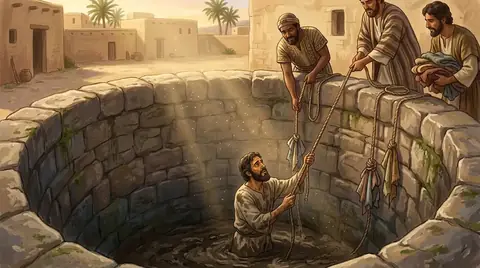
Moses married a Cushite woman, and Miriam and Aaron used it against him, for which Miriam was struck with leprosy (Numbers 12:1–10). Zerah the Ethiopian came against King Asa with a vast army, and Asa, praying that it was nothing to God to help the weak against the strong, routed it (2 Chronicles 14:9–13). A Cushite runner brought David the news of Absalom's death (2 Samuel 18:21–32). Ebed-melech, an Ethiopian servant at the palace, went to the king for leave to pull Jeremiah out of the muddy cistern, and God promised him his life for his trust (Jeremiah 38:7–13; Jeremiah 39:15–18). The prophets foresaw Ethiopia bringing gifts to God and "stretching out her hands" to him (Psalms 68:31; Isaiah 18:7; Zephaniah 3:10).
In the New Testament
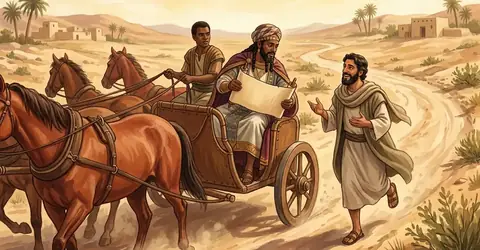
On the desert road to Gaza, Philip met the treasurer of Candace, queen of the Ethiopians, riding home from worship in Jerusalem and reading Isaiah 53 aloud. Philip explained that the chapter was about Jesus, and the official was baptised in the first water they came to and went home rejoicing (Acts 8:26–39). The church of Ethiopia has long counted him its first believer.
Key verses
- Numbers 12:1
And Miriam and Aaron spake against Moses because of the Ethiopian woman whom he had married: for he had married an Ethiopian woman.
- 2 Chronicles 14:11–12
And Asa cried unto the Lord his God, and said, Lord, it is nothing with thee to help, whether with many, or with them that have no power: help us, O Lord our God; for we rest on thee, and in thy name we go against this multitude. O Lord, thou art our God; let not man prevail against thee. So the Lord smote the Ethiopians before Asa, and before Judah; and the Ethiopians fled.
- Psalms 68:31
Princes shall come out of Egypt; Ethiopia shall soon stretch out her hands unto God.
- Jeremiah 38:7–13
Now when Ebed–melech the Ethiopian, one of the eunuchs which was in the king’s house, heard that they had put Jeremiah in the dungeon; the king then sitting in the gate of Benjamin; Ebed–melech went forth out of the king’s house, and spake to the king, saying, My lord the king, these men have done evil in all that they have done to Jeremiah the prophet, whom they have cast into the dungeon; and he is like to die for hunger in the place where he is: for there is no more bread in the city. …
- Acts 8:27–39
And he arose and went: and, behold, a man of Ethiopia, an eunuch of great authority under Candace queen of the Ethiopians, who had the charge of all her treasure, and had come to Jerusalem for to worship, Was returning, and sitting in his chariot read Esaias the prophet. Then the Spirit said unto Philip, Go near, and join thyself to this chariot. …
On the map
Read next
 Place · PersonCushThe land south of Egypt along the upper Nile, called Ethiopia in the KJV, and the son of Ham from whom its people came.…
 PersonHamNoah's youngest son, saved in the ark with his wife. After the flood he shamed his drunken father, and Noah's curse…
 PersonJeremiahThe prophet who warned Judah for forty years that Babylon was coming, and wept as it came. He was beaten, put in the…
 PersonSennacheribThe king of Assyria who invaded Judah in Hezekiah's reign and threatened Jerusalem. God answered Hezekiah's prayer…
 PersonMosesThe man God used to bring Israel out of Egypt, give them his Law at Sinai, and lead them for forty years in the…
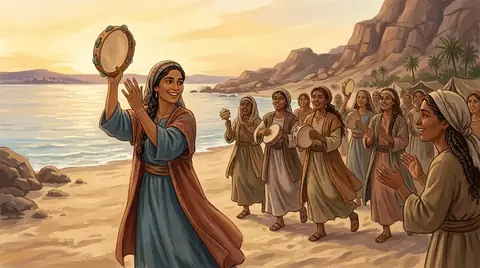 PersonMiriamMoses' older sister, who watched over his basket in the Nile and later led the women of Israel in song at the Red Sea.…
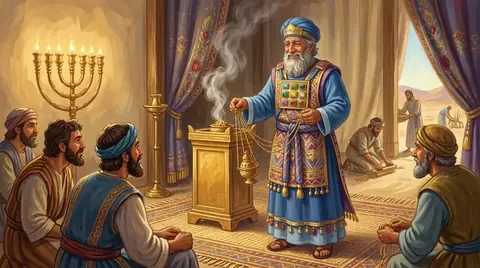 PersonAaronMoses' older brother and Israel's first high priest. He spoke for Moses before Pharaoh and served God at the tabernacle…
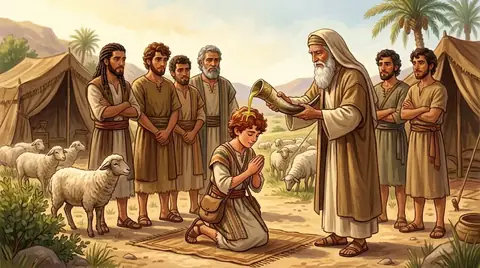 Person · KingDavidThe shepherd boy who killed Goliath and became Israel's greatest king, "a man after God's own heart". He wrote many…
Written for this app in its own words, from the Bible, with the facts checked against Bible dictionaries and encyclopedias: Easton's, Smith's, Fausset's, ISBE, Holman, the New Bible Dictionary, Vine's and the Thompson Chain topics.
