
Thing · Music
Dulcimer
DUL-sim-er
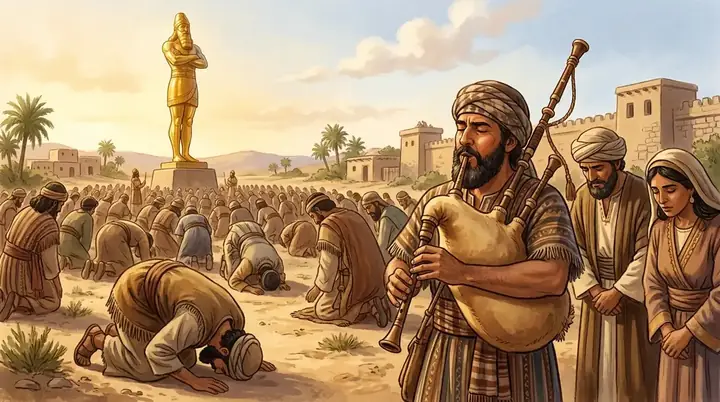
One of the instruments in Nebuchadnezzar's band that signalled everyone to bow to his golden image. The Aramaic word is sumphonia, and most think it was a bagpipe, not the hammered strings now called a dulcimer.
- Where
- Daniel 3:5,10,15
- Aramaic
- Sumphonia, a word borrowed from Greek; "bagpipe" in the Revised Version margin
- With it
- The cornet, flute, harp, sackbut and psaltery
The word appears three times, always in the same list, as Nebuchadnezzar's herald tells the crowds on the plain of Dura that when they hear the cornet, flute, harp, sackbut, psaltery, dulcimer and all kinds of music they must fall down and worship the king's golden image (Daniel 3:5,10,15). The Aramaic name is a Greek word that means "sounding together", and it was not a Hebrew instrument at all; a Greek musician had probably brought it to Babylon. What it was isn't certain. Luther thought a lute, others an organ or a lyre, but the best guess is a bagpipe, a skin bag with pipes such as shepherds in Italy and the East still play. The English "dulcimer", a box of strings struck with little hammers, was simply the translators' choice in 1611.
The point of the long list is the noise of it. Every instrument the empire could muster was played to make men bow, and three young Jews, Shadrach, Meshach and Abednego, stood still through the whole orchestra. They went into the furnace for it, and a fourth walked with them there (Daniel 3:16–25).
Key verses
- Daniel 3:5
That at what time ye hear the sound of the cornet, flute, harp, sackbut, psaltery, dulcimer, and all kinds of musick, ye fall down and worship the golden image that Nebuchadnezzar the king hath set up:
- Daniel 3:15
Now if ye be ready that at what time ye hear the sound of the cornet, flute, harp, sackbut, psaltery, and dulcimer, and all kinds of musick, ye fall down and worship the image which I have made; well: but if ye worship not, ye shall be cast the same hour into the midst of a burning fiery furnace; and who is that God that shall deliver you out of my hands?
- Daniel 3:17–18
If it be so, our God whom we serve is able to deliver us from the burning fiery furnace, and he will deliver us out of thine hand, O king. But if not, be it known unto thee, O king, that we will not serve thy gods, nor worship the golden image which thou hast set up.
Read next
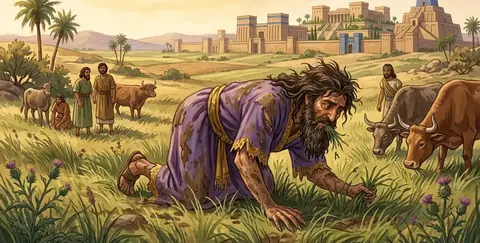 Person · KingNebuchadnezzarThe great king of Babylon who destroyed Jerusalem and its temple and carried Judah into exile. In Daniel he dreams of a…
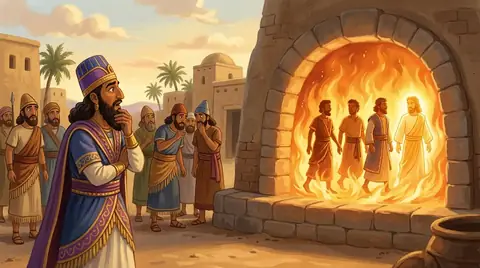 PersonShadrachOne of Daniel's three friends taken to Babylon. With Meshach and Abednego he refused to bow to Nebuchadnezzar's golden…PersonMeshachOne of Daniel's three friends in Babylon. With Shadrach and Abednego he refused to bow to Nebuchadnezzar's golden…PersonAbednegoOne of Daniel's three friends taken to Babylon. With Shadrach and Meshach he refused to bow to King Nebuchadnezzar's…
Written for this app in its own words, from the Bible, with the facts checked against Bible dictionaries and encyclopedias: Easton's, Smith's, Fausset's, ISBE, Holman, the New Bible Dictionary, Vine's and the Thompson Chain topics.
