
Thing · Temple
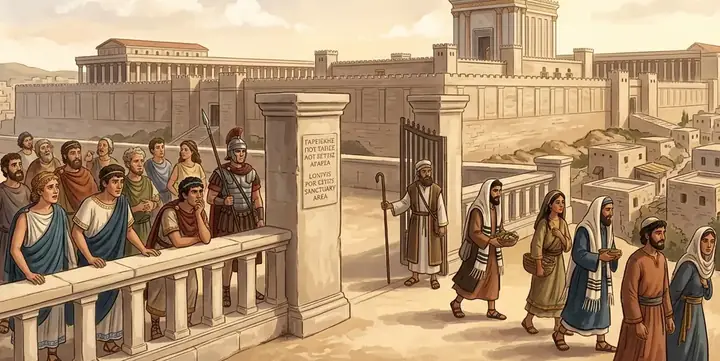
The dividing wall
"The middle wall of partition" (Eph 2:14)
A low stone barrier in Herod's temple beyond which no Gentile could go, on pain of death. Paul says that Christ has broken this wall down, making Jew and Gentile one.
- Where
- Ephesians 2:14; Acts 21:28–29
- In the temple
- About 4.5 ft (1.4 m) high, between the Court of the Gentiles and the inner courts
What it was
The outer court of Herod's temple, the Court of the Gentiles, was open to anyone. But beyond it stood a stone fence, waist-high, with notices in Greek and Latin fixed at intervals. They warned that any foreigner who passed was responsible for his own death. One of these notices has been dug up in Jerusalem. Inside the barrier lay the courts for Jewish women, Jewish men and the priests, and the sanctuary itself. The wall said plainly: God's house was for Israel, and the nations must stay outside.
Paul and the wall
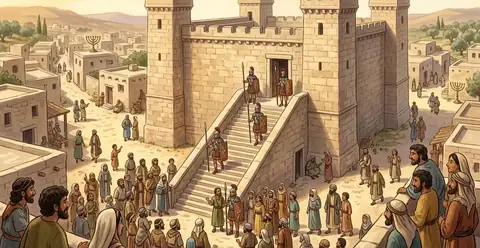
When Paul came to the temple, Jews from Asia saw him and cried out that he had brought Greeks into the holy place, for they had seen him in the city with Trophimus of Ephesus (Acts 21:28–29). The charge was false, but a mob dragged him out and would have killed him had the Roman soldiers not run down from the Antonia fortress. That arrest led to his years in prison.
What it means
From that prison Paul wrote to the Ephesians that Christ "hath broken down the middle wall of partition between us" (Ephesians 2:14). On the cross he ended the division that the Law marked out, so that Jew and Gentile become "one new man", fellow citizens, built together into one temple for God (Ephesians 2:15–22). The stone wall still stood when Paul wrote; in God's sight it was already rubble.
Key verses
- Ephesians 2:14–16
For he is our peace, who hath made both one, and hath broken down the middle wall of partition between us; Having abolished in his flesh the enmity, even the law of commandments contained in ordinances; for to make in himself of twain one new man, so making peace; And that he might reconcile both unto God in one body by the cross, having slain the enmity thereby:
- Acts 21:28–29
Crying out, Men of Israel, help: This is the man, that teacheth all men every where against the people, and the law, and this place: and further brought Greeks also into the temple, and hath polluted this holy place. (For they had seen before with him in the city Trophimus an Ephesian, whom they supposed that Paul had brought into the temple.)
- Ephesians 2:19
Now therefore ye are no more strangers and foreigners, but fellowcitizens with the saints, and of the household of God;
Read next
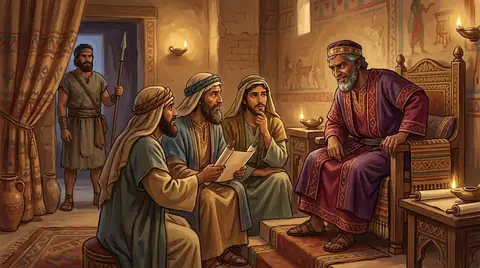 Person · KingHerodThe name of a family of rulers under Rome. Herod the Great tried to kill the infant Jesus; his son Antipas beheaded…
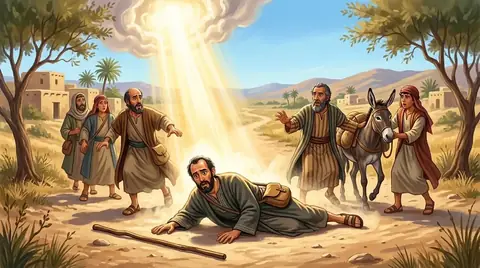 PersonPaulA Pharisee who hated the church until the risen Jesus met him on the road to Damascus. He became the apostle to the…
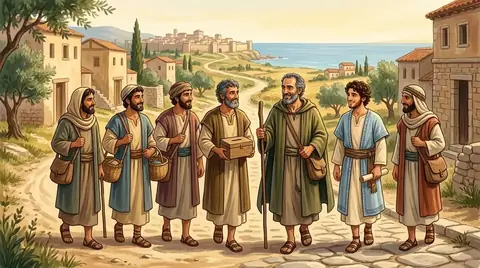 PersonTrophimusA Gentile Christian from Ephesus who travelled with Paul. When he was seen with Paul in Jerusalem, a rumour that Paul…
 Place · BuildingThe Antonia fortressThe Roman barracks that overlooked the temple courts in Jerusalem, which Herod the Great rebuilt and named for Mark…
Written for this app in its own words, from the Bible, with the facts checked against Bible dictionaries and encyclopedias: Easton's, Smith's, Fausset's, ISBE, Holman, the New Bible Dictionary, Vine's and the Thompson Chain topics.
