
Thing · Time
Dial
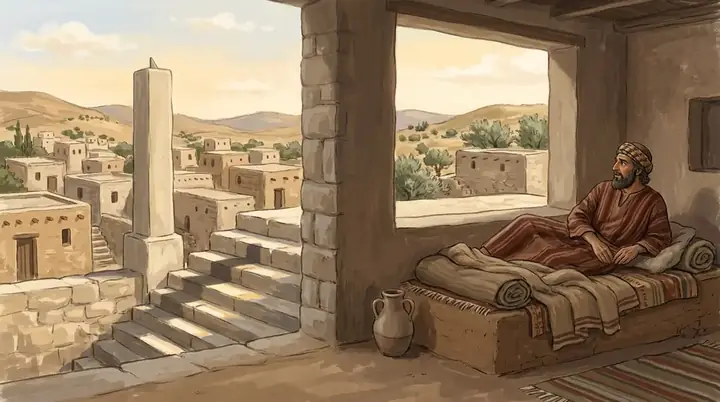
The stairway or steps of King Ahaz on which a shadow told the hour. When Hezekiah was dying, God made the shadow go back ten steps as a sign that he would recover.
- Where
- 2 Kings 20:8–11; Isaiah 38:7–8
- Hebrew
- Ma'aloth, "steps" or "goings up"; the same word is used for stairs and for the Songs of Degrees
What it was
The Bible speaks of only one sundial, and it belonged to King Ahaz. The Hebrew word simply means "steps", so it was probably a stairway on which the shadow of a pillar fell. As the sun climbed and sank, the shadow covered more or fewer steps, and so the time of day could be read. The idea may have come from Babylon, where the hour was first counted; Ahaz had dealings with the East and copied foreign things (2 Kings 16:10).
The sign to Hezekiah
When Hezekiah lay dying, Isaiah told him God would add fifteen years to his life. Hezekiah asked for a sign. He was offered a choice: should the shadow go forward ten steps, or back? He answered that going forward would be easy, so let it go back. Isaiah prayed, and the shadow returned ten steps on the dial of Ahaz (2 Kings 20:8–11; Isaiah 38:7–8). The envoys of Babylon later came to ask about "the wonder that was done in the land" (2 Chronicles 32:31).
What it means
A shadow cannot run backwards, yet God turned it. The one who made the sun can bend time itself to keep a promise to a praying man.
Key verses
- 2 Kings 20:9–11
And Isaiah said, This sign shalt thou have of the Lord, that the Lord will do the thing that he hath spoken: shall the shadow go forward ten degrees, or go back ten degrees? And Hezekiah answered, It is a light thing for the shadow to go down ten degrees: nay, but let the shadow return backward ten degrees. And Isaiah the prophet cried unto the Lord: and he brought the shadow ten degrees backward, by which it had gone down in the dial of Ahaz.
- Isaiah 38:8
Behold, I will bring again the shadow of the degrees, which is gone down in the sun dial of Ahaz, ten degrees backward. So the sun returned ten degrees, by which degrees it was gone down.
- 2 Chronicles 32:31
Howbeit in the business of the ambassadors of the princes of Babylon, who sent unto him to enquire of the wonder that was done in the land, God left him, to try him, that he might know all that was in his heart.
Read next
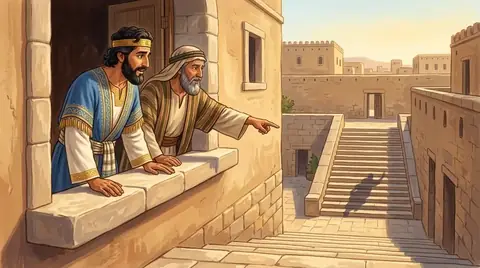 Person · KingAhazA wicked king of Judah who sacrificed his own son, shut the temple, and paid Assyria for help instead of trusting God.…
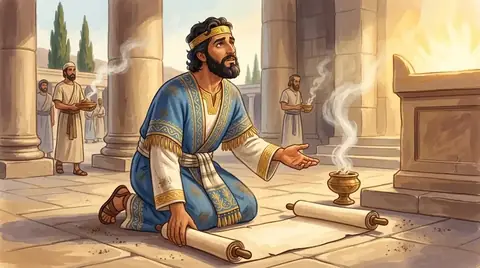 Person · KingHezekiahOne of Judah's best kings. He cleansed the temple, smashed the idols, trusted God when Assyria besieged Jerusalem, and…Person · ProphetIsaiahThe prophet of Jerusalem who served four kings, saw the LORD on his throne, and foretold the virgin's son, the…
Written for this app in its own words, from the Bible, with the facts checked against Bible dictionaries and encyclopedias: Easton's, Smith's, Fausset's, ISBE, Holman, the New Bible Dictionary, Vine's and the Thompson Chain topics.
