
Teaching
Despondency
also called Despair, Discouragement
Losing heart or hope. Moses, Elijah, Job and Jonah all sank so low they wished to die, yet God met each of them. "Why art thou cast down, O my soul?... hope thou in God."
Even great servants of God lost heart. Moses told God, "I am not able to bear all this people alone... kill me, I pray thee" (Numbers 11:14–15). After the victory on Carmel, Elijah fled from Jezebel, sat under a juniper tree and asked to die (1 Kings 19:4). Job cursed the day he was born (Job 3:1–3). Jonah, angry that Nineveh was spared, said, "it is better for me to die than to live" (Jonah 4:3). The Israelites in Egypt "hearkened not unto Moses for anguish of spirit" (Exodus 6:9). "Hope deferred maketh the heart sick" (Proverbs 13:12).
God did not scold Elijah; he gave him food and sleep, then spoke in a still small voice and gave him new work (1 Kings 19:5–18). The psalmist argued with his own soul: "Why art thou cast down, O my soul?... hope thou in God: for I shall yet praise him" (Psalms 42:11). Jeremiah, in the depths, remembered that God's compassions "are new every morning: great is thy faithfulness" (Lamentations 3:19–23). Paul could say, "We are troubled on every side, yet not distressed; we are perplexed, but not in despair" (2 Corinthians 4:8).
Key verses
- 1 Kings 19:4–8
But he himself went a day’s journey into the wilderness, and came and sat down under a juniper tree: and he requested for himself that he might die; and said, It is enough; now, O Lord, take away my life; for I am not better than my fathers. And as he lay and slept under a juniper tree, behold, then an angel touched him, and said unto him, Arise and eat. And he looked, and, behold, there was a cake baken on the coals, and a cruse of water at his head. And he did eat and drink, and laid him down again. …
- Psalms 42:11
Why art thou cast down, O my soul? and why art thou disquieted within me? hope thou in God: for I shall yet praise him, who is the health of my countenance, and my God.
- Lamentations 3:21–23
This I recall to my mind, therefore have I hope. It is of the Lord’s mercies that we are not consumed, because his compassions fail not. They are new every morning: great is thy faithfulness.
- 2 Corinthians 4:8–9
We are troubled on every side, yet not distressed; we are perplexed, but not in despair; Persecuted, but not forsaken; cast down, but not destroyed;
Read next
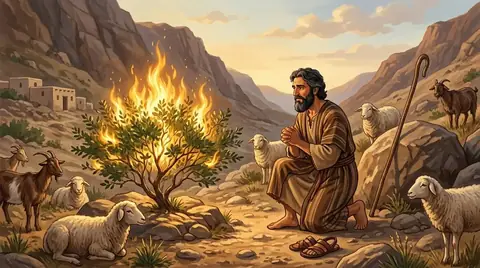 PersonMosesThe man God used to bring Israel out of Egypt, give them his Law at Sinai, and lead them for forty years in the…
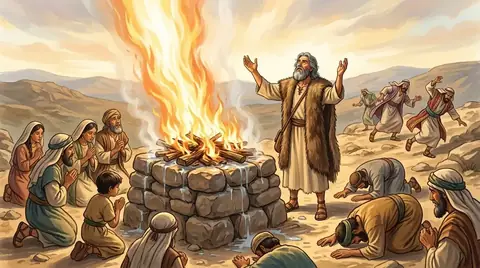 PersonElijahThe fiery prophet who stood alone against King Ahab and the prophets of Baal, called down fire on Mount Carmel, and was…
 PersonJobA rich and godly man who lost his children, his wealth and his health in a single stroke, and would not curse God. His…
 PersonJonahThe prophet who ran from God's call to preach at Nineveh, was swallowed by a great fish, and then sulked when the city…
Written for this app in its own words, from the Bible, with the facts checked against Bible dictionaries and encyclopedias: Easton's, Smith's, Fausset's, ISBE, Holman, the New Bible Dictionary, Vine's and the Thompson Chain topics.
