
Teaching
Curiosity
The wish to know or see. It can be good, as when Zacchaeus climbed a tree to see Jesus, or harmful, as when the men of Beth-shemesh looked into the ark. Jesus told Peter not to pry into another's path but to follow him.
Curiosity shows up throughout the Bible, for good and ill. Eve looked at the forbidden fruit and saw it was "to be desired to make one wise" (Genesis 3:6). Jacob and Manoah both asked the angel's name and were not told (Genesis 32:29; Judges 13:17–18). The men of Beth-shemesh looked into the ark of the LORD and were struck down (1 Samuel 6:19). Hezekiah proudly showed the Babylonian envoys all his treasures, and Isaiah said it would all be carried to Babylon (2 Kings 20:13–17).
Some curiosity led to faith. Herod long wished to see Jesus, hoping for a miracle, but got no answer (Luke 23:8–9). Greeks came saying, "Sir, we would see Jesus" (John 12:21), and Zacchaeus climbed a sycamore tree to see him and found salvation (Luke 19:3–9).
When the disciples asked when the kingdom would come, Jesus said, "It is not for you to know the times or the seasons" (Acts 1:6–7). When Peter asked what would become of John, Jesus answered, "what is that to thee? follow thou me" (John 21:21–22). "The secret things belong unto the LORD our God: but those things which are revealed belong unto us" (Deuteronomy 29:29).
Key verses
- Deuteronomy 29:29
The secret things belong unto the Lord our God: but those things which are revealed belong unto us and to our children for ever, that we may do all the words of this law.
- 1 Samuel 6:19
And he smote the men of Beth–shemesh, because they had looked into the ark of the Lord, even he smote of the people fifty thousand and threescore and ten men: and the people lamented, because the Lord had smitten many of the people with a great slaughter.
- Luke 19:3–4
And he sought to see Jesus who he was; and could not for the press, because he was little of stature. And he ran before, and climbed up into a sycomore tree to see him: for he was to pass that way.
- John 21:21–22
Peter seeing him saith to Jesus, Lord, and what shall this man do? Jesus saith unto him, If I will that he tarry till I come, what is that to thee? follow thou me.
- Acts 1:7
And he said unto them, It is not for you to know the times or the seasons, which the Father hath put in his own power.
Read next
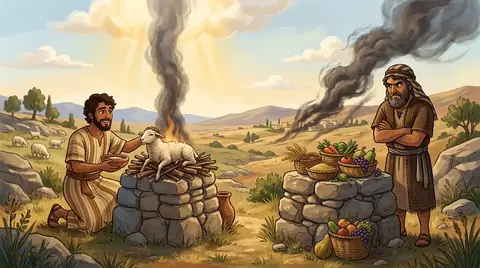 PersonEveThe first woman, made by God from Adam's side to be his wife and partner. Deceived by the serpent, she ate the…
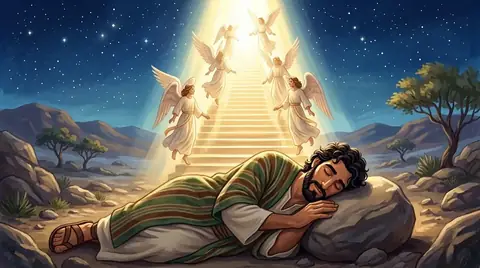 PersonJacobIsaac's younger twin son, who won his brother's birthright and blessing by cunning, was changed by God, and was renamed…
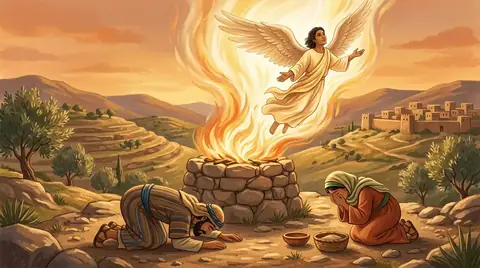 PersonManoahSamson's father, a man of Dan from Zorah, who with his wife received an angel's promise of a son and saw the angel rise…
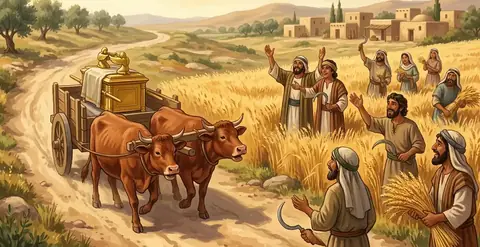 PlaceBeth-shemeshA town of Judah in the western foothills, given to the priests. The ark came home there on a cart pulled by two cows…
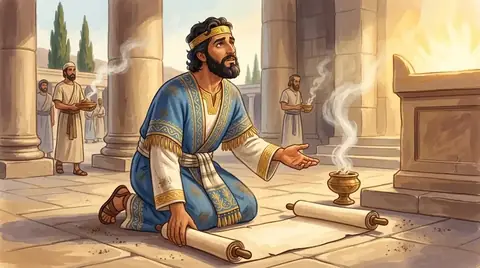 Person · KingHezekiahOne of Judah's best kings. He cleansed the temple, smashed the idols, trusted God when Assyria besieged Jerusalem, and…
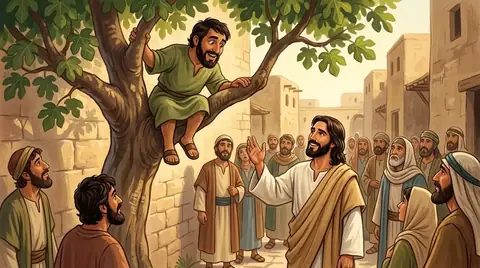 PersonZacchaeusA rich chief tax collector of Jericho who climbed a tree to see Jesus. Jesus came to his house, and Zacchaeus turned…
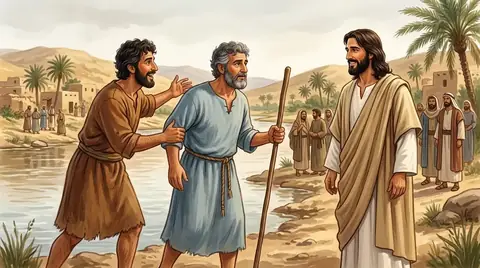 PersonPeterA Galilean fisherman who became the leader of the twelve apostles. Bold and impulsive, he confessed Jesus as the…
Written for this app in its own words, from the Bible, with the facts checked against Bible dictionaries and encyclopedias: Easton's, Smith's, Fausset's, ISBE, Holman, the New Bible Dictionary, Vine's and the Thompson Chain topics.
