
Custom · Law
Creditor
One who lends and is owed
Someone who has lent money or goods and is owed repayment. God's law set limits on what a creditor could take, the prophets and Nehemiah rebuked creditors who crushed the poor, and Jesus used a merciful creditor as a picture of God.
- See also
- Debtor, Debt, Usury, Surety
In Israel a loan to a poor neighbour was meant to be a kindness, not a business. A creditor could not charge his brother interest, had to give back a pledged cloak by sunset, could not take a millstone at all, and was to let debts go in the seventh year (Exodus 22:25–27; Deuteronomy 15:2; Deuteronomy 24:6). "A good man sheweth favour, and lendeth" (Psalms 112:5).
Many creditors were hard. A widow cried to Elisha that "the creditor is come" to take her two sons as slaves (2 Kings 4:1), and in Nehemiah's day families had lost their fields and children to their own countrymen until he made the lenders give everything back (Nehemiah 5:1–12). Jesus told of a creditor who freely forgave two debtors, one owing ten times more than the other, to show why the one forgiven much loves much (Luke 7:41–43).
Key verses
- Deuteronomy 15:2
And this is the manner of the release: Every creditor that lendeth ought unto his neighbour shall release it; he shall not exact it of his neighbour, or of his brother; because it is called the Lord’s release.
- Deuteronomy 24:10–13
When thou dost lend thy brother any thing, thou shalt not go into his house to fetch his pledge. Thou shalt stand abroad, and the man to whom thou dost lend shall bring out the pledge abroad unto thee. And if the man be poor, thou shalt not sleep with his pledge: …
- 2 Kings 4:1
Now there cried a certain woman of the wives of the sons of the prophets unto Elisha, saying, Thy servant my husband is dead; and thou knowest that thy servant did fear the Lord: and the creditor is come to take unto him my two sons to be bondmen.
- Nehemiah 5:10–12
I likewise, and my brethren, and my servants, might exact of them money and corn: I pray you, let us leave off this usury. Restore, I pray you, to them, even this day, their lands, their vineyards, their oliveyards, and their houses, also the hundredth part of the money, and of the corn, the wine, and the oil, that ye exact of them. Then said they, We will restore them, and will require nothing of them; so will we do as thou sayest. Then I called the priests, and took an oath of them, that they should do according to this promise.
- Luke 7:41–43
There was a certain creditor which had two debtors: the one owed five hundred pence, and the other fifty. And when they had nothing to pay, he frankly forgave them both. Tell me therefore, which of them will love him most? Simon answered and said, I suppose that he, to whom he forgave most. And he said unto him, Thou hast rightly judged.
Read next
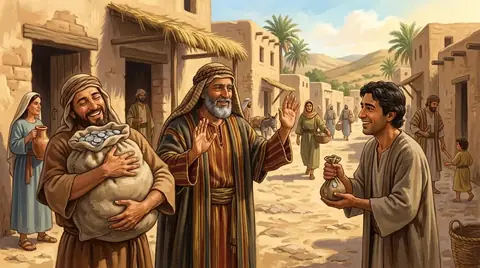 Custom · LawDebtorSomeone who owes money. In Bible times a debtor could lose his cloak, his land, his children or his freedom. The law…
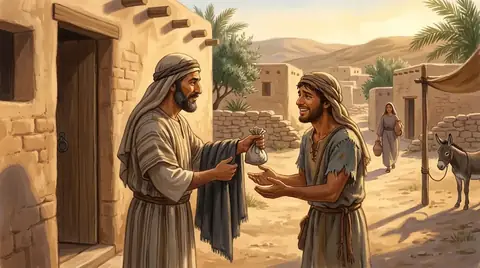 Teaching · LawDebtOwing money or anything else. God's law told Israel to lend freely to the poor, not to charge them interest, and to…Custom · MoneyUsuryIn the Bible, usury means charging interest on a loan. Israelites were forbidden to charge it to a fellow Israelite in…Name of Christ · TeachingThe SuretyA surety guarantees another person's promise or debt and answers for it himself. Hebrews says Jesus is the surety of…
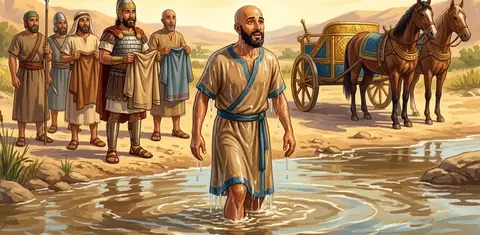 PersonElishaElijah's successor, a farmer's son who asked for a double share of his master's spirit and received it. His long…
Written for this app in its own words, from the Bible, with the facts checked against Bible dictionaries and encyclopedias: Easton's, Smith's, Fausset's, ISBE, Holman, the New Bible Dictionary, Vine's and the Thompson Chain topics.
