
Teaching · Law
Debt
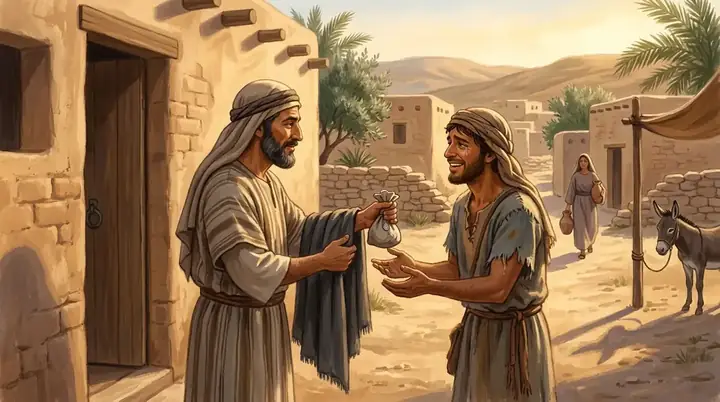
Owing money or anything else. God's law told Israel to lend freely to the poor, not to charge them interest, and to cancel debts every seventh year. Jesus taught us to pray, "forgive us our debts".
- Law
- Lend freely (Deuteronomy 15:7–11); no interest from a brother (Exodus 22:25; Leviticus 25:36); release every seventh year (Deuteronomy 15:1–2)
- Pledges
- A cloak taken as security was returned by night (Exodus 22:26–27); a millstone could not be taken (Deuteronomy 24:6)
- Warned
- "Be not thou one of them that strike hands" as surety (Proverbs 22:26)
In the law
God's people were to be generous lenders. If a brother fell on hard times, you lent him what he needed, and you did not charge him interest, because he was a brother and the land was God's (Leviticus 25:35–37). Interest could be taken from foreigners trading for profit, but to squeeze the poor was a sin the prophets condemned (Ezekiel 18:8–13). Every seventh year all debts between Israelites were released (Deuteronomy 15:1–2), and a man who had sold himself to pay his debts went free (Deuteronomy 15:12). God warned against the mean thought, "the seventh year is near", that would refuse a loan (Deuteronomy 15:9). Yet debt still crushed people: a widow's sons were about to be taken as slaves for her husband's debt when Elisha multiplied her oil (2 Kings 4:1–7), and Nehemiah had to make the nobles give back the fields and children they had taken from debtors (Nehemiah 5:1–13).
In Jesus
Jesus told his disciples to pray, "forgive us our debts, as we forgive our debtors" (Matthew 6:12): sin is a debt to God that we cannot pay. The servant forgiven ten thousand talents who then throttled a fellow servant over a hundred pence shows how ugly it is to take forgiveness and not give it (Matthew 18:23–35). Two debtors forgiven, one much and one little, showed Simon why the sinful woman loved so much (Luke 7:41–47).
For us
Paul says to owe no one anything but love (Romans 13:8). Lending to the poor is lending to the LORD (Proverbs 19:17). See also Debtor.
Key verses
- Deuteronomy 15:1–2
At the end of every seven years thou shalt make a release. And this is the manner of the release: Every creditor that lendeth ought unto his neighbour shall release it; he shall not exact it of his neighbour, or of his brother; because it is called the Lord’s release.
- Deuteronomy 15:7–8
If there be among you a poor man of one of thy brethren within any of thy gates in thy land which the Lord thy God giveth thee, thou shalt not harden thine heart, nor shut thine hand from thy poor brother: But thou shalt open thine hand wide unto him, and shalt surely lend him sufficient for his need, in that which he wanteth.
- Nehemiah 5:1–13
And there was a great cry of the people and of their wives against their brethren the Jews. For there were that said, We, our sons, and our daughters, are many: therefore we take up corn for them, that we may eat, and live. Some also there were that said, We have mortgaged our lands, vineyards, and houses, that we might buy corn, because of the dearth. …
- Matthew 6:12
And forgive us our debts, as we forgive our debtors.
- Matthew 18:23–35
Therefore is the kingdom of heaven likened unto a certain king, which would take account of his servants. And when he had begun to reckon, one was brought unto him, which owed him ten thousand talents. But forasmuch as he had not to pay, his lord commanded him to be sold, and his wife, and children, and all that he had, and payment to be made. …
- Romans 13:8
Owe no man any thing, but to love one another: for he that loveth another hath fulfilled the law.
Read next
Written for this app in its own words, from the Bible, with the facts checked against Bible dictionaries and encyclopedias: Easton's, Smith's, Fausset's, ISBE, Holman, the New Bible Dictionary, Vine's and the Thompson Chain topics.
