
Custom · Law
Contracts
Binding agreements between people. In Bible times they were sealed by oaths, gifts, a heap of stones, a handshake, a sandal handed over, or a signed and witnessed deed, and keeping them mattered to God.
How they were made
Abraham gave seven ewe lambs to Abimelech as witness that he had dug the well at Beersheba, and they swore an oath there (Genesis 21:25–31). He bought the cave of Machpelah in front of all who went in at the city gate (Genesis 23:16–18). Jacob and Laban set up a heap of stones as witness between them (Genesis 31:44–49). Boaz settled his right to redeem Ruth's land before the elders, and the other kinsman drew off his shoe to seal it (Ruth 4:1–8). Jeremiah bought a field with a signed, sealed and witnessed deed, kept in an earthen jar (Jeremiah 32:9–14). A handshake could make a man surety for another, which Proverbs warns against doing lightly (Proverbs 6:1–2).
Kept and broken
Laban cheated Jacob, giving him Leah instead of Rachel and changing his wages ten times (Genesis 29:25; Genesis 31:7). Solomon and Hiram kept a long trade agreement for the temple (1 Kings 5:9–12).
For us
The godly man "sweareth to his own hurt, and changeth not" (Psalms 15:4). And God himself bound his promise with an oath, so that we might have strong hope (Hebrews 6:16–18).
Key verses
- Genesis 21:27–31
And Abraham took sheep and oxen, and gave them unto Abimelech; and both of them made a covenant. And Abraham set seven ewe lambs of the flock by themselves. And Abimelech said unto Abraham, What mean these seven ewe lambs which thou hast set by themselves? …
- Ruth 4:7–8
Now this was the manner in former time in Israel concerning redeeming and concerning changing, for to confirm all things; a man plucked off his shoe, and gave it to his neighbour: and this was a testimony in Israel. Therefore the kinsman said unto Boaz, Buy it for thee. So he drew off his shoe.
- Jeremiah 32:9–14
And I bought the field of Hanameel my uncle’s son, that was in Anathoth, and weighed him the money, even seventeen shekels of silver. And I subscribed the evidence, and sealed it, and took witnesses, and weighed him the money in the balances. So I took the evidence of the purchase, both that which was sealed according to the law and custom, and that which was open: …
- Psalms 15:4
In whose eyes a vile person is contemned; but he honoureth them that fear the Lord. He that sweareth to his own hurt, and changeth not.
- Hebrews 6:16–18
For men verily swear by the greater: and an oath for confirmation is to them an end of all strife. Wherein God, willing more abundantly to shew unto the heirs of promise the immutability of his counsel, confirmed it by an oath: That by two immutable things, in which it was impossible for God to lie, we might have a strong consolation, who have fled for refuge to lay hold upon the hope set before us:
Read next
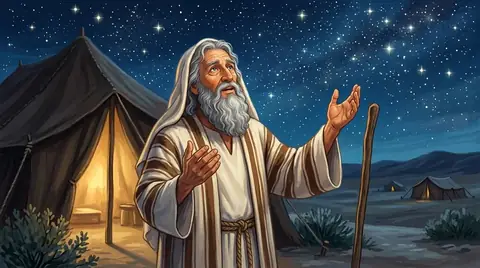 PersonAbrahamThe man God called out of Ur to a land he had never seen, promising him a people and a blessing for the whole world. He…
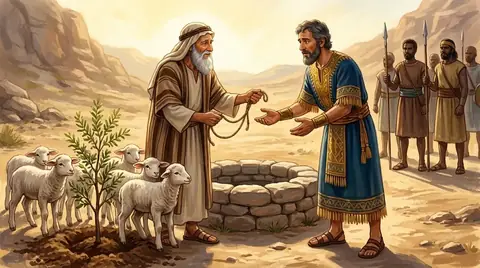 PersonAbimelechThe name of the kings of Gerar who dealt with Abraham and Isaac over their wives, and of Gideon's ruthless son who…Place · TownBeershebaThe well where Abraham swore a treaty, and the home of all three patriarchs. As the last town before the desert, "from…
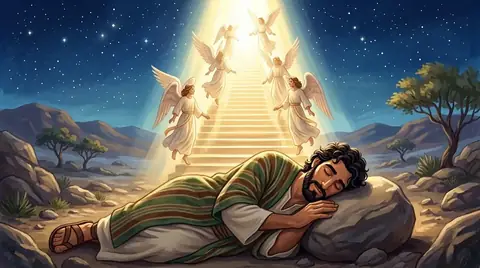 PersonJacobIsaac's younger twin son, who won his brother's birthright and blessing by cunning, was changed by God, and was renamed…
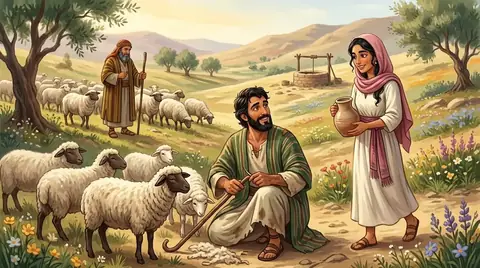 PersonLabanRebekah's brother in Haran, the father of Leah and Rachel. He took Jacob in, tricked him into marrying both daughters…
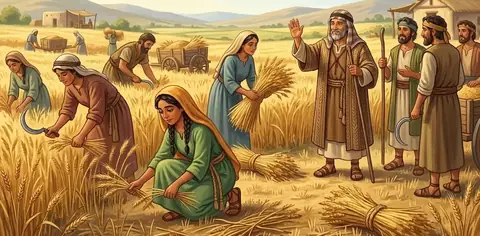 PersonBoazA wealthy farmer of Bethlehem who married Ruth, the Moabite widow, as her kinsman-redeemer. Their great-grandson was…
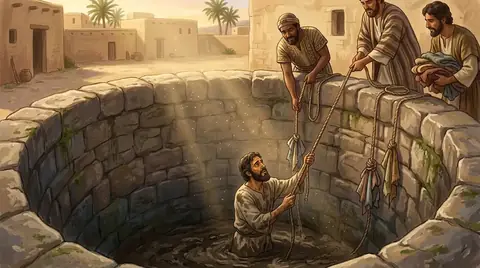 PersonJeremiahThe prophet who warned Judah for forty years that Babylon was coming, and wept as it came. He was beaten, put in the…
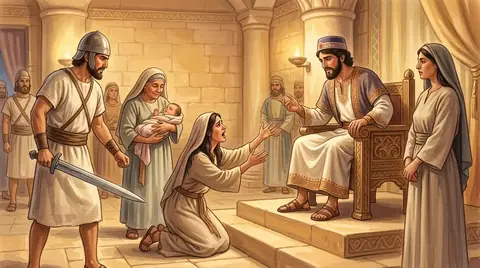 Person · KingSolomonDavid's son and Israel's third king, who asked God for wisdom and received riches and fame as well. He built the temple…
Written for this app in its own words, from the Bible, with the facts checked against Bible dictionaries and encyclopedias: Easton's, Smith's, Fausset's, ISBE, Holman, the New Bible Dictionary, Vine's and the Thompson Chain topics.
