
Teaching
Complicity
also called Being an accomplice
Sharing in someone else's sin by helping, approving or standing by. Pilate handed Jesus over though he found no fault in him, and Saul of Tarsus kept the clothes of those who stoned Stephen.
Sin is not only what we do with our own hands. "Whoso is partner with a thief hateth his own soul" (Proverbs 29:24), and God rebukes the one who, seeing a thief, "consentedst with him" (Psalms 50:18). Paul says that those who do evil, and those who take pleasure in others who do it, are alike guilty (Romans 1:32), and John warns that whoever welcomes a false teacher "is partaker of his evil deeds" (2 John 1:10–11).
The Bible gives sad examples. The daughter of Herodias, prompted by her mother, asked the king to give her John the Baptist's head on a dish (Mark 6:24–25). Pilate washed his hands and declared himself innocent, yet he gave Jesus to be crucified (Matthew 27:24–26). The young Saul did not throw a stone, but the witnesses laid their clothes at his feet, and he consented to Stephen's death (Acts 7:58; Acts 8:1). Later he confessed it with sorrow (Acts 22:20), and found mercy.
Key verses
- Proverbs 29:24
Whoso is partner with a thief hateth his own soul: he heareth cursing, and bewrayeth it not.
- Romans 1:32
Who knowing the judgment of God, that they which commit such things are worthy of death, not only do the same, but have pleasure in them that do them.
- 2 John 1:10–11
If there come any unto you, and bring not this doctrine, receive him not into your house, neither bid him God speed: For he that biddeth him God speed is partaker of his evil deeds.
- Matthew 27:24–26
When Pilate saw that he could prevail nothing, but that rather a tumult was made, he took water, and washed his hands before the multitude, saying, I am innocent of the blood of this just person: see ye to it. Then answered all the people, and said, His blood be on us, and on our children. Then released he Barabbas unto them: and when he had scourged Jesus, he delivered him to be crucified.
- Acts 22:20
And when the blood of thy martyr Stephen was shed, I also was standing by, and consenting unto his death, and kept the raiment of them that slew him.
Read next
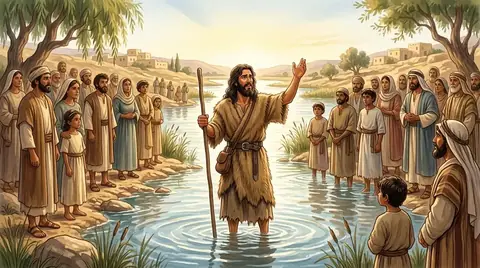 PersonJohn the BaptistThe prophet God sent to prepare the way for Jesus. He called Israel to repent, baptized in the Jordan, pointed to Jesus…
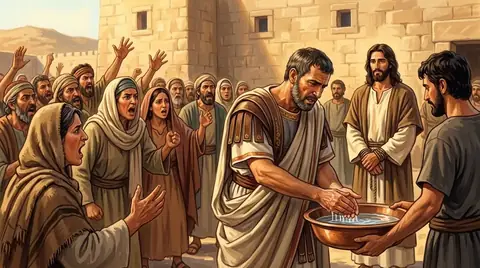 PersonPilateThe Roman governor of Judea who tried Jesus. He said three times that he found no fault in him, yet handed him over to…
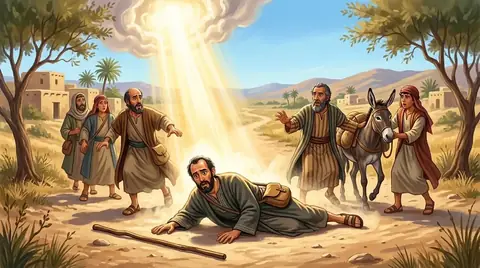 PersonPaulA Pharisee who hated the church until the risen Jesus met him on the road to Damascus. He became the apostle to the…
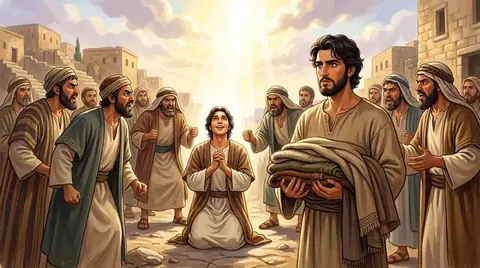 PersonStephenOne of the seven men chosen to care for the widows of the Jerusalem church. Full of faith and the Holy Spirit, he…
Written for this app in its own words, from the Bible, with the facts checked against Bible dictionaries and encyclopedias: Easton's, Smith's, Fausset's, ISBE, Holman, the New Bible Dictionary, Vine's and the Thompson Chain topics.
