
Teaching
Chiding
Scolding or rebuking someone. The Bible records many sharp words, some just and some not, and shows Jesus gently but plainly rebuking his disciples for their little faith.
To chide is to scold. Some chiding in the Bible is just: Pharaoh and Abimelech rebuked Abraham and Isaac for passing their wives off as sisters (Genesis 12:18–19; Genesis 26:9–10), and Reuben reminded his brothers that he had warned them not to harm Joseph (Genesis 42:22). Some is sinful: at Massah the people chided Moses and tested the LORD (Exodus 17:2–7). Jacob and Laban chided each other over years of wrongs (Genesis 31:36).
Jesus chided his disciples for their fear in the storm, "O ye of little faith" (Matthew 8:26), for slowness to understand (Mark 7:18; Luke 24:25), for sleeping in Gethsemane (Matthew 26:40), and for turning away the children (Mark 10:14). Yet of God himself the psalmist says, "He will not always chide: neither will he keep his anger for ever" (Psalms 103:9).
Key verses
- Exodus 17:2
Wherefore the people did chide with Moses, and said, Give us water that we may drink. And Moses said unto them, Why chide ye with me? wherefore do ye tempt the Lord?
- Psalms 103:9
He will not always chide: neither will he keep his anger for ever.
- Matthew 8:26
And he saith unto them, Why are ye fearful, O ye of little faith? Then he arose, and rebuked the winds and the sea; and there was a great calm.
- Mark 10:14
But when Jesus saw it, he was much displeased, and said unto them, Suffer the little children to come unto me, and forbid them not: for of such is the kingdom of God.
- Luke 24:25
Then he said unto them, O fools, and slow of heart to believe all that the prophets have spoken:
Read next
 PersonAbrahamThe man God called out of Ur to a land he had never seen, promising him a people and a blessing for the whole world. He…
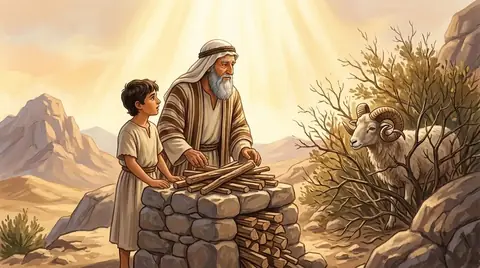 PersonIsaacThe son God promised to Abraham and Sarah when they were far too old for children, offered on Mount Moriah and spared.…
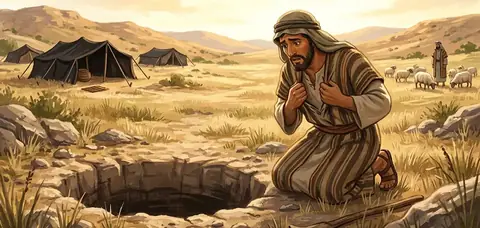 Person · TribeReubenJacob's firstborn, who lost the rights of the eldest by sleeping with his father's concubine. He tried to save Joseph…
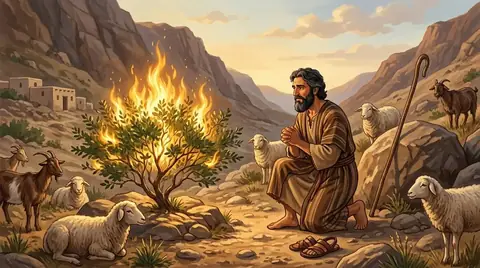 PersonMosesThe man God used to bring Israel out of Egypt, give them his Law at Sinai, and lead them for forty years in the…
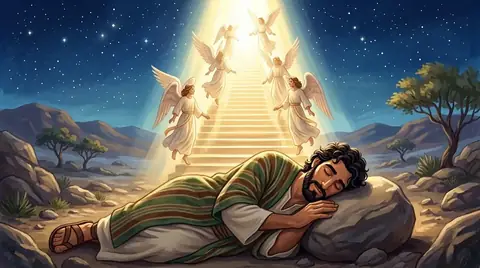 PersonJacobIsaac's younger twin son, who won his brother's birthright and blessing by cunning, was changed by God, and was renamed…
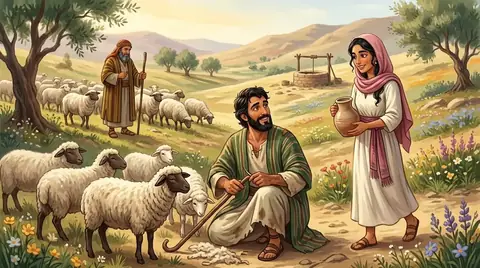 PersonLabanRebekah's brother in Haran, the father of Leah and Rachel. He took Jacob in, tricked him into marrying both daughters…
Written for this app in its own words, from the Bible, with the facts checked against Bible dictionaries and encyclopedias: Easton's, Smith's, Fausset's, ISBE, Holman, the New Bible Dictionary, Vine's and the Thompson Chain topics.
