
Plant
Chestnut tree
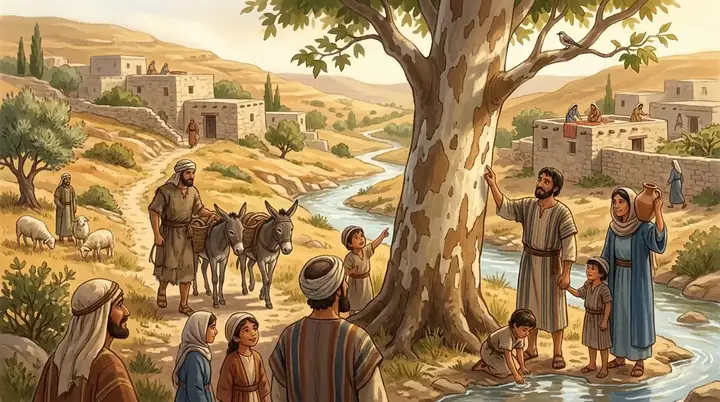
Probably the oriental plane tree
A tall, handsome tree named twice in the Bible: Jacob peeled its rods at Laban's watering troughs, and Ezekiel used it to picture the greatness of Assyria. It was most likely the plane tree, not the true chestnut.
- Where
- Genesis 30:37; Ezekiel 31:8
- Hebrew
- armon, "bare", because the tree sheds its outer bark each year
- Probably
- The oriental plane, a broad shade tree that grows by streams
In the Bible
Jacob took fresh-cut rods of poplar, hazel and chestnut, peeled strips of bark from them to show the white wood, and set them in front of the flocks at the watering troughs (Genesis 30:37–39). His trick is remembered more than the trees. Ezekiel later described Assyria as a cedar so grand that no chestnut tree in the garden of God had boughs like its boughs (Ezekiel 31:8); even the finest trees fell short of it, and still it was cut down.
What tree it was
The sweet chestnut does not grow wild in the land of Israel, and most take the Hebrew to mean the oriental plane tree, which the Revised Version prints. The plane is a great spreading tree that loves water, and it peels its outer bark every year in patches, leaving the trunk smooth and bare; the Hebrew name seems to mean just that. The exact tree isn't certain.
Key verses
- Genesis 30:37
And Jacob took him rods of green poplar, and of the hazel and chesnut tree; and pilled white strakes in them, and made the white appear which was in the rods.
- Ezekiel 31:8
The cedars in the garden of God could not hide him: the fir trees were not like his boughs, and the chesnut trees were not like his branches; nor any tree in the garden of God was like unto him in his beauty.
Read next
 PersonJacobIsaac's younger twin son, who won his brother's birthright and blessing by cunning, was changed by God, and was renamed…
 PersonEzekielA priest and prophet taken to Babylon with the exiles from Judah. By the river Chebar he saw visions of God's glory and…
 Place · EmpireAssyriaThe land and empire on the upper Tigris whose capital was Nineveh. Assyria crushed the northern kingdom of Israel in…
Written for this app in its own words, from the Bible, with the facts checked against Bible dictionaries and encyclopedias: Easton's, Smith's, Fausset's, ISBE, Holman, the New Bible Dictionary, Vine's and the Thompson Chain topics.
