
Thing · Worship
Caldron
A large cooking pot. Caldrons were used to boil the sacrificial meat at the tabernacle and the temple, and the bronze ones were carried off to Babylon. Ezekiel turned the boast "this city is the caldron, and we be the flesh" against Jerusalem's leaders.
- At the tabernacle
- 1 Samuel 2:13–14
- At the temple
- 2 Chronicles 35:13; Jeremiah 52:18–19
- Figure
- Ezekiel 11:3–11; Micah 3:3
- Compare
- Boiling Pot, Fleshhook
How it was used
The peace offerings were shared: part was burned, part went to the priest, and the worshipper's family ate the rest. The meat was boiled in pots and caldrons. At Shiloh, Eli's sons sent a servant with a three-pronged fork to plunge into "the pan, or kettle, or caldron, or pot", and took whatever it brought up, even before the fat was burned to God (1 Samuel 2:13–17). At Josiah's great Passover, the holy offerings were boiled in pots, caldrons and pans and shared out quickly (2 Chronicles 35:13). When Jerusalem fell, the Babylonians took the bronze caldrons with the other temple vessels (Jeremiah 52:18).
As a picture
The leaders left in Jerusalem after the first exiles were taken said, "this city is the caldron, and we be the flesh": they were the choice meat, safe inside the walls. God told Ezekiel that only the innocent they had killed were the flesh; the leaders would be dragged out and judged at the border of Israel (Ezekiel 11:3–11). Micah pictured rulers who chopped up God's people "as flesh within the caldron" (Micah 3:3).
Key verses
- 1 Samuel 2:14
And he struck it into the pan, or kettle, or caldron, or pot; all that the fleshhook brought up the priest took for himself. So they did in Shiloh unto all the Israelites that came thither.
- 2 Chronicles 35:13
And they roasted the passover with fire according to the ordinance: but the other holy offerings sod they in pots, and in caldrons, and in pans, and divided them speedily among all the people.
- Jeremiah 52:18
The caldrons also, and the shovels, and the snuffers, and the bowls, and the spoons, and all the vessels of brass wherewith they ministered, took they away.
- Ezekiel 11:3
Which say, It is not near; let us build houses: this city is the caldron, and we be the flesh.
- Ezekiel 11:7
Therefore thus saith the Lord God; Your slain whom ye have laid in the midst of it, they are the flesh, and this city is the caldron: but I will bring you forth out of the midst of it.
Read next
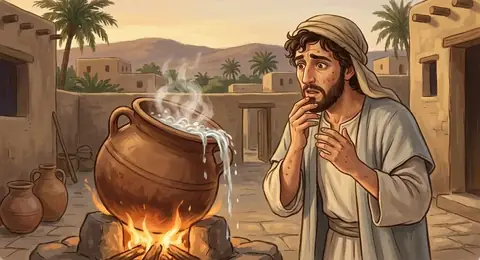 SymbolBoiling PotAn acted parable in Ezekiel. On the day Babylon began its siege of Jerusalem, God told Ezekiel to set a pot of meat…Thing · Everyday lifeHookSeveral things in the Bible: the gold hooks that hung the tabernacle curtains, the fisherman's hook, the three-pronged…
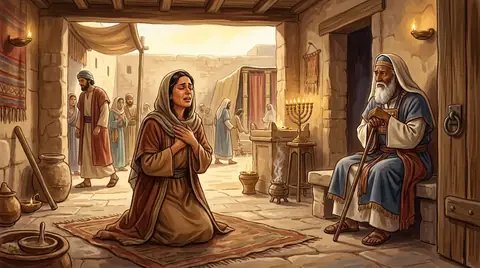 Place · TownShilohThe town in the hills of Ephraim where the tabernacle stood for over three hundred years, from Joshua to Samuel. Hannah…
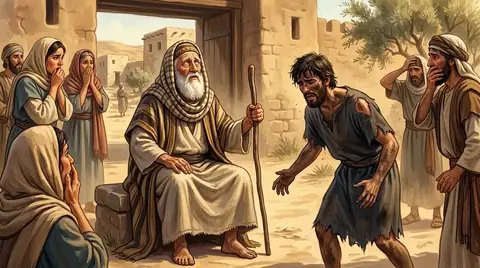 PersonEliThe old high priest at Shiloh who raised the boy Samuel. A kind man, he failed to restrain his wicked sons, and died…
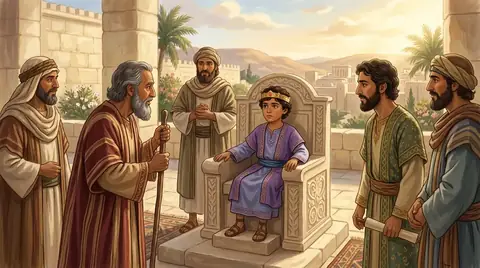 PersonJosiahThe boy king of Judah who turned the nation back to God. When the lost Book of the Law was found in the temple, he tore…
 PersonEzekielA priest and prophet taken to Babylon with the exiles from Judah. By the river Chebar he saw visions of God's glory and…PersonMicahA prophet of Judah in the days of Isaiah, from the country town of Moresheth, who denounced injustice and foretold that…
Written for this app in its own words, from the Bible, with the facts checked against Bible dictionaries and encyclopedias: Easton's, Smith's, Fausset's, ISBE, Holman, the New Bible Dictionary, Vine's and the Thompson Chain topics.
