
Place · Word
Brook
Throughout the Old Testament · Hebrew nachal, a stream or its valley
A stream, often one that runs only after the winter rains and dries up in summer, and also the steep valley it runs in. Many of the Bible's "brooks" are named landmarks, such as Kidron, Cherith and Eshcol.
- Hebrew
- Nachal, a torrent or its bed (a wadi)
- Named brooks
- Kidron, Cherith, Eshcol, Arnon, Jabbok, the brook of Egypt
What it was
In the Bible lands most streams are not like the rivers of wetter countries. A brook might rush full and muddy after the winter rains, then shrink to a trickle or vanish in summer, leaving a dry, stony valley. The same Hebrew word stands for both the stream and its valley. The spies cut their famous bunch of grapes at the brook of Eshcol (Numbers 13:23), and Elijah hid by the brook Cherith and drank from it until it dried up (1 Kings 17:3–7).
What it meant
Because brooks could fail, Job compared friends who let him down to a stream that disappears when it is most needed (Job 6:15). But the promised land was "a land of brooks of water" (Deuteronomy 8:7), a sign of God's goodness. The thirsty soul longs for God "as the hart panteth after the water brooks" (Psalms 42:1), and the King in Psalm 110 "shall drink of the brook in the way" and be refreshed for victory (Psalms 110:7).
Key verses
- Numbers 13:23
And they came unto the brook of Eshcol, and cut down from thence a branch with one cluster of grapes, and they bare it between two upon a staff; and they brought of the pomegranates, and of the figs.
- 1 Kings 17:3
Get thee hence, and turn thee eastward, and hide thyself by the brook Cherith, that is before Jordan.
- Job 6:15
My brethren have dealt deceitfully as a brook, and as the stream of brooks they pass away;
- Deuteronomy 8:7
For the Lord thy God bringeth thee into a good land, a land of brooks of water, of fountains and depths that spring out of valleys and hills;
- Psalms 42:1
To the chief Musician, Maschil, for the sons of Korah. As the hart panteth after the water brooks, so panteth my soul after thee, O God.
Read next
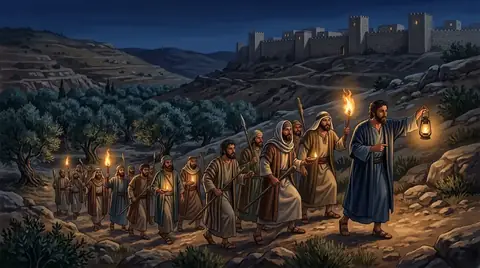 Place · ValleyKidronThe deep valley on the east side of Jerusalem, with a stream that runs only in winter. David crossed it weeping as he…
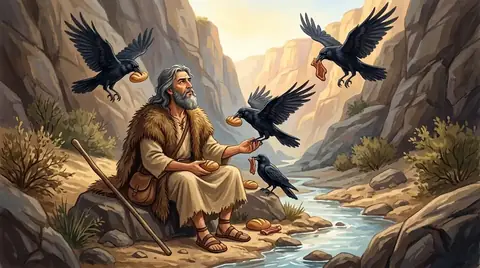 PlaceCherithThe brook where Elijah hid at the start of the long drought. God fed him there by ravens, morning and evening, until…
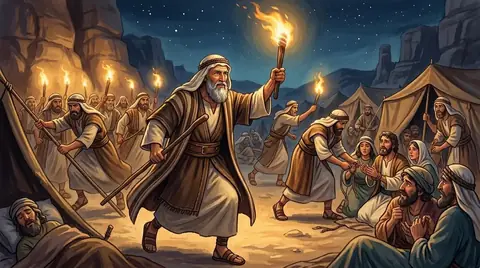 PersonEshcolAn Amorite near Hebron, brother of Mamre and Aner. The three were Abram's allies and went with him to rescue Lot from…Place · RiverArnonA river in a deep gorge east of the Dead Sea. It was the border between Moab and the Amorites, and after Israel beat…
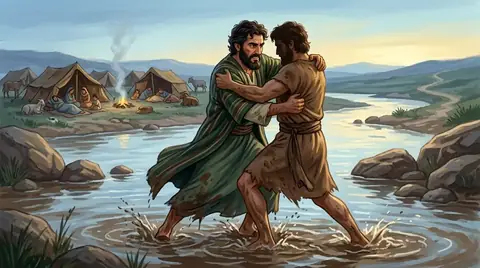 Place · RiverJabbokA river in Gilead that flows west into the Jordan. Jacob wrestled with God on its bank, and it later marked the border…
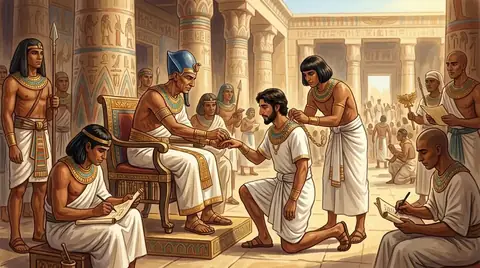 Place · NationEgyptThe great kingdom of the Nile, where Israel grew from a family into a nation and was then enslaved. The Exodus from…
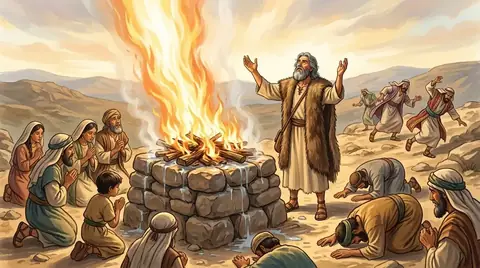 PersonElijahThe fiery prophet who stood alone against King Ahab and the prophets of Baal, called down fire on Mount Carmel, and was…
Written for this app in its own words, from the Bible, with the facts checked against Bible dictionaries and encyclopedias: Easton's, Smith's, Fausset's, ISBE, Holman, the New Bible Dictionary, Vine's and the Thompson Chain topics.
