
Nature
Botany
Also flowers, plants
The plants of the Bible, over a hundred kinds, from cedar and olive to hyssop and mustard. They were made by God, each "after his kind", and Jesus used them often to teach: the lilies, the fig tree, the mustard seed, the vine.
- Created
- Genesis 1:11–12
- Lessons
- Matthew 6:28–29; Luke 6:43–44; 1 Corinthians 15:36–38; Galatians 6:7
- Some plants
- Cedar, Olive, Fig, Vine, Hyssop, Mustard, Lily, Wheat, Barley, Flax
Made by God
On the third day God said, "Let the earth bring forth grass, the herb yielding seed, and the fruit tree yielding fruit after his kind", and saw that it was good (Genesis 1:11–12). The Bible lands, from the snows of Lebanon to the Jordan valley and the desert, hold a great variety of plants, and Scripture names many of them: trees for timber and fruit, grains, herbs and spices for food and incense, and wild flowers and thorns.
Lessons from plants
Jesus taught from the fields around him. "Consider the lilies of the field, how they grow": God clothes them more finely than Solomon, so he will surely care for us (Matthew 6:28–30). "Every tree is known by his own fruit", for figs do not grow on thorns (Luke 6:44). Seeds grow true to kind, so "whatsoever a man soweth, that shall he also reap" (Galatians 6:7). A seed must die to become a plant, a picture of the resurrection body (1 Corinthians 15:36–38). The mustard seed, the vine and its branches, the wheat and tares all carried his message. See the separate articles on each plant.
Key verses
- Genesis 1:11–12
And God said, Let the earth bring forth grass, the herb yielding seed, and the fruit tree yielding fruit after his kind, whose seed is in itself, upon the earth: and it was so. And the earth brought forth grass, and herb yielding seed after his kind, and the tree yielding fruit, whose seed was in itself, after his kind: and God saw that it was good.
- Matthew 6:28–29
And why take ye thought for raiment? Consider the lilies of the field, how they grow; they toil not, neither do they spin: And yet I say unto you, That even Solomon in all his glory was not arrayed like one of these.
- Luke 6:44
For every tree is known by his own fruit. For of thorns men do not gather figs, nor of a bramble bush gather they grapes.
- 1 Corinthians 15:37–38
And that which thou sowest, thou sowest not that body that shall be, but bare grain, it may chance of wheat, or of some other grain: But God giveth it a body as it hath pleased him, and to every seed his own body.
- Galatians 6:7
Be not deceived; God is not mocked: for whatsoever a man soweth, that shall he also reap.
Read next
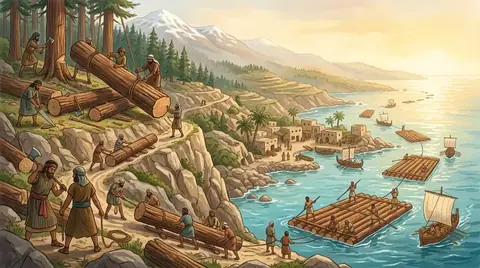 Plant · SymbolThe cedarThe great tree of Lebanon, tall, fragrant and long-lasting, whose timber built Solomon's temple and palace. In the…
 PlantOliveThe fruit of the olive tree, picked by beating the branches and crushed for its oil, which gave Israel its light, its…
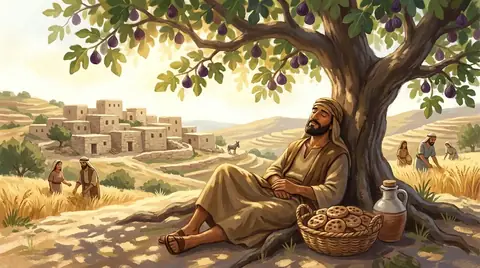 Plant · FoodFigA sweet fruit from a broad-leaved tree that grows all over the Holy Land, eaten fresh or pressed into cakes. Adam and…
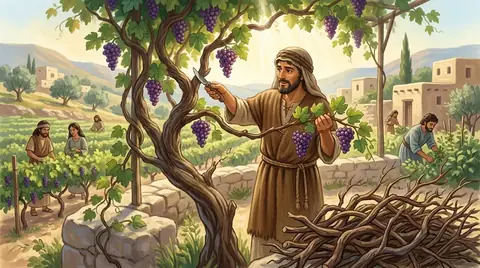 Symbol · PlantThe vineThe grapevine was Israel's most prized crop, and in the Bible it stands for God's people, planted and tended by him.…
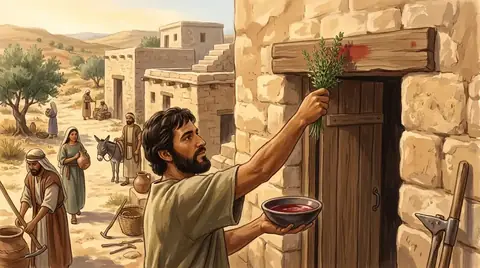 Plant · SymbolHyssopA small bushy plant used as a brush to sprinkle blood or water when something was being made clean, and to paint the…
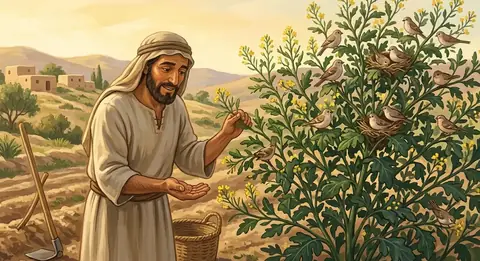 PlantMustardA garden plant with tiny seeds that grows tall enough for birds to perch in. Jesus likened the kingdom of heaven, and…Plant · FlowerLilyA general name in the Bible for bright flowers of the field. Lily shapes crowned the temple's pillars and rimmed its…
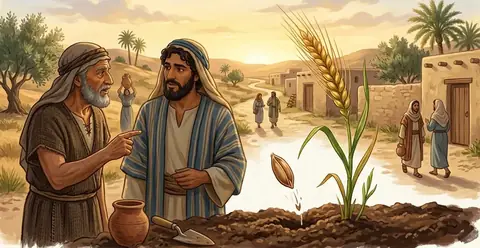 Plant · FoodWheatThe main bread grain of Bible lands, sown in autumn and reaped in early summer. Its harvest, its threshing and its…
Written for this app in its own words, from the Bible, with the facts checked against Bible dictionaries and encyclopedias: Easton's, Smith's, Fausset's, ISBE, Holman, the New Bible Dictionary, Vine's and the Thompson Chain topics.
