
Plant · Flower
Lily
A general name in the Bible for bright flowers of the field. Lily shapes crowned the temple's pillars and rimmed its great basin, and Jesus used the lilies to teach trust in God's care.
- Hebrew
- Shushan, from a word for whiteness
- Where
- 1 Kings 7:19–26; Song of Songs 2:1–2; Hosea 14:5; Matthew 6:28; Luke 12:27
What it was
The Hebrew shushan (the name Susanna comes from it) was used loosely for a range of showy flowers: the tulip, iris, anemone and others that fill the fields in spring. Jesus' "lilies of the field" in Galilee were probably the scarlet anemones that cover the hills there, though some think of a red wild lily. Which flower is meant in each place isn't certain; the point is always the same, something lovely and short-lived.
In the temple
Solomon's two great bronze pillars, Jachin and Boaz, were topped with "lily work", and the huge basin called the molten sea had a rim shaped like the cup of a lily flower (1 Kings 7:19–26; 2 Chronicles 4:5). God's house was decorated with the beauty of his creation. Two psalms are headed "upon Shoshannim", "on lilies", perhaps a tune name (Psalms 45; Psalms 69).
In the Song of Solomon
The bride is "the lily of the valleys" and a lily among thorns (Song of Songs 2:1–2); her beloved pastures his flock among the lilies (Song of Songs 6:3). Hosea promises that Israel, forgiven, will blossom like the lily (Hosea 14:5).
The lesson Jesus drew
"Consider the lilies of the field, how they grow; they toil not, neither do they spin" (Matthew 6:28). God dresses them better than a king, though they last only a few days. So why should his children fret about clothes? See Lilies and the rose of Sharon.
Key verses
- 1 Kings 7:19
And the chapiters that were upon the top of the pillars were of lily work in the porch, four cubits.
- Song of Songs 2:1–2
I am the rose of Sharon, and the lily of the valleys. As the lily among thorns, so is my love among the daughters.
- Hosea 14:5
I will be as the dew unto Israel: he shall grow as the lily, and cast forth his roots as Lebanon.
- Matthew 6:28–30
And why take ye thought for raiment? Consider the lilies of the field, how they grow; they toil not, neither do they spin: And yet I say unto you, That even Solomon in all his glory was not arrayed like one of these. Wherefore, if God so clothe the grass of the field, which to day is, and to morrow is cast into the oven, shall he not much more clothe you, O ye of little faith?
Read next
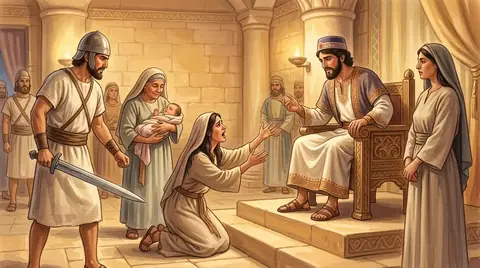 Person · KingSolomonDavid's son and Israel's third king, who asked God for wisdom and received riches and fame as well. He built the temple…
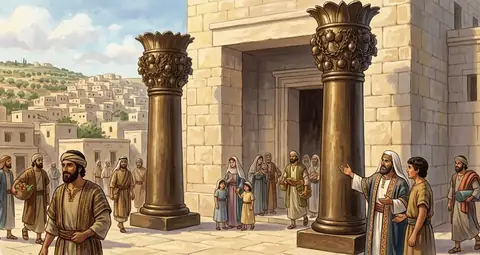 Thing · TempleJachin and BoazThe two huge bronze pillars that stood at the entrance of Solomon's temple, each with a name: Jachin, "he will…
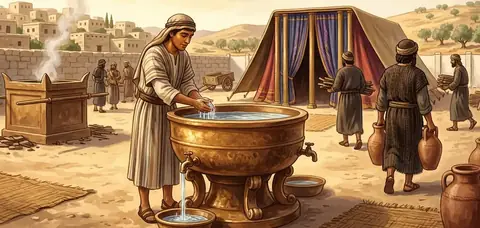 Thing · WorshipLaverThe large bronze basin that stood in the tabernacle court at which the priests washed hands and feet before they served…
 Person · ProphetHoseaThe prophet God sent to Israel, the northern kingdom, in its last years. God told him to marry Gomer, who was…
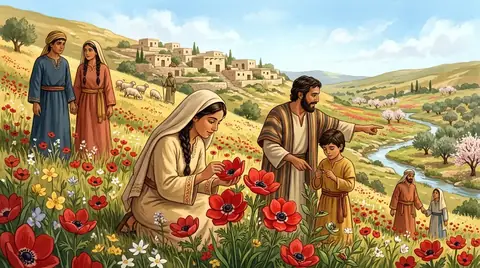 Plant · Wild flowersLilies and the rose of SharonThe bright wild flowers that carpet the hills of the land each spring and fade within weeks. Jesus pointed to them to…
Written for this app in its own words, from the Bible, with the facts checked against Bible dictionaries and encyclopedias: Easton's, Smith's, Fausset's, ISBE, Holman, the New Bible Dictionary, Vine's and the Thompson Chain topics.
