
Plant
Bay tree
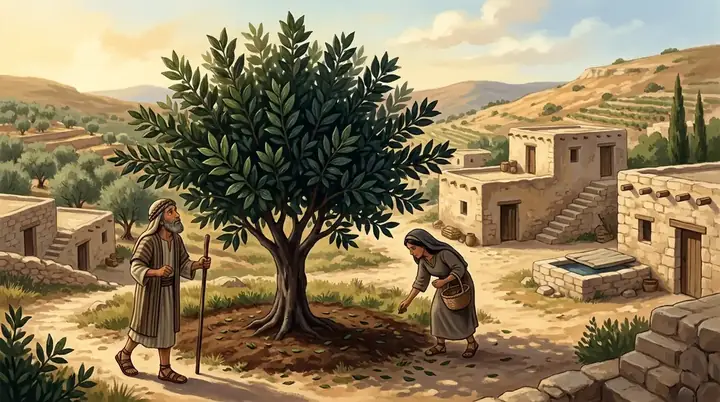
Named once in the King James Bible, where the wicked flourish "like a green bay tree". The Hebrew means a tree growing in its own soil, spreading and untouched.
- Hebrew
- ezrach, "native-born", a tree never transplanted
- Maybe
- The evergreen bay laurel, which grows wild in the hills of Israel
In the Bible
In Psalm 37, David says he once saw a wicked man in great power, "spreading himself like a green bay tree"; then he passed by, and the man was gone and could not be found (Psalms 37:35–36). The Hebrew word simply means a tree in its native soil, one that has never been moved and so grows strong and leafy. If a particular tree is meant, it may be the bay laurel, a glossy evergreen common in the land.
The point of the picture is that a proud, rooted, thriving life without God is shorter than it looks. The psalm urges the reader not to fret over it but to trust the LORD, who keeps the meek.
Key verses
- Psalms 37:35–36
I have seen the wicked in great power, and spreading himself like a green bay tree. Yet he passed away, and, lo, he was not: yea, I sought him, but he could not be found.
- Psalms 37:1–3
A Psalm of David. Fret not thyself because of evildoers, neither be thou envious against the workers of iniquity. For they shall soon be cut down like the grass, and wither as the green herb. Trust in the Lord, and do good; so shalt thou dwell in the land, and verily thou shalt be fed.
Read next
Written for this app in its own words, from the Bible, with the facts checked against Bible dictionaries and encyclopedias: Easton's, Smith's, Fausset's, ISBE, Holman, the New Bible Dictionary, Vine's and the Thompson Chain topics.
