
Custom
Barefoot
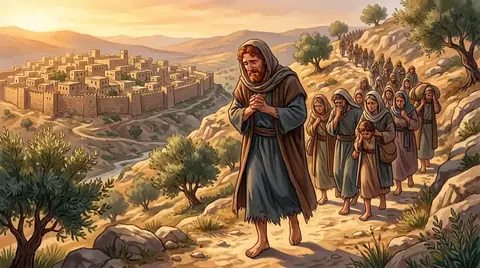
Going without sandals. It was a sign of mourning, shame or deep distress, as when David fled up the Mount of Olives weeping and barefoot; it could also show reverence, as when Moses took off his sandals on holy ground.
- Mourning
- 2 Samuel 15:30; Ezekiel 24:17
- A sign
- Isaiah walked barefoot three years (Isaiah 20:2–4)
- Reverence
- Exodus 3:5; Joshua 5:15
- Compare
- Shoes and sandals
What it meant
Everyone who could afford sandals wore them, so going barefoot was noticed. When Absalom rebelled, David climbed the Mount of Olives with his head covered and his feet bare, weeping as he went (2 Samuel 15:30). When Ezekiel's wife died, God told him not to mourn in the usual way but to keep his shoes on, as a sign to the people (Ezekiel 24:17).
At God's command Isaiah went about stripped and barefoot for three years, a picture of how Egypt and Ethiopia would be led away as prisoners by Assyria (Isaiah 20:2–4).
Holy ground
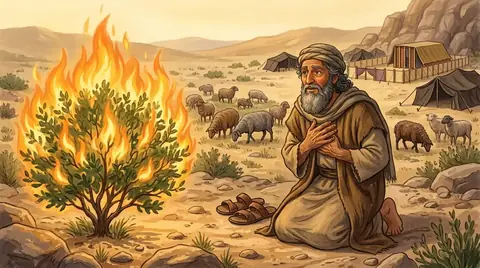
Taking off the shoes could also be an act of reverence. At the burning bush God told Moses, "put off thy shoes from off thy feet, for the place whereon thou standest is holy ground" (Exodus 3:5), and the captain of the LORD's host said the same to Joshua (Joshua 5:15).
Key verses
- 2 Samuel 15:30
And David went up by the ascent of mount Olivet, and wept as he went up, and had his head covered, and he went barefoot: and all the people that was with him covered every man his head, and they went up, weeping as they went up.
- Isaiah 20:2–3
At the same time spake the Lord by Isaiah the son of Amoz, saying, Go and loose the sackcloth from off thy loins, and put off thy shoe from thy foot. And he did so, walking naked and barefoot. And the Lord said, Like as my servant Isaiah hath walked naked and barefoot three years for a sign and wonder upon Egypt and upon Ethiopia;
- Exodus 3:5
And he said, Draw not nigh hither: put off thy shoes from off thy feet, for the place whereon thou standest is holy ground.
- Joshua 5:15
And the captain of the Lord’s host said unto Joshua, Loose thy shoe from off thy foot; for the place whereon thou standest is holy. And Joshua did so.
Read next
 Custom · Daily lifeShoes and sandalsSandals were taken off on holy ground and in grief, handed over to seal a bargain, and untied by slaves. John the…
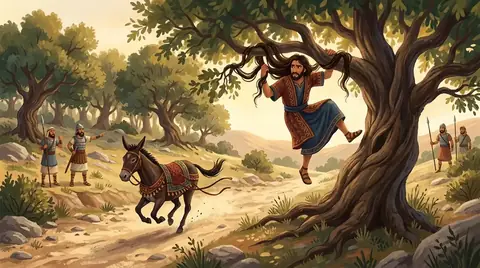 PersonAbsalomDavid's handsome third son, who murdered his brother Amnon, won the hearts of Israel and rose in rebellion against his…
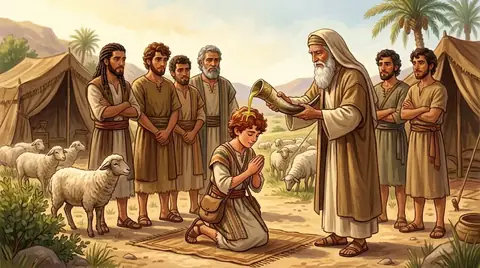 Person · KingDavidThe shepherd boy who killed Goliath and became Israel's greatest king, "a man after God's own heart". He wrote many…
 Place · MountainMount of OlivesThe hill east of Jerusalem where Jesus often prayed, wept over the city, taught about the end, was arrested in…
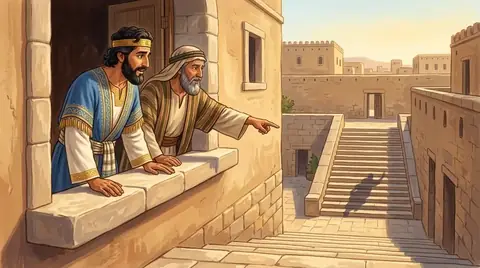 Person · ProphetIsaiahThe prophet of Jerusalem who served four kings, saw the LORD on his throne, and foretold the virgin's son, the…
 PersonMosesThe man God used to bring Israel out of Egypt, give them his Law at Sinai, and lead them for forty years in the…
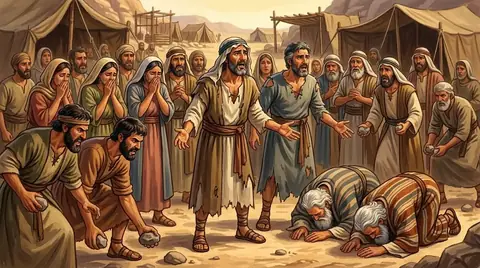 PersonJoshuaMoses' helper who took over from him and led Israel across the Jordan into the Promised Land. He fought the wars of…
Written for this app in its own words, from the Bible, with the facts checked against Bible dictionaries and encyclopedias: Easton's, Smith's, Fausset's, ISBE, Holman, the New Bible Dictionary, Vine's and the Thompson Chain topics.
