
Topic
Banishment
Being forced to leave one's home or country as a punishment. Adam and Eve were driven out of Eden, Cain became a wanderer, the emperor Claudius expelled the Jews from Rome, and John was exiled to Patmos for the word of God.
- In the law
- Ezra 7:26
- Examples
- Adam and Eve (Genesis 3:23–24); Cain (Genesis 4:12–14); Absalom (2 Samuel 14:13–14); the Jews from Rome (Acts 18:2); John (Revelation 1:9)
- Compare
- Exile
In the Bible
The first banishment came after the first sin: God sent Adam and Eve out of the garden and set cherubim to guard the way to the tree of life (Genesis 3:23–24). Cain, after killing his brother, became "a fugitive and a vagabond in the earth" (Genesis 4:12–14). David let Absalom stay away three years after he killed Amnon, until a wise woman reminded him that God doth "devise means, that his banished be not expelled from him" (2 Samuel 14:13–14). The Persian king gave Ezra power to punish lawbreakers with death, banishment, loss of goods or prison (Ezra 7:26).
In the New Testament the emperor Claudius ordered all Jews out of Rome, which brought Aquila and Priscilla to Corinth, where they met Paul (Acts 18:2). John was on the island of Patmos "for the word of God", and there received the book of Revelation (Revelation 1:9).
For us
God turned even banishment to good, and in Christ he has made a way for the banished to come home.
Key verses
- Genesis 3:23–24
Therefore the Lord God sent him forth from the garden of Eden, to till the ground from whence he was taken. So he drove out the man; and he placed at the east of the garden of Eden Cherubims, and a flaming sword which turned every way, to keep the way of the tree of life.
- Genesis 4:14
Behold, thou hast driven me out this day from the face of the earth; and from thy face shall I be hid; and I shall be a fugitive and a vagabond in the earth; and it shall come to pass, that every one that findeth me shall slay me.
- 2 Samuel 14:14
For we must needs die, and are as water spilt on the ground, which cannot be gathered up again; neither doth God respect any person: yet doth he devise means, that his banished be not expelled from him.
- Acts 18:2
And found a certain Jew named Aquila, born in Pontus, lately come from Italy, with his wife Priscilla; (because that Claudius had commanded all Jews to depart from Rome:) and came unto them.
- Revelation 1:9
I John, who also am your brother, and companion in tribulation, and in the kingdom and patience of Jesus Christ, was in the isle that is called Patmos, for the word of God, and for the testimony of Jesus Christ.
Read next
 PersonAdamThe first man, made by God from the dust and given life by his breath. His disobedience in Eden brought sin and death…
 PersonEveThe first woman, made by God from Adam's side to be his wife and partner. Deceived by the serpent, she ate the…
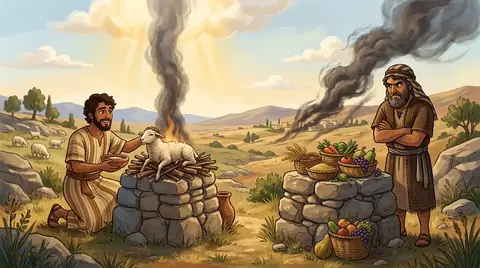
 Group · HeavenCherubim and seraphimWinged beings close to God's throne. Cherubim guard his holiness and carry his glory, and their golden figures covered…PersonCainThe first child born into the world, and the first murderer. Jealous because God accepted his brother Abel's offering…
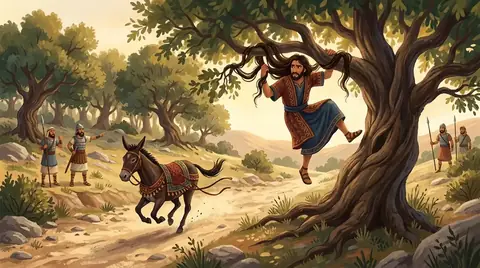 PersonAbsalomDavid's handsome third son, who murdered his brother Amnon, won the hearts of Israel and rose in rebellion against his…
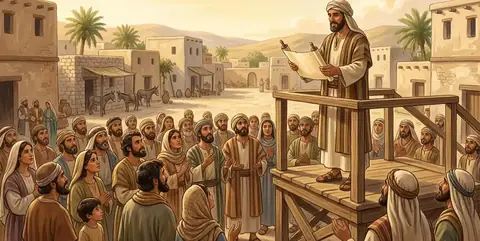 PersonEzraA priest and scribe who led a second group of exiles back from Babylon, taught the people God's law and read it to them…
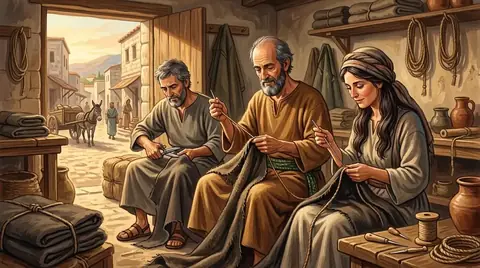 PersonClaudiusThe fourth Roman emperor, who reigned while the gospel spread through the empire. A famine in his reign was foretold by…
Written for this app in its own words, from the Bible, with the facts checked against Bible dictionaries and encyclopedias: Easton's, Smith's, Fausset's, ISBE, Holman, the New Bible Dictionary, Vine's and the Thompson Chain topics.
