
Custom · Nature
Astronomy
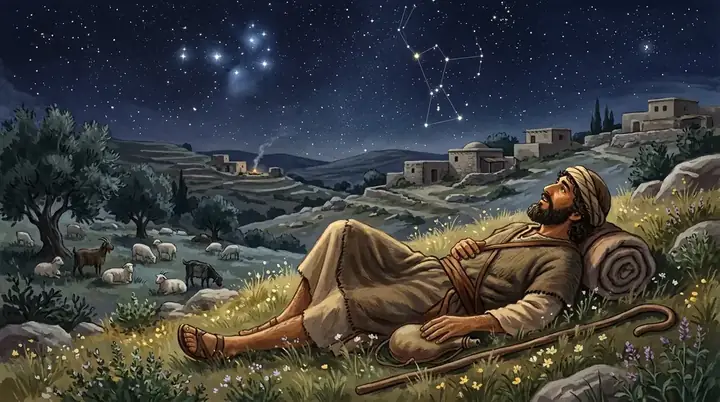
The Bible's writers watched the night sky with wonder. They named the stars' groups, counted months by the moon, and saw in the heavens the handiwork and power of God, never gods to be worshipped.
- Named in the Bible
- The Pleiades, Orion, Arcturus and his sons, Mazzaroth (Job 9:9; Job 38:31–32)
- Used for
- The calendar: months by the new moon, feasts by the seasons (Genesis 1:14)
- Forbidden
- Worshipping the sun, moon and stars (Deuteronomy 4:19)
The sky they saw
Without city lights, the people of the Bible saw a sky blazing with stars every clear night. They knew its patterns well. Job names the Pleiades, Orion and Arcturus (the Great Bear), and God asks him whether he can bind the Pleiades or loose Orion's bands, or bring out "Mazzaroth", the twelve signs, in their season (Job 9:9; Job 38:31–32). Amos points to the maker of the Pleiades and Orion who turns night into day (Amos 5:8). Paul's ship to Rome sailed under the sign of "Castor and Pollux", the twins (Acts 28:11).
Keeping time
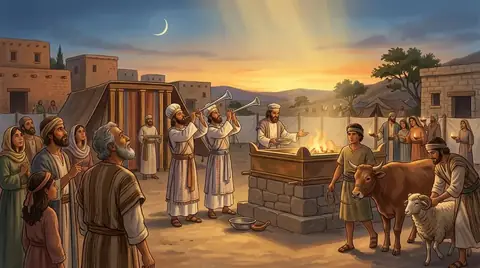
God set the sun, moon and stars "for signs, and for seasons, and for days, and years" (Genesis 1:14). Israel's months began with the new moon, announced by trumpets, and its feasts fell on fixed days of those months. So someone had to watch the sky carefully, and the Passover and the Day of Atonement came round at the right time each year.
What the heavens said
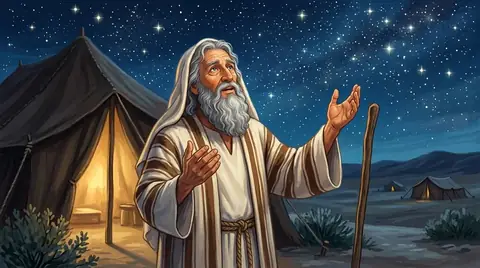
To the Hebrews the stars were not gods, as they were to Israel's neighbours, but God's creatures. He "telleth the number of the stars; he calleth them all by their names" (Psalms 147:4). Isaiah told the exiles to lift up their eyes and see who had created these things and brought out their host by number (Isaiah 40:26). The sky was proof of his faithfulness: as long as the ordinances of sun and moon stood, so would his promise to Israel (Jeremiah 31:35–36). And it humbled the one who looked: "When I consider thy heavens... what is man, that thou art mindful of him?" (Psalms 8:3–4).
A warning
Israel was told never to bow to the host of heaven (Deuteronomy 4:19), and Isaiah mocked Babylon's star-gazers who could not save themselves (Isaiah 47:13). The one time the sky led men to worship rightly was when wise men followed a star to Bethlehem (Matthew 2:2). See also Stars and Moon.
Key verses
- Genesis 1:14
And God said, Let there be lights in the firmament of the heaven to divide the day from the night; and let them be for signs, and for seasons, and for days, and years:
- Job 38:31–32
Canst thou bind the sweet influences of Pleiades, or loose the bands of Orion? Canst thou bring forth Mazzaroth in his season? or canst thou guide Arcturus with his sons?
- Psalms 8:3–4
When I consider thy heavens, the work of thy fingers, the moon and the stars, which thou hast ordained; What is man, that thou art mindful of him? and the son of man, that thou visitest him?
- Psalms 19:1
To the chief Musician, A Psalm of David. The heavens declare the glory of God; and the firmament sheweth his handywork.
- Isaiah 40:26
Lift up your eyes on high, and behold who hath created these things, that bringeth out their host by number: he calleth them all by names by the greatness of his might, for that he is strong in power; not one faileth.
- Amos 5:8
Seek him that maketh the seven stars and Orion, and turneth the shadow of death into the morning, and maketh the day dark with night: that calleth for the waters of the sea, and poureth them out upon the face of the earth: The Lord is his name:
Read next
Written for this app in its own words, from the Bible, with the facts checked against Bible dictionaries and encyclopedias: Easton's, Smith's, Fausset's, ISBE, Holman, the New Bible Dictionary, Vine's and the Thompson Chain topics.
