
Thing · War
Artillery
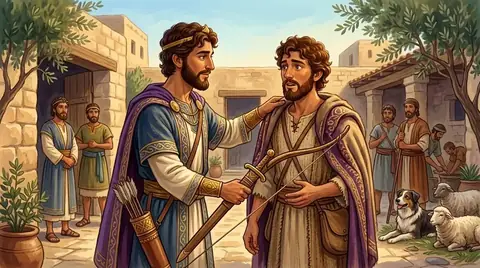
An old English word for weapons, not for cannon. It comes once in the Bible, where Jonathan hands his bow and arrows to his boy after signalling to David.
- Where
- 1 Samuel 20:40 only
- Hebrew
- keli, gear or equipment of any kind
- Means
- Jonathan's bow, arrows and quiver
When the King James Bible was made, "artillery" meant any missile weapons, bows and arrows included; the big guns came later. The word appears once. After Jonathan had shot his arrows into the field as a secret signal to David, he "gave his artillery unto his lad" and sent him back to the city, so that he and David could speak alone and weep together before David fled (1 Samuel 20:35–42).
The Hebrew word is simply "gear" or "vessels", the same word used of the temple vessels and of any tools, so modern Bibles read "weapons". Nothing about the verse is about war; it is about a prince who kept his promise to a friend at the cost of his own throne.
Key verses
- 1 Samuel 20:40
And Jonathan gave his artillery unto his lad, and said unto him, Go, carry them to the city.
- 1 Samuel 20:42
And Jonathan said to David, Go in peace, forasmuch as we have sworn both of us in the name of the Lord, saying, The Lord be between me and thee, and between my seed and thy seed for ever. And he arose and departed: and Jonathan went into the city.
Read next
Written for this app in its own words, from the Bible, with the facts checked against Bible dictionaries and encyclopedias: Easton's, Smith's, Fausset's, ISBE, Holman, the New Bible Dictionary, Vine's and the Thompson Chain topics.
