
Nation
The Arameans (Syrians)
the "Syrians" of older Bibles; their land was Aram
The people north-east of Israel whose capital was Damascus. Abraham's family came from among them, and their kings fought Israel for generations until Assyria swallowed them up.
- Where
- Aram, from Damascus north and east to the Euphrates; Aram-naharaim ("Aram of the two rivers") in the far north
- Known for
- Laban, Ben-hadad, Hazael, Naaman; the siege of Samaria
- Language
- Aramaic, which the Jews spoke in Jesus' day
Who they were
Aram was the son of Shem (Genesis 10:22), and his descendants settled the lands north and east of Israel, from Damascus to the Euphrates. The King James Bible calls them Syrians. They spoke Aramaic, a sister tongue to Hebrew, which later spread through the whole Near East and was the everyday language of Jesus and the disciples.
Israel's own roots were among them. Abraham's family lived at Haran in Aram-naharaim; Rebekah came from there, and Jacob worked twenty years for his Aramean uncle Laban (Genesis 25:20; Genesis 31:20). Every Israelite bringing his firstfruits confessed, "A Syrian ready to perish was my father" (Deuteronomy 26:5).
At war with Israel
Under the kings, Aram became Israel's most stubborn enemy. David beat the Arameans of Damascus and Zobah and put garrisons among them (2 Samuel 8:5–6), but after Solomon's death the kingdom of Damascus grew strong. Ben-hadad besieged Samaria twice and was beaten by Ahab with God's help (1 Kings 20). Ahab died in a later war with him, struck by a stray arrow (1 Kings 22:34–35).
Elisha knew their plans before they made them and led a whole raiding party blind into Samaria, then fed them and sent them home (2 Kings 6:8–23). Their commander Naaman, a leper, was cured when he did what Elisha said and dipped seven times in the Jordan (2 Kings 5). Yet God also used them as a rod: Elisha wept as he told Hazael the harm he would do to Israel, and Hazael took all the land east of the Jordan (2 Kings 8:11–13; 2 Kings 10:32–33). In Isaiah's day Aram joined with Israel against Judah, and the prophet promised King Ahaz that the plan would fail (Isaiah 7:1–9). Within a few years Assyria destroyed Damascus and carried the Arameans away (2 Kings 16:9).
In the New Testament
Jesus reminded Nazareth that of all the lepers in Israel in Elisha's time, only Naaman the Syrian was healed, and the town tried to throw him off a cliff (Luke 4:27–29). Paul met Christ on the road to Damascus, and the first Gentile church grew up at Antioch in Syria.
Key verses
- Deuteronomy 26:5
And thou shalt speak and say before the Lord thy God, A Syrian ready to perish was my father, and he went down into Egypt, and sojourned there with a few, and became there a nation, great, mighty, and populous:
- 1 Kings 20:1
And Ben–hadad the king of Syria gathered all his host together: and there were thirty and two kings with him, and horses, and chariots: and he went up and besieged Samaria, and warred against it.
- 2 Kings 5:1
Now Naaman, captain of the host of the king of Syria, was a great man with his master, and honourable, because by him the Lord had given deliverance unto Syria: he was also a mighty man in valour, but he was a leper.
- 2 Kings 6:16–17
And he answered, Fear not: for they that be with us are more than they that be with them. And Elisha prayed, and said, Lord, I pray thee, open his eyes, that he may see. And the Lord opened the eyes of the young man; and he saw: and, behold, the mountain was full of horses and chariots of fire round about Elisha.
- Isaiah 7:4
And say unto him, Take heed, and be quiet; fear not, neither be fainthearted for the two tails of these smoking firebrands, for the fierce anger of Rezin with Syria, and of the son of Remaliah.
- Luke 4:27
And many lepers were in Israel in the time of Eliseus the prophet; and none of them was cleansed, saving Naaman the Syrian.
On the map
Read next
 PersonLabanRebekah's brother in Haran, the father of Leah and Rachel. He took Jacob in, tricked him into marrying both daughters…PersonBen-hadadThe name of three kings of Syria at Damascus who fought Israel for a century. The second besieged Samaria in Elisha's…Person · KingHazaelA Syrian officer whom God told Elijah to anoint as king. He smothered his master Ben-hadad, seized the throne of…
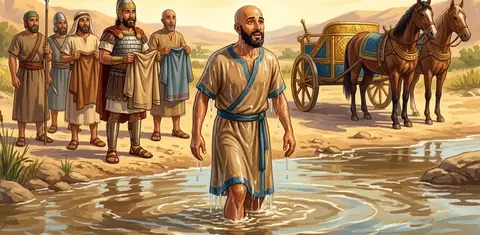 PersonNaamanThe Syrian general who had leprosy and was healed when he humbled himself and washed seven times in the Jordan at…
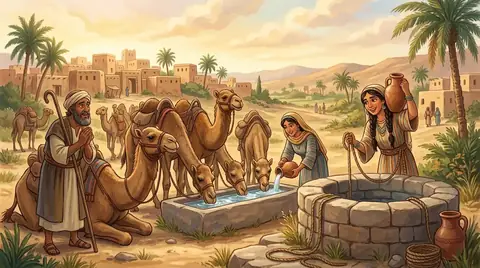 PersonRebekahIsaac's wife, found for him at a well far away in Abraham's homeland. She was told before her twins were born that the…
 Person · KingDavidThe shepherd boy who killed Goliath and became Israel's greatest king, "a man after God's own heart". He wrote many…
 Person · KingAhabThe seventh king of the northern kingdom of Israel, who married Jezebel and led the nation into Baal worship. He…PersonElishaElijah's successor, a farmer's son who asked for a double share of his master's spirit and received it. His long…
Written for this app in its own words, from the Bible, with the facts checked against Bible dictionaries and encyclopedias: Easton's, Smith's, Fausset's, ISBE, Holman, the New Bible Dictionary, Vine's and the Thompson Chain topics.
