
Saying
Whited sepulchres
SEP-ul-kers
Jesus' name for the scribes and Pharisees: tombs painted white, handsome outside but full of dead men's bones. A picture of religion that is all show.
- Where
- Matthew 23:27; Acts 23:3
- Means
- A hypocrite: clean on the outside, corrupt within
The custom
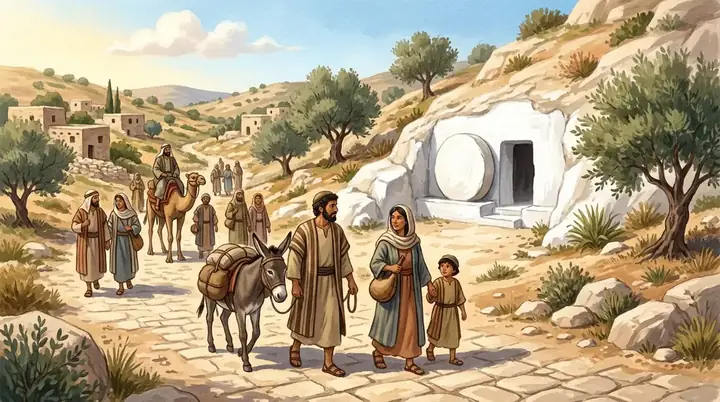
Touching a grave made a Jew unclean for seven days (Numbers 19:16). So before the great feasts, when crowds of pilgrims walked up to Jerusalem, the tombs beside the roads were given a coat of whitewash so that no one would brush against one by mistake. A whitened tomb looked bright and clean. Inside it was what it always was.
What Jesus meant
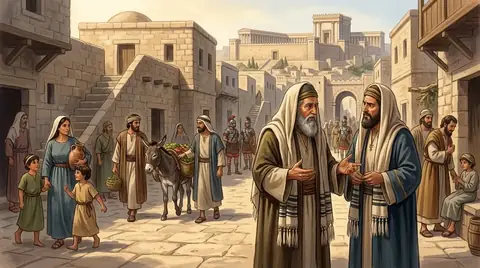
In his last public words to the scribes and Pharisees, Jesus said they were like these tombs: they looked righteous to people, but inside they were "full of hypocrisy and iniquity" (Matthew 23:27–28). The whitewash was not a lie about the tomb; it was a warning. The danger of religious show is that it warns no one, and the outside hides the rot. Paul used a similar phrase when the high priest had him struck: "thou whited wall" (Acts 23:3), a crumbling wall with a fresh coat of plaster.
For us
The question is not how we look to others but what is inside. Jesus told the Pharisees to clean the inside of the cup first, and then the outside would be clean too (Matthew 23:26).
Key verses
- Matthew 23:27
Woe unto you, scribes and Pharisees, hypocrites! for ye are like unto whited sepulchres, which indeed appear beautiful outward, but are within full of dead men’s bones, and of all uncleanness.
- Matthew 23:26
Thou blind Pharisee, cleanse first that which is within the cup and platter, that the outside of them may be clean also.
- Acts 23:3
Then said Paul unto him, God shall smite thee, thou whited wall: for sittest thou to judge me after the law, and commandest me to be smitten contrary to the law?
Read next
Written for this app in its own words, from the Bible, with the facts checked against Bible dictionaries and encyclopedias: Easton's, Smith's, Fausset's, ISBE, Holman, the New Bible Dictionary, Vine's and the Thompson Chain topics.
