
Custom
Week
Seven days: six for work and one for rest. The week goes back to creation, when God worked six days and rested the seventh. Israel's feasts were counted in weeks, and Jesus rose on the first day of the week.
- From creation
- Genesis 2:2–3
- Feast of weeks
- Seven weeks after Passover (Deuteronomy 16:9–10)
- First day
- Jesus rose (Matthew 28:1); the church met (Acts 20:7)
Where it came from
Unlike the day, the month and the year, the week is not set by the sun or moon. It comes from God's own pattern: he made the world in six days and rested on the seventh, and blessed it (Genesis 2:2–3; Exodus 20:11). Weeks are counted already in Noah's day, as he waited seven days between sending out birds (Genesis 8:10–12), and Jacob served a "week" of years for Rachel (Genesis 29:27–28).
In Israel
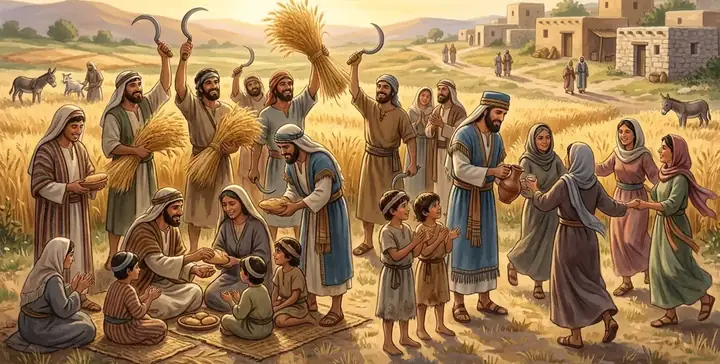
The seventh day was the sabbath. The feast of weeks, later called Pentecost, came seven weeks after the first sheaf of harvest (Deuteronomy 16:9–10). A mother was unclean for a week after the birth of a son (Leviticus 12:2–5). Daniel was told of seventy weeks, weeks of years, until the coming of Messiah the Prince (Daniel 9:24–27).
For us
Jesus rose from the dead "as it began to dawn toward the first day of the week" (Matthew 28:1), and the early church met on that day to break bread (Acts 20:7; 1 Corinthians 16:2). The week is a weekly reminder that we are not machines, and that God's rest is offered to us.
Key verses
- Genesis 2:2–3
And on the seventh day God ended his work which he had made; and he rested on the seventh day from all his work which he had made. And God blessed the seventh day, and sanctified it: because that in it he had rested from all his work which God created and made.
- Exodus 20:11
For in six days the Lord made heaven and earth, the sea, and all that in them is, and rested the seventh day: wherefore the Lord blessed the sabbath day, and hallowed it.
- Deuteronomy 16:9–10
Seven weeks shalt thou number unto thee: begin to number the seven weeks from such time as thou beginnest to put the sickle to the corn. And thou shalt keep the feast of weeks unto the Lord thy God with a tribute of a freewill offering of thine hand, which thou shalt give unto the Lord thy God, according as the Lord thy God hath blessed thee:
- Daniel 9:24–25
Seventy weeks are determined upon thy people and upon thy holy city, to finish the transgression, and to make an end of sins, and to make reconciliation for iniquity, and to bring in everlasting righteousness, and to seal up the vision and prophecy, and to anoint the most Holy. Know therefore and understand, that from the going forth of the commandment to restore and to build Jerusalem unto the Messiah the Prince shall be seven weeks, and threescore and two weeks: the street shall be built again, and the wall, even in troublous times.
- Matthew 28:1
In the end of the sabbath, as it began to dawn toward the first day of the week, came Mary Magdalene and the other Mary to see the sepulchre.
Read next
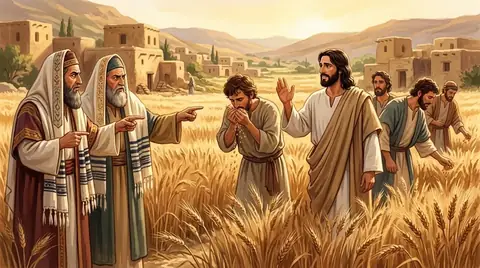 Custom · Day of restThe SabbathThe seventh day of the week, kept holy for rest and worship because God rested after creation. It was the sign of God's…
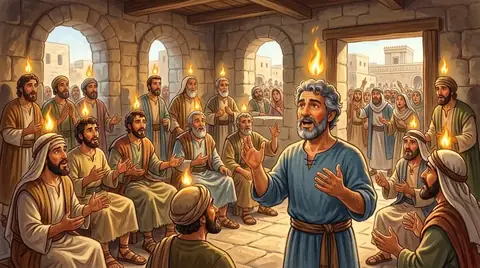 FeastPentecost (the Feast of Weeks)The harvest feast kept fifty days after Passover, when two loaves baked from the new wheat were offered to God. On the…
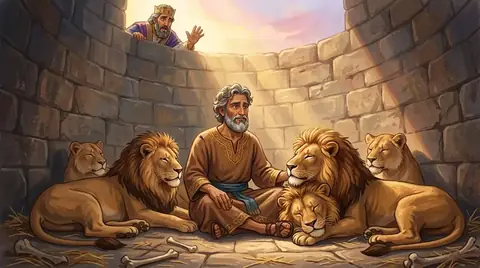 Person · ProphetDanielA young noble of Judah carried off to Babylon, who served four kings with wisdom and never bent his faith. God gave him…
Written for this app in its own words, from the Bible, with the facts checked against Bible dictionaries and encyclopedias: Easton's, Smith's, Fausset's, ISBE, Holman, the New Bible Dictionary, Vine's and the Thompson Chain topics.
