
Custom · Daily life
Weddings
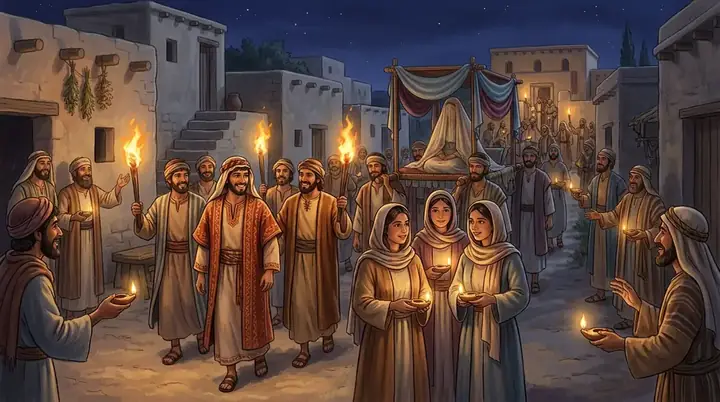
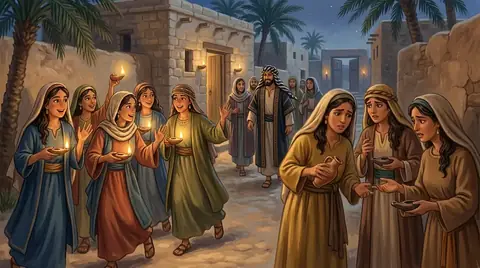
A wedding in Bible times meant the bridegroom's lamplit procession, usually after dark, to carry his bride home for a feast that could last a week. Jesus' parables draw on every part of it.
- Steps
- Betrothal, then the procession and feast, often a year later
- Feast
- Seven days (Genesis 29:27; Judges 14:12), with wine, music and new clothes
- Picture
- Christ the bridegroom and his people the bride (John 3:29; Revelation 19:7–9)
How it was done
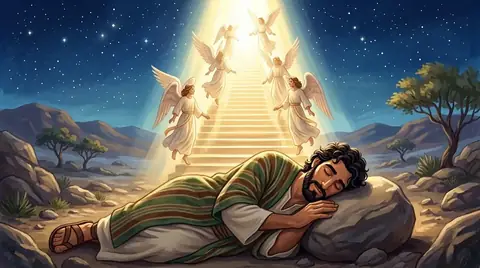
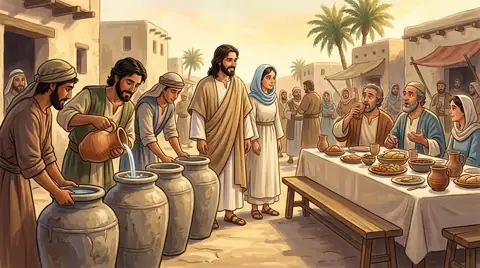
A wedding began long before the day. The two families agreed the match and the bride-price, and from the betrothal the couple were bound to each other (see Marriage). On the wedding day the bridegroom, dressed in his best and sometimes crowned (Song of Songs 3:11), set out with his friends to the bride's house, usually after dark with torches and lamps and singing, and brought her back in procession to his home. The bride came veiled; Jacob did not know until morning that he had been given Leah (Genesis 29:23–25). Then came the feast, often seven days long, as at Jacob's wedding and Samson's (Genesis 29:27; Judges 14:12), with riddles, songs and wine. Guests were expected to wear festive clothes (Matthew 22:11–12). Running out of wine was a disgrace, which is why Mary spoke to Jesus at Cana (John 2:3).
Jesus and weddings
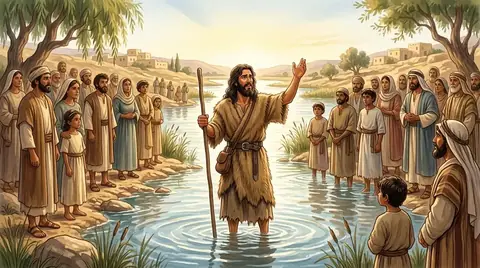
Jesus' first miracle was at a wedding, turning water into the best wine (John 2:1–11). He called himself the bridegroom whose friends cannot fast while he is with them (Matthew 9:15), and John the Baptist called himself the bridegroom's friend who rejoices to hear his voice (John 3:29). His parables use the lamps of the ten virgins waiting for the procession (Matthew 25:1–13), the king's wedding feast and the guest without a wedding garment (Matthew 22:1–14), and servants waiting for their master to return from a wedding (Luke 12:36).
The last wedding
Paul says a husband's love for his wife should mirror Christ's love for the church, whom he presents to himself as a spotless bride (Ephesians 5:25–27). The Bible ends with "the marriage of the Lamb", his wife dressed in fine linen, and a blessing on all who are invited to the supper (Revelation 19:7–9). See Bride and The bride and the bridegroom.
Key verses
- Genesis 29:27
Fulfil her week, and we will give thee this also for the service which thou shalt serve with me yet seven other years.
- John 2:1–11
And the third day there was a marriage in Cana of Galilee; and the mother of Jesus was there: And both Jesus was called, and his disciples, to the marriage. And when they wanted wine, the mother of Jesus saith unto him, They have no wine. …
- Matthew 25:1–13
Then shall the kingdom of heaven be likened unto ten virgins, which took their lamps, and went forth to meet the bridegroom. And five of them were wise, and five were foolish. They that were foolish took their lamps, and took no oil with them: …
- John 3:29
He that hath the bride is the bridegroom: but the friend of the bridegroom, which standeth and heareth him, rejoiceth greatly because of the bridegroom’s voice: this my joy therefore is fulfilled.
- Revelation 19:7–9
Let us be glad and rejoice, and give honour to him: for the marriage of the Lamb is come, and his wife hath made herself ready. And to her was granted that she should be arrayed in fine linen, clean and white: for the fine linen is the righteousness of saints. And he saith unto me, Write, Blessed are they which are called unto the marriage supper of the Lamb. And he saith unto me, These are the true sayings of God.
Read next
 CustomThe bride price (dowry)The payment, gift or service a bridegroom gave to the bride's family when a marriage was agreed. Jacob worked seven…
 Custom · MarriageBetrothalThe binding promise of marriage, agreed between the families, usually about a year before the wedding. A betrothed…CustomMarriageThe lifelong union of a man and a woman, given by God in Eden. Jesus upheld it, the apostles taught how to live in it…
 SymbolThe bride and the bridegroomThe Bible's picture of God's love for his people as a marriage. Israel was the LORD's bride; Christ is the Bridegroom…
 PersonJacobIsaac's younger twin son, who won his brother's birthright and blessing by cunning, was changed by God, and was renamed…
 Place · VillageCanaA village in Galilee where Jesus did his first miracle, turning water into wine at a wedding. From Cana he also healed…
 PersonJohn the BaptistThe prophet God sent to prepare the way for Jesus. He called Israel to repent, baptized in the Jordan, pointed to Jesus…
 Person · CustomBrideA woman about to marry, or newly married. In Bible times a bride was richly dressed and given gifts and maids; the…
Written for this app in its own words, from the Bible, with the facts checked against Bible dictionaries and encyclopedias: Easton's, Smith's, Fausset's, ISBE, Holman, the New Bible Dictionary, Vine's and the Thompson Chain topics.
