
Custom · Worship
Vows
A solemn promise made to God, often a pledge of a gift or a service should God grant a request. No one had to make a vow, but a vow once made had to be kept.
- Rule
- "Pay that which thou hast vowed" (Ecclesiastes 5:4–5; Deuteronomy 23:21–23)
- Examples
- Jacob at Bethel, Hannah, Jephthah, the Nazirite, Paul
- Law
- Leviticus 27 set prices for buying back what was vowed; Numbers 30 covered a woman's vows
What a vow was
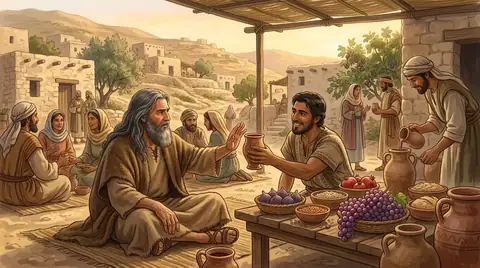
A vow was a promise spoken to God. It might be a promise to give something, a child, an animal, a field or money, or a promise to go without something, as the Nazirite went without wine and haircuts for a set time (Numbers 6). Vows were voluntary; God did not ask for them, and "if thou shalt forbear to vow, it shall be no sin in thee" (Deuteronomy 23:22). But once the words were out, delay was dangerous: "Better is it that thou shouldest not vow, than that thou shouldest vow and not pay" (Ecclesiastes 5:5). Leviticus 27 let a person buy back a vowed house, field or animal by paying its value and a fifth more, and Numbers 30 explained when a father or husband could cancel a vow made by a daughter or wife.
Vows in the Bible
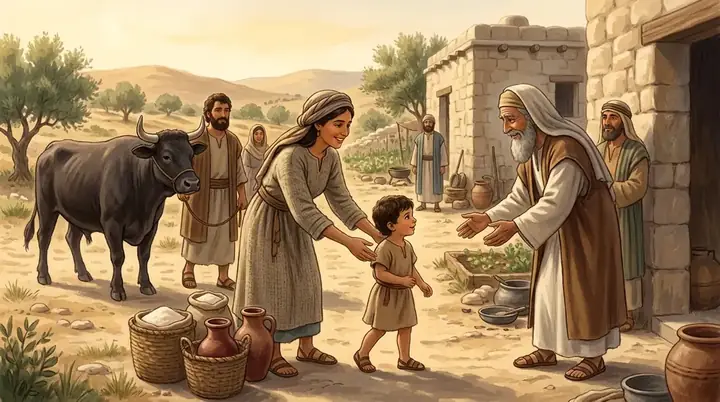
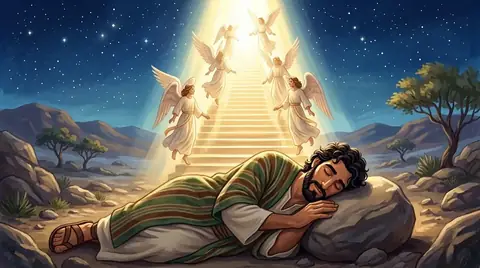
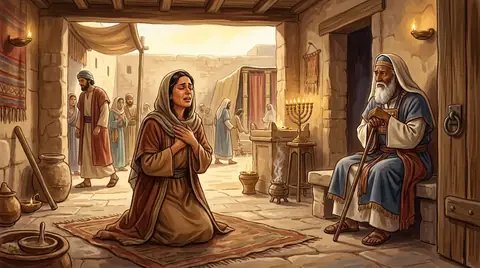
Jacob, alone at Bethel, vowed that if God brought him home safely, the LORD would be his God and he would give a tenth of everything (Genesis 28:20–22). Hannah vowed that if God gave her a son she would give him back to the LORD for all his life, and she did, bringing Samuel to the tabernacle (1 Samuel 1:11, 27–28). Jephthah vowed rashly to offer whatever came out of his door to meet him, and it was his daughter (Judges 11:30–40). The sailors on Jonah's ship made vows when the storm stopped (Jonah 1:16). Paul had his hair cut at Cenchrea because of a vow (Acts 18:18), and later paid the costs of four men completing theirs (Acts 21:23–26).
What to learn
God takes our words seriously. Jesus warned against the kind of vow that was used as an excuse, telling parents that what might have helped them was "Corban", given to God (Mark 7:11–13), and taught his followers to need no oaths at all: let your yes be yes (Matthew 5:33–37). The psalmist's promise is the right spirit: "I will pay my vows unto the LORD now in the presence of all his people" (Psalms 116:14).
Key verses
- Deuteronomy 23:21–23
When thou shalt vow a vow unto the Lord thy God, thou shalt not slack to pay it: for the Lord thy God will surely require it of thee; and it would be sin in thee. But if thou shalt forbear to vow, it shall be no sin in thee. That which is gone out of thy lips thou shalt keep and perform; even a freewill offering, according as thou hast vowed unto the Lord thy God, which thou hast promised with thy mouth.
- Ecclesiastes 5:4–5
When thou vowest a vow unto God, defer not to pay it; for he hath no pleasure in fools: pay that which thou hast vowed. Better is it that thou shouldest not vow, than that thou shouldest vow and not pay.
- 1 Samuel 1:11
And she vowed a vow, and said, O Lord of hosts, if thou wilt indeed look on the affliction of thine handmaid, and remember me, and not forget thine handmaid, but wilt give unto thine handmaid a man child, then I will give him unto the Lord all the days of his life, and there shall no razor come upon his head.
- Psalms 116:14
I will pay my vows unto the Lord now in the presence of all his people.
- Acts 18:18
And Paul after this tarried there yet a good while, and then took his leave of the brethren, and sailed thence into Syria, and with him Priscilla and Aquila; having shorn his head in Cenchrea: for he had a vow.
Read next
 Custom · VowThe NaziriteA man or woman who vowed to belong wholly to God, for a set time or for life, drinking no wine, never cutting their…
 PersonJacobIsaac's younger twin son, who won his brother's birthright and blessing by cunning, was changed by God, and was renamed…
 PersonHannahThe childless wife of Elkanah who prayed for a son at Shiloh, promised him to God, and became the mother of the prophet…
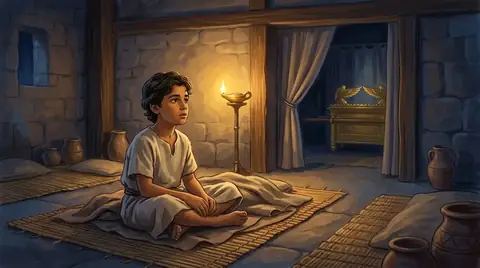 Person · Prophet and judgeSamuelThe prophet who led Israel from the time of the judges into the time of the kings. Given to God by his mother Hannah…
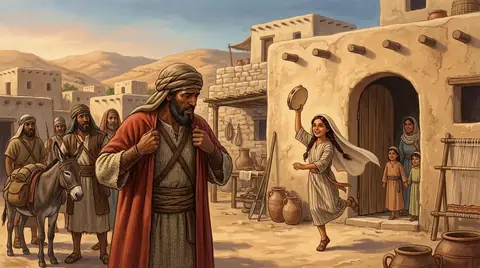 PersonJephthahThe outcast son of Gilead who was called back to lead Israel against the Ammonites. He won a great victory, but a rash…
Written for this app in its own words, from the Bible, with the facts checked against Bible dictionaries and encyclopedias: Easton's, Smith's, Fausset's, ISBE, Holman, the New Bible Dictionary, Vine's and the Thompson Chain topics.
