
Custom · War
Truce
An agreement to stop fighting. After a bloody day in the war between Saul's house and David's, Abner called out to Joab to stop the slaughter, and Joab blew the trumpet to end the pursuit.
- Where
- 2 Samuel 2:26–31
After Saul's death his general Abner and David's commander Joab met at the pool of Gibeon. A contest between twelve young men from each side turned into a battle, and Abner's men were beaten (2 Samuel 2:12–17). As evening fell Abner stood on a hill and called to Joab, "Shall the sword devour for ever? knowest thou not that it will be bitterness in the latter end?" (2 Samuel 2:26).
Joab agreed. He blew the trumpet, and his men stopped chasing Israel, and both armies marched home through the night (2 Samuel 2:28–29). Twenty of David's men had fallen, and three hundred and sixty of Abner's (2 Samuel 2:30–31). The truce did not end the long war between the two houses, but it showed the wisdom of stopping before brothers destroyed one another. "Blessed are the peacemakers" (Matthew 5:9).
Key verses
- 2 Samuel 2:26–28
Then Abner called to Joab, and said, Shall the sword devour for ever? knowest thou not that it will be bitterness in the latter end? how long shall it be then, ere thou bid the people return from following their brethren? And Joab said, As God liveth, unless thou hadst spoken, surely then in the morning the people had gone up every one from following his brother. So Joab blew a trumpet, and all the people stood still, and pursued after Israel no more, neither fought they any more.
- Matthew 5:9
Blessed are the peacemakers: for they shall be called the children of God.
Read next
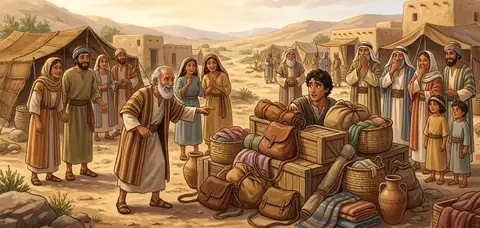 Person · KingSaulIsrael's first king, a tall Benjamite chosen when the people demanded a king like the nations. He began humbly and won…
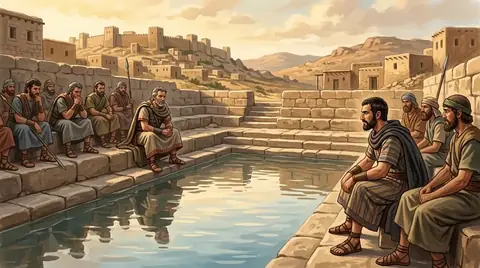 PersonAbnerSaul's cousin and the commander of his army. After Saul died he kept the house of Saul in power for years, then went…
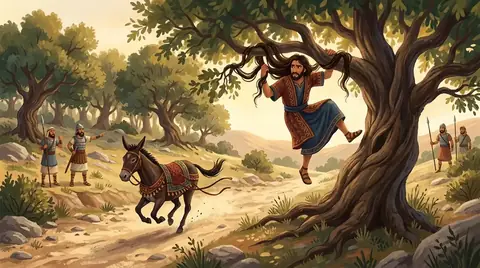 PersonJoabDavid's nephew, who commanded his army for forty years: brave, loyal to the throne, and ruthless. He murdered Abner and…
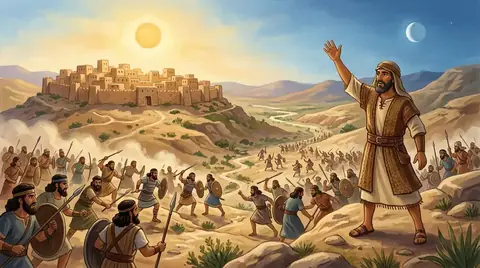 Place · CityGibeonThe Hivite city whose people fooled Joshua into a treaty, and where the sun stood still over the battle that followed.…
Written for this app in its own words, from the Bible, with the facts checked against Bible dictionaries and encyclopedias: Easton's, Smith's, Fausset's, ISBE, Holman, the New Bible Dictionary, Vine's and the Thompson Chain topics.
