
Teaching
Treachery
Betraying someone who trusts you. The Bible records many acts of treachery, from Joab's murder of Abner and Amasa to David's plot against Uriah and Judas's kiss, and condemns the smiling lie.
- Examples
- Joab and Abner (2 Samuel 3:27); David and Uriah (2 Samuel 11); Joab and Amasa (2 Samuel 20:9–10); Judas (Matthew 26:48–49)
Treachery is breaking faith with one who trusts you. Jeremiah describes it: a man "speaketh peaceably to his neighbour with his mouth, but in heart he layeth his wait" (Jeremiah 9:8).
The Bible's history is full of it. Joab took Abner aside as if to talk quietly and stabbed him (2 Samuel 3:27), and later took Amasa by the beard to kiss him and killed him (2 Samuel 20:9–10). Two captains murdered their king Ish-bosheth on his bed (2 Samuel 4:5–7). David himself sent Uriah back to the army carrying the letter that arranged his death (2 Samuel 11:14–15). Jehu called a great feast for Baal to trap its worshippers (2 Kings 10:18–28), and Nehemiah's enemies pretended friendship to lure him out (Nehemiah 6:2). Worst of all, Judas betrayed the Son of man with a kiss (Luke 22:48).
David knew the pain: "it was not an enemy that reproached me... But it was thou, a man mine equal, my guide, and mine acquaintance" (Psalms 55:12–13). God calls his people to be true in word and deed. See Traitor.
Key verses
- Jeremiah 9:8
Their tongue is as an arrow shot out; it speaketh deceit: one speaketh peaceably to his neighbour with his mouth, but in heart he layeth his wait.
- 2 Samuel 3:27
And when Abner was returned to Hebron, Joab took him aside in the gate to speak with him quietly, and smote him there under the fifth rib, that he died, for the blood of Asahel his brother.
- 2 Samuel 20:9–10
And Joab said to Amasa, Art thou in health, my brother? And Joab took Amasa by the beard with the right hand to kiss him. But Amasa took no heed to the sword that was in Joab’s hand: so he smote him therewith in the fifth rib, and shed out his bowels to the ground, and struck him not again; and he died. So Joab and Abishai his brother pursued after Sheba the son of Bichri.
- Psalms 55:12–13
For it was not an enemy that reproached me; then I could have borne it: neither was it he that hated me that did magnify himself against me; then I would have hid myself from him: But it was thou, a man mine equal, my guide, and mine acquaintance.
- Luke 22:48
But Jesus said unto him, Judas, betrayest thou the Son of man with a kiss?
Read next
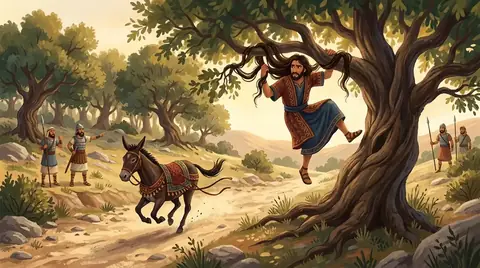 PersonJoabDavid's nephew, who commanded his army for forty years: brave, loyal to the throne, and ruthless. He murdered Abner and…
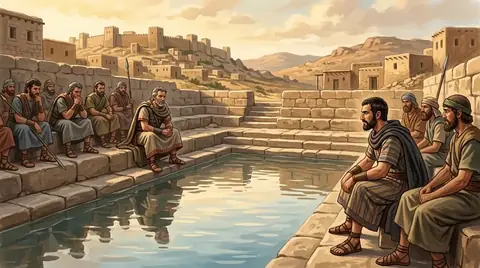 PersonAbnerSaul's cousin and the commander of his army. After Saul died he kept the house of Saul in power for years, then went…
 Person · KingDavidThe shepherd boy who killed Goliath and became Israel's greatest king, "a man after God's own heart". He wrote many…PersonUriahA Hittite soldier in David's army and husband of Bathsheba. David took his wife, then had him killed in battle to hide…PersonAmasaDavid's nephew, who led Absalom's army in the rebellion. David forgave him and made him commander in Joab's place, but…
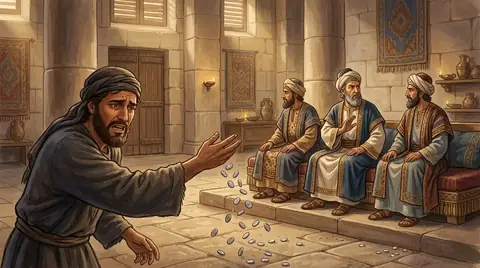 PersonJudasThe disciple who sold Jesus to the priests for thirty pieces of silver and pointed him out with a kiss. Full of…PersonIsh-boshethSaul's surviving son, made king over the northern tribes by Abner after Saul's death while David ruled Judah. He…
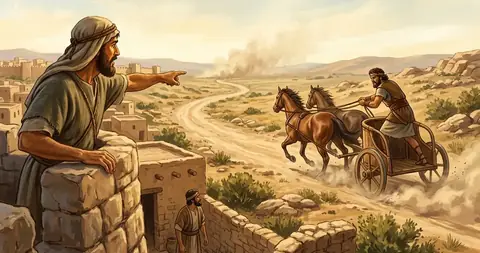 PersonJehuThe army commander anointed to wipe out Ahab's family. He drove his chariot furiously to Jezreel, shot King Joram, had…
Written for this app in its own words, from the Bible, with the facts checked against Bible dictionaries and encyclopedias: Easton's, Smith's, Fausset's, ISBE, Holman, the New Bible Dictionary, Vine's and the Thompson Chain topics.
