
Teaching · Law
Theft
Also called stealing, burglary, larceny
Taking what belongs to someone else. "Thou shalt not steal" is one of the Ten Commandments; the law made a thief pay back double or more, and the New Testament tells him to work and give instead.
- Commandment
- The eighth (Exodus 20:15)
- Paying back
- Double, or four or five times for a slaughtered sheep or ox (Exodus 22:1–4)
- Thieves in the Bible
- Rachel, Achan, Micah, Judas
In the law
"Thou shalt not steal" (Exodus 20:15; Deuteronomy 5:19). A thief had to repay: double what he took, or five oxen for an ox and four sheep for a sheep that he had killed or sold. If he had nothing, he was sold to work off the debt (Exodus 22:1–4). A burglar struck dead at night brought no blood-guilt on the householder (Exodus 22:2). Kidnapping a person to sell him was punished by death (Exodus 21:16). Withholding a worker's wages overnight was a kind of robbery too (Leviticus 19:13).
In the story
Rachel stole her father's household gods (Genesis 31:19), Achan took forbidden spoil at Jericho and brought defeat on Israel (Joshua 7:11), and Judas helped himself from the disciples' purse (John 12:6). Jesus drove out traders who had made God's house "a den of thieves" (Matthew 21:13), and one of the thieves crucified beside him was promised paradise (Luke 23:43).
For us
Stealing comes out of the heart (Matthew 15:19), and thieves will not inherit the kingdom (1 Corinthians 6:10). But the gospel changes them: "Let him that stole steal no more: but rather let him labour... that he may have to give" (Ephesians 4:28). Zacchaeus paid back fourfold (Luke 19:8).
Key verses
- Exodus 20:15
Thou shalt not steal.
- Exodus 22:1
If a man shall steal an ox, or a sheep, and kill it, or sell it; he shall restore five oxen for an ox, and four sheep for a sheep.
- Matthew 15:19
For out of the heart proceed evil thoughts, murders, adulteries, fornications, thefts, false witness, blasphemies:
- Ephesians 4:28
Let him that stole steal no more: but rather let him labour, working with his hands the thing which is good, that he may have to give to him that needeth.
- 1 Peter 4:15
But let none of you suffer as a murderer, or as a thief, or as an evildoer, or as a busybody in other men’s matters.
Read next
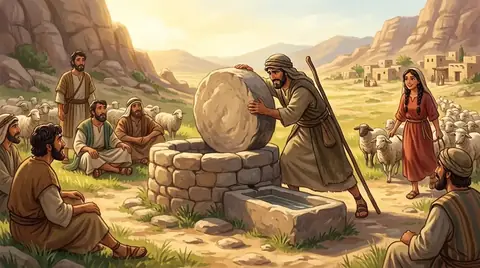 PersonRachelJacob's beloved wife, for whom he worked fourteen years. Long childless, she became the mother of Joseph and died…
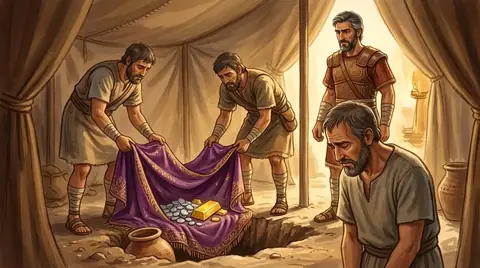 PersonAchanThe man who stole from Jericho's plunder, which God had set apart for himself. His hidden sin caused Israel's defeat at…PersonMicahA prophet of Judah in the days of Isaiah, from the country town of Moresheth, who denounced injustice and foretold that…
 PersonJudasThe disciple who sold Jesus to the priests for thirty pieces of silver and pointed him out with a kiss. Full of…
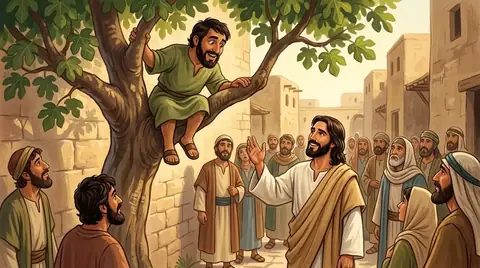 PersonZacchaeusA rich chief tax collector of Jericho who climbed a tree to see Jesus. Jesus came to his house, and Zacchaeus turned…
Written for this app in its own words, from the Bible, with the facts checked against Bible dictionaries and encyclopedias: Easton's, Smith's, Fausset's, ISBE, Holman, the New Bible Dictionary, Vine's and the Thompson Chain topics.
