
Place
Thebes
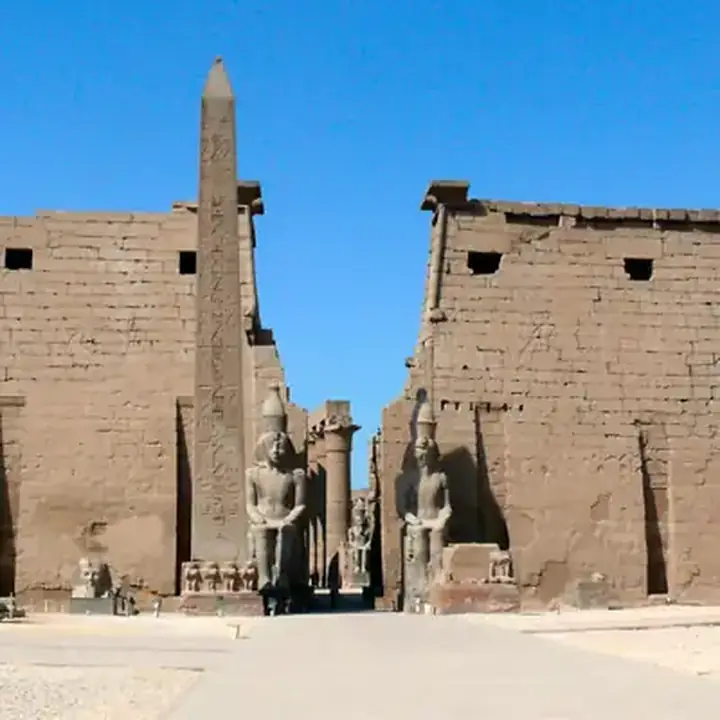
Called No or No-amon in the Bible · today Luxor, in Egypt
The great city of Upper Egypt and home of its chief god, Amon. The prophets foretold its punishment, and Nahum pointed to its fall as a warning to Nineveh.
- Where
- On the river Nile, in southern Egypt, at modern Luxor
- Also called
- No, No-amon, "the city of Amon"
- Known for
- Its temples and its fall to Assyria in 663 BC
Where
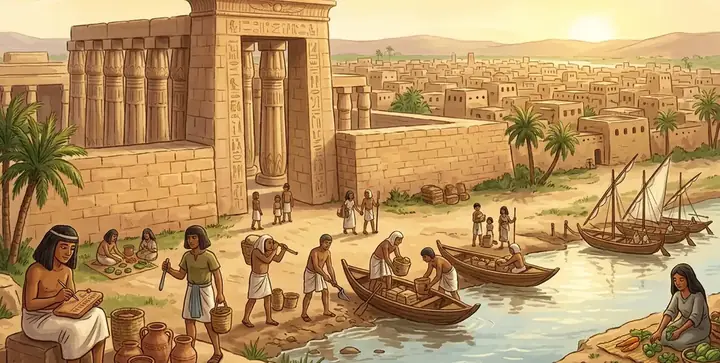
Thebes lay on both banks of the Nile, far up the river in the south of Egypt. For centuries it was one of the country's capitals and the centre of the worship of the god Amon, with enormous temples and royal tombs.
In the Old Testament
The Bible calls it No, or No-amon. Nahum asked Nineveh whether it was any better than Thebes, a city with the river for a wall and Ethiopia and Egypt for strength, which was nevertheless taken captive, its children killed and its great men put in chains (Nahum 3:8–10). This happened when the Assyrians sacked it in 663 BC.
Jeremiah and Ezekiel both foretold God's judgment on it: the LORD would punish Amon of No, together with Pharaoh and everyone who relied on him (Jeremiah 46:25; Ezekiel 30:14–16).
What to learn
Thebes looked safe behind its waters and its gods. Nahum's point is simple: no city is too strong for God to humble, and Nineveh would fall too.
Key verses
- Nahum 3:8–10
Art thou better than populous No, that was situate among the rivers, that had the waters round about it, whose rampart was the sea, and her wall was from the sea? Ethiopia and Egypt were her strength, and it was infinite; Put and Lubim were thy helpers. Yet was she carried away, she went into captivity: her young children also were dashed in pieces at the top of all the streets: and they cast lots for her honourable men, and all her great men were bound in chains.
- Jeremiah 46:25
The Lord of hosts, the God of Israel, saith; Behold, I will punish the multitude of No, and Pharaoh, and Egypt, with their gods, and their kings; even Pharaoh, and all them that trust in him:
- Ezekiel 30:14–16
And I will make Pathros desolate, and will set fire in Zoan, and will execute judgments in No. And I will pour my fury upon Sin, the strength of Egypt; and I will cut off the multitude of No. And I will set fire in Egypt: Sin shall have great pain, and No shall be rent asunder, and Noph shall have distresses daily.
On the map
Mentioned in 5 verses
- Jeremiah 1
- Ezekiel 3
- Nahum 1
Read next
Written for this app in its own words, from the Bible, with the facts checked against Bible dictionaries and encyclopedias: Easton's, Smith's, Fausset's, ISBE, Holman, the New Bible Dictionary, Vine's and the Thompson Chain topics. People and places: STEPBible.org (TIPNR), CC BY 4.0; where a place is today and its photo: OpenBible.info, CC BY 4.0.
