
Title · Ruler
Tetrarch
TET-rark"Ruler of a fourth part" · Herod Antipas, Philip and Lysanias
A ruler of part of a country under Rome, lower than a king. Herod the Great's sons Antipas and Philip were tetrarchs in Jesus' day; Antipas beheaded John the Baptist and mocked Jesus.
- Meaning
- Ruler of a quarter; by Roman times any lesser prince
- In the Gospels
- Herod Antipas of Galilee and Perea; Philip of the north-east; Lysanias of Abilene (Luke 3:1)
What it was
The word first meant the ruler of one of four parts into which a province was divided, but by New Testament times Rome gave the title to any local prince whom it did not think worth calling king. When Herod the Great died in 4 BC, Augustus split his kingdom among three sons. Archelaus got Judea and Samaria as ethnarch (he was soon removed and a Roman governor put in his place); Antipas got Galilee and Perea; Philip got the thinly peopled lands north and east of the Sea of Galilee. Luke dates the start of John the Baptist's ministry by these rulers, naming Herod tetrarch of Galilee, Philip tetrarch of Ituraea and Trachonitis, and Lysanias tetrarch of Abilene (Luke 3:1).
Herod the tetrarch
Herod Antipas is the "Herod" of the Gospels after chapter 2 of Matthew. He ruled Galilee through Jesus' whole life. He married his brother's wife Herodias, and when John the Baptist told him it was unlawful, he jailed him and at a birthday feast had him beheaded to keep a rash promise (Matthew 14:1–12). Hearing of Jesus, he feared John had come back (Luke 9:7–9). Jesus called him "that fox" (Luke 13:32). At the trial Pilate sent Jesus to him because he was a Galilean, and Herod questioned him, got no answer, mocked him in a fine robe and sent him back (Luke 23:7–12). People called him king out of courtesy (Matthew 14:9), but when he asked Rome for the title he was banished to Gaul.
Philip was a quieter man who built Caesarea Philippi, where Peter confessed Jesus as the Christ (Matthew 16:13). Manaen, a leader of the church at Antioch, had been brought up with Herod the tetrarch (Acts 13:1).
Key verses
- Luke 3:1
Now in the fifteenth year of the reign of Tiberius Cesar, Pontius Pilate being governor of Judea, and Herod being tetrarch of Galilee, and his brother Philip tetrarch of Iturea and of the region of Trachonitis, and Lysanias the tetrarch of Abilene,
- Matthew 14:1–12
At that time Herod the tetrarch heard of the fame of Jesus, And said unto his servants, This is John the Baptist; he is risen from the dead; and therefore mighty works do shew forth themselves in him. For Herod had laid hold on John, and bound him, and put him in prison for Herodias’ sake, his brother Philip’s wife. …
- Luke 13:32
And he said unto them, Go ye, and tell that fox, Behold, I cast out devils, and I do cures to day and to morrow, and the third day I shall be perfected.
- Luke 23:7–12
And as soon as he knew that he belonged unto Herod’s jurisdiction, he sent him to Herod, who himself also was at Jerusalem at that time. And when Herod saw Jesus, he was exceeding glad: for he was desirous to see him of a long season, because he had heard many things of him; and he hoped to have seen some miracle done by him. Then he questioned with him in many words; but he answered him nothing. …
On the map
Read next
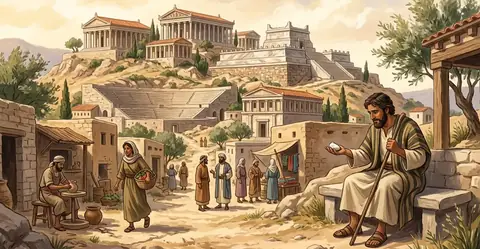 Person · MartyrAntipasA Christian of Pergamum whom the risen Jesus calls "my faithful martyr". He was killed for his faith in a city where…
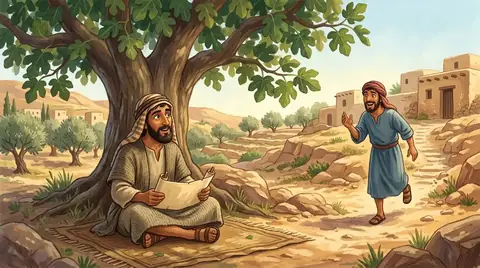 PersonPhilipOne of the twelve apostles, from Bethsaida, who brought Nathanael to Jesus. Another Philip, one of the seven, preached…
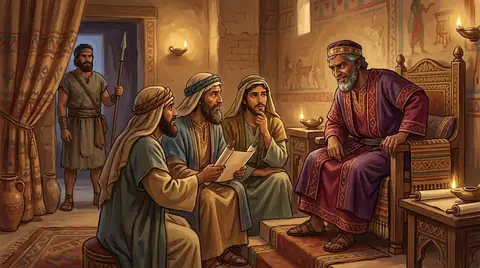 Person · KingHerodThe name of a family of rulers under Rome. Herod the Great tried to kill the infant Jesus; his son Antipas beheaded…
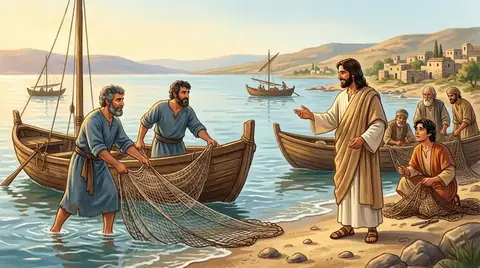 Place · RegionGalileeThe hill country of northern Israel, west of the lake that bears its name. Jesus grew up there, chose his disciples…
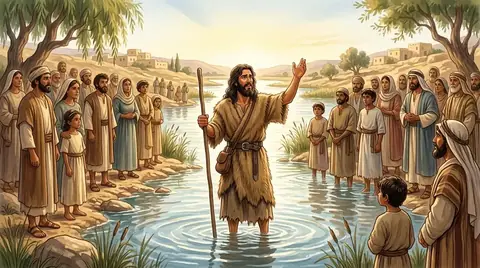 PersonJohn the BaptistThe prophet God sent to prepare the way for Jesus. He called Israel to repent, baptized in the Jordan, pointed to Jesus…
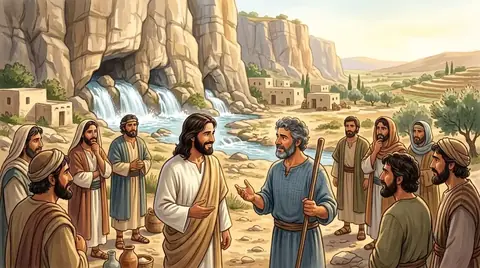 Place · CityCaesarea PhilippiA town in the far north of the Holy Land, at the springs of the Jordan. Near here Peter declared that Jesus is the…
Written for this app in its own words, from the Bible, with the facts checked against Bible dictionaries and encyclopedias: Easton's, Smith's, Fausset's, ISBE, Holman, the New Bible Dictionary, Vine's and the Thompson Chain topics.
