
Teaching
Temptation
Being drawn toward sin, or being put to the test. God tests his people to prove their faith; the devil tempts them to make them fall. Jesus was tempted and did not sin, and he helps those who are.
- Two senses
- Testing by God (Genesis 22:1; James 1:2–3) and enticing to sin by the devil (Matthew 4:3; James 1:13–14)
- Jesus
- Tempted in the wilderness (Matthew 4:1–11) and "in all points" like us, without sin (Hebrews 4:15)
- The promise
- God makes a way to escape (1 Corinthians 10:13)
Two meanings
In the King James Bible "tempt" has two faces. One is to test: God "did tempt Abraham" when he asked for Isaac (Genesis 22:1), meaning he proved his faith; and James tells us to count it all joy when we fall into many temptations, because the trial of faith makes us steadfast (James 1:2–3). The other is to entice: to draw someone toward sin. God never does that. "God cannot be tempted with evil, neither tempteth he any man" (James 1:13). The same trouble can be both at once: a test from God that the devil tries to turn into a trap, as with Job.
How it works
James traces the path: a person is tempted when drawn away by his own desire; desire conceives and gives birth to sin; sin, grown up, brings death (James 1:14–15). The devil is called "the tempter" (Matthew 4:3), and the first temptation shows his way: a doubt about God's word, "Yea, hath God said?", then a lie about God's goodness, then the fruit looked good (Genesis 3:1–6). Eve fell, and Adam with her. Joseph faced the same pull and ran (Genesis 39:9–12); David looked and stayed (2 Samuel 11:2–4); Peter swore he would never fall and fell within hours (Matthew 26:33, 74).
In Jesus
After his baptism Jesus was led by the Spirit into the wilderness and, after forty days without food, was tempted by the devil: to turn stones to bread, to throw himself from the temple, to take the kingdoms of the world for one act of worship. He answered each time with Scripture, and the devil left (Matthew 4:1–11). Where Adam fell in a garden and Israel failed in the wilderness, he stood. Hebrews says he was tempted in every way as we are, yet without sin, and because he suffered being tempted he is able to help those who are tempted (Hebrews 2:18; Hebrews 4:15). In Gethsemane he told his sleeping disciples, "Watch and pray, that ye enter not into temptation" (Matthew 26:41).
For us
Temptation itself is not sin; giving in to it is. Jesus taught us to pray "lead us not into temptation" (Matthew 6:13), and Paul promised that no temptation comes that is beyond us, because God "will with the temptation also make a way to escape" (1 Corinthians 10:13). The way out is usually the way Joseph took: look away, and go. "Resist the devil, and he will flee from you" (James 4:7).
Key verses
- Genesis 3:1–6
Now the serpent was more subtil than any beast of the field which the Lord God had made. And he said unto the woman, Yea, hath God said, Ye shall not eat of every tree of the garden? And the woman said unto the serpent, We may eat of the fruit of the trees of the garden: But of the fruit of the tree which is in the midst of the garden, God hath said, Ye shall not eat of it, neither shall ye touch it, lest ye die. …
- Matthew 4:1–11
Then was Jesus led up of the Spirit into the wilderness to be tempted of the devil. And when he had fasted forty days and forty nights, he was afterward an hungred. And when the tempter came to him, he said, If thou be the Son of God, command that these stones be made bread. …
- 1 Corinthians 10:13
There hath no temptation taken you but such as is common to man: but God is faithful, who will not suffer you to be tempted above that ye are able; but will with the temptation also make a way to escape, that ye may be able to bear it.
- Hebrews 4:15
For we have not an high priest which cannot be touched with the feeling of our infirmities; but was in all points tempted like as we are, yet without sin.
- James 1:13–15
Let no man say when he is tempted, I am tempted of God: for God cannot be tempted with evil, neither tempteth he any man: But every man is tempted, when he is drawn away of his own lust, and enticed. Then when lust hath conceived, it bringeth forth sin: and sin, when it is finished, bringeth forth death.
Read next
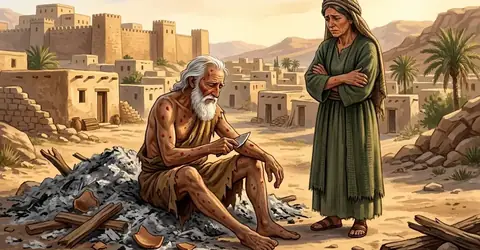 PersonJobA rich and godly man who lost his children, his wealth and his health in a single stroke, and would not curse God. His…
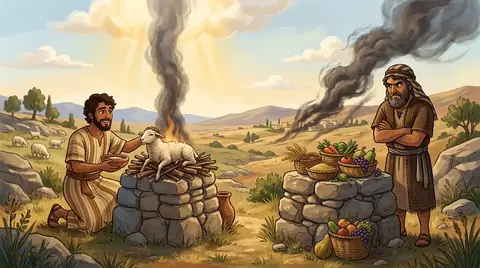 PersonEveThe first woman, made by God from Adam's side to be his wife and partner. Deceived by the serpent, she ate the…
 PersonAdamThe first man, made by God from the dust and given life by his breath. His disobedience in Eden brought sin and death…
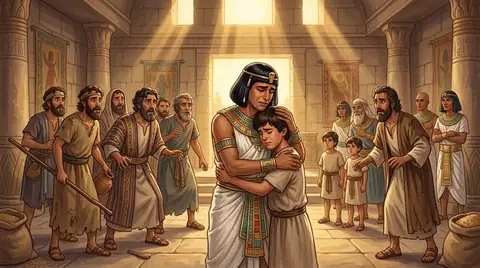 PersonJosephJacob's favourite son, sold by his brothers into Egypt, where he rose from prison to rule the land and saved his family…
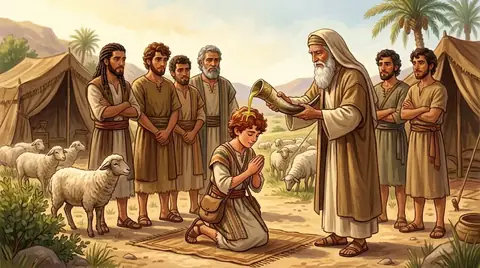 Person · KingDavidThe shepherd boy who killed Goliath and became Israel's greatest king, "a man after God's own heart". He wrote many…
 PersonPeterA Galilean fisherman who became the leader of the twelve apostles. Bold and impulsive, he confessed Jesus as the…
Written for this app in its own words, from the Bible, with the facts checked against Bible dictionaries and encyclopedias: Easton's, Smith's, Fausset's, ISBE, Holman, the New Bible Dictionary, Vine's and the Thompson Chain topics.
