
Place · Sea
Syrtis
SUR-tisNew Testament · Paul's voyage to Rome, about AD 60 · "the quicksands" in the KJV · today the Gulf of Sidra, Libya
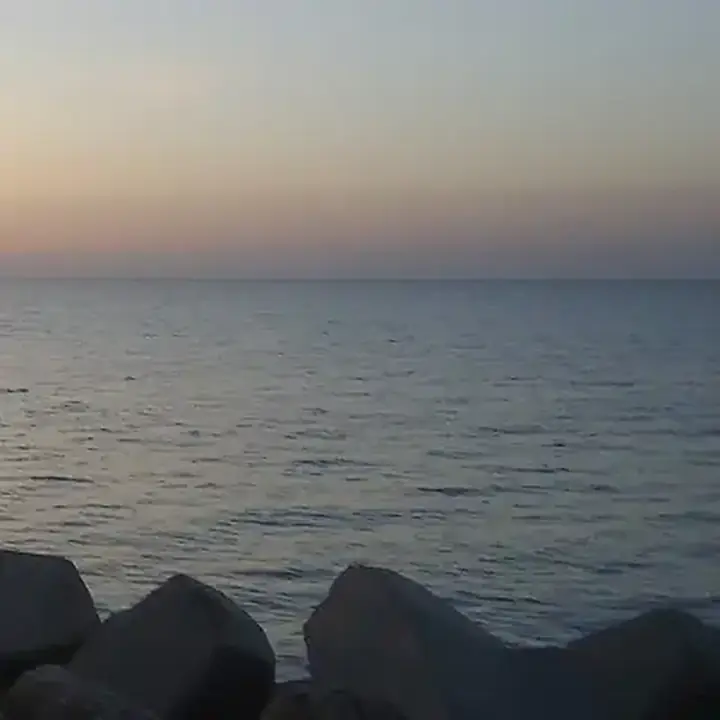
The great shallow gulf off the coast of Libya, feared by sailors for its sandbanks. In the storm on Paul's voyage to Rome, the crew were afraid of being blown into it.
- Where
- Off the north coast of Africa, west of Crete
- Today
- The Gulf of Sidra (Sirte), Libya
- In the KJV
- "The quicksands" (Acts 27:17)
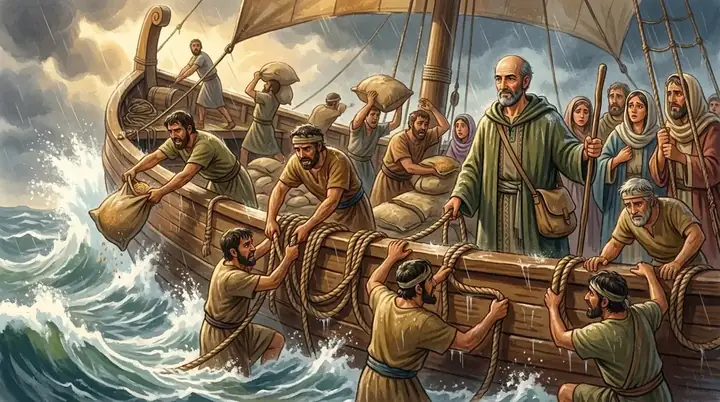
Off the coast of Crete, the vessel taking Paul to Rome was seized by a fierce north-east wind and driven out to sea. The sailors bound ropes round the hull to hold it together, and, "fearing lest they should fall into the quicksands", they let down the gear and let the ship drive (Acts 27:17). The Greek word is Syrtis.
The Syrtis was a wide bay on the coast of Libya, full of shifting sandbars where many ships had been wrecked. The wind was blowing toward it, so the danger was real. But God had told Paul that not one life would be lost, and it happened as he said (Acts 27:22–24, 44).
Key verses
- Acts 27:17
Which when they had taken up, they used helps, undergirding the ship; and, fearing lest they should fall into the quicksands, strake sail, and so were driven.
- Acts 27:22–24
And now I exhort you to be of good cheer: for there shall be no loss of any man’s life among you, but of the ship. For there stood by me this night the angel of God, whose I am, and whom I serve, Saying, Fear not, Paul; thou must be brought before Cesar: and, lo, God hath given thee all them that sail with thee.
- Acts 27:44
And the rest, some on boards, and some on broken pieces of the ship. And so it came to pass, that they escaped all safe to land.
On the map
Mentioned in 1 verse
- Acts 1
Read next
Written for this app in its own words, from the Bible, with the facts checked against Bible dictionaries and encyclopedias: Easton's, Smith's, Fausset's, ISBE, Holman, the New Bible Dictionary, Vine's and the Thompson Chain topics. People and places: STEPBible.org (TIPNR), CC BY 4.0; where a place is today and its photo: OpenBible.info, CC BY 4.0.
