
Custom · Law
Stray
The law told Israel to bring back a neighbour's lost ox, sheep or donkey, even an enemy's. Saul was out looking for his father's strayed donkeys when he met Samuel and was anointed king.
- Law
- Exodus 23:4; Deuteronomy 22:1–3
- Saul
- Looking for Kish's donkeys (1 Samuel 9:3–20)
The law
"If thou meet thine enemy's ox or his ass going astray, thou shalt surely bring it back to him again" (Exodus 23:4). If the owner lived far away or was unknown, the finder was to take the animal home and keep it until he came looking for it. The same went for anything lost: "thou mayest not hide thyself" (Deuteronomy 22:1–3). Caring for another's property was part of loving one's neighbour.
Saul's donkeys
The donkeys of Kish strayed, and he sent his son Saul with a servant to find them. After searching for three days they came to the town where Samuel was, hoping the seer could help. God had told Samuel the day before that the man he chose as king was coming. Samuel told Saul the donkeys were found, and then anointed him (1 Samuel 9:3–20; 1 Samuel 10:1–2). God used lost animals to bring a man to his calling.
Straying people
"All we like sheep have gone astray" (Isaiah 53:6). Jesus the Good Shepherd goes after the one sheep that strays until he finds it (Matthew 18:12–13), and Peter says we "were as sheep going astray; but are now returned unto the Shepherd" (1 Peter 2:25).
Key verses
- Exodus 23:4
If thou meet thine enemy’s ox or his ass going astray, thou shalt surely bring it back to him again.
- Deuteronomy 22:1–3
Thou shalt not see thy brother’s ox or his sheep go astray, and hide thyself from them: thou shalt in any case bring them again unto thy brother. And if thy brother be not nigh unto thee, or if thou know him not, then thou shalt bring it unto thine own house, and it shall be with thee until thy brother seek after it, and thou shalt restore it to him again. In like manner shalt thou do with his ass; and so shalt thou do with his raiment; and with all lost thing of thy brother’s, which he hath lost, and thou hast found, shalt thou do likewise: thou mayest not hide thyself.
- 1 Samuel 9:3
And the asses of Kish Saul’s father were lost. And Kish said to Saul his son, Take now one of the servants with thee, and arise, go seek the asses.
- Isaiah 53:6
All we like sheep have gone astray; we have turned every one to his own way; and the Lord hath laid on him the iniquity of us all.
- Matthew 18:12–13
How think ye? if a man have an hundred sheep, and one of them be gone astray, doth he not leave the ninety and nine, and goeth into the mountains, and seeketh that which is gone astray? And if so be that he find it, verily I say unto you, he rejoiceth more of that sheep, than of the ninety and nine which went not astray.
Read next
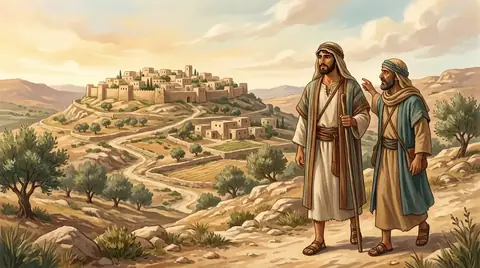 PersonKishA wealthy Benjamite whose lost donkeys sent his son Saul to the prophet Samuel, and so to the throne of Israel. Several…
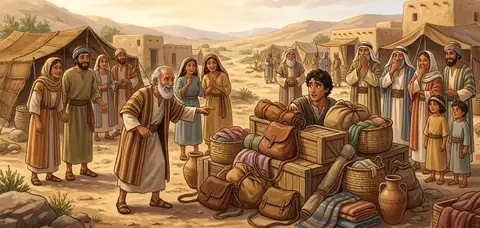 Person · KingSaulIsrael's first king, a tall Benjamite chosen when the people demanded a king like the nations. He began humbly and won…
 Person · Prophet and judgeSamuelThe prophet who led Israel from the time of the judges into the time of the kings. Given to God by his mother Hannah…
Written for this app in its own words, from the Bible, with the facts checked against Bible dictionaries and encyclopedias: Easton's, Smith's, Fausset's, ISBE, Holman, the New Bible Dictionary, Vine's and the Thompson Chain topics.
