
Group · Philosophers
Stoics
STOH-iksNew Testament · Athens, about AD 50 · KJV "Stoicks"
Followers of a Greek school of thought who taught that the wise man lives by reason and accepts whatever comes without being moved. Some of them argued with Paul in Athens.
- Founder
- Zeno of Citium, about 300 BC
- Name from
- The stoa, a covered porch in Athens where Zeno taught
- Met Paul
- In Athens (Acts 17:18)
- See also
- Epicureans, Areopagus
What they taught
The Stoics took their name from the painted porch, or stoa, in Athens, where their founder Zeno taught. They believed that everything is ruled by fate and reason running through the whole world, and that the wise man lives in harmony with it. He should be self-sufficient, master his feelings, and bear pain or loss calmly. Many Stoics were proud of their self-control and strict morals, though their idea of god was not the personal God of the Bible.
Paul in Athens
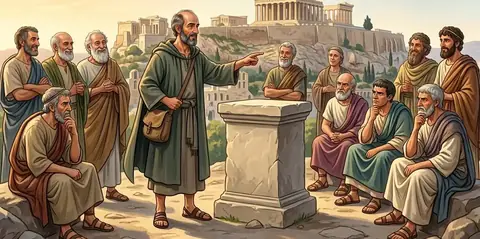
When Paul was in Athens, "certain philosophers of the Epicureans, and of the Stoicks, encountered him." Some called him a babbler; others thought he was bringing new gods, "because he preached unto them Jesus, and the resurrection" (Acts 17:18). On the Areopagus he told them about the one God who made the world and gives life to all, quoting their own poets, and he called them to repent before the man God had raised from the dead (Acts 17:24–31). Some mocked; but some believed (Acts 17:32–34).
For us
The Stoics knew that life is hard and that self-mastery matters. But they could not tell of a God who loves, forgives and raises the dead. Paul's answer was not a better philosophy but a person: Christ crucified and risen.
Key verses
- Acts 17:18
Then certain philosophers of the Epicureans, and of the Stoicks, encountered him. And some said, What will this babbler say? other some, He seemeth to be a setter forth of strange gods: because he preached unto them Jesus, and the resurrection.
- Acts 17:28
For in him we live, and move, and have our being; as certain also of your own poets have said, For we are also his offspring.
- Acts 17:31–34
Because he hath appointed a day, in the which he will judge the world in righteousness by that man whom he hath ordained; whereof he hath given assurance unto all men, in that he hath raised him from the dead. And when they heard of the resurrection of the dead, some mocked: and others said, We will hear thee again of this matter. So Paul departed from among them. …
Read next
 Place · CityAthensThe ancient centre of Greek learning and art, full of temples and statues. Paul preached there on Mars' Hill to the…GroupEpicureansFollowers of the Greek thinker Epicurus, who taught that the best life is a quiet, pleasant one free of pain and fear.…PlaceAreopagusA rocky hill in Athens, and the city's ancient council that met there. Paul spoke on it to the philosophers about the…
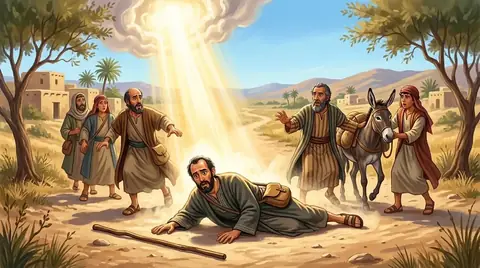 PersonPaulA Pharisee who hated the church until the risen Jesus met him on the road to Damascus. He became the apostle to the…
Written for this app in its own words, from the Bible, with the facts checked against Bible dictionaries and encyclopedias: Easton's, Smith's, Fausset's, ISBE, Holman, the New Bible Dictionary, Vine's and the Thompson Chain topics.
