
Custom · Music
Song
Also "songs"
Israel sang at every great moment: Moses at the Red Sea, Deborah after battle, Hannah at the tabernacle, David all his life. The Psalms are the Bible's song book, and the Bible ends with the song of the redeemed in heaven.
- Great songs
- Moses (Exodus 15; Deuteronomy 32), Deborah (Judges 5), Hannah (1 Samuel 2), David (2 Samuel 22), Mary and Zacharias (Luke 1), Simeon (Luke 2:29–32), the redeemed (Revelation 5:9; Revelation 15:3)
- Where
- Exodus 15:1; 1 Kings 4:32; Psalms 33:3; Psalms 137:4; Matthew 26:30; Ephesians 5:19; Colossians 3:16; Revelation 14:3
In the Old Testament
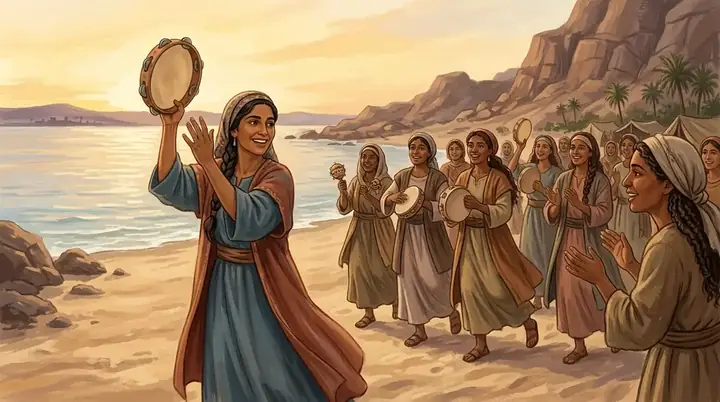
The first song in the Bible is sung on the far shore of the Red Sea: "I will sing unto the LORD, for he hath triumphed gloriously", with Miriam and the women answering with tambourines and dancing (Exodus 15:1–21). There were work songs at the well (Numbers 21:17–18), songs of victory (Judges 5; 1 Samuel 18:7), songs of harvest and the vineyard (Isaiah 16:10; Isaiah 5:1), songs at weddings and feasts, and laments for the dead, like David's for Saul and Jonathan (2 Samuel 1:17–27). Moses taught Israel a long song so that they would remember God's ways when they forgot everything else (Deuteronomy 31:19–22; Deuteronomy 32). Hannah sang when she gave Samuel to God (1 Samuel 2:1–10).
David, the "sweet psalmist of Israel", organised the temple singers, four thousand of them, in choirs with harps, lyres and cymbals (1 Chronicles 23:5; 1 Chronicles 25). Solomon wrote 1,005 songs (1 Kings 4:32), and the Song of Solomon is called "the song of songs", the best of them all. The Psalms, 150 songs for every mood from joy to despair, became the hymn book of Israel and of the church. In exile the people hung up their harps and asked how they could sing the LORD's song in a strange land (Psalms 137:1–4).
In the New Testament
Luke's Gospel opens with four songs: Mary's, Zacharias's, the angels' and Simeon's. Jesus and the disciples sang a hymn, the Passover psalms, before going out to Gethsemane (Matthew 26:30). Paul and Silas sang in the Philippian jail at midnight (Acts 16:25). Paul tells Christians to speak to one another "in psalms and hymns and spiritual songs, singing and making melody in your heart to the Lord" (Ephesians 5:19; Colossians 3:16); some lines in his letters look like early hymns (Philippians 2:6–11; 1 Timothy 3:16). Revelation is full of singing: the "new song" of the Lamb who was slain (Revelation 5:9), the song of the 144,000 that no one else can learn (Revelation 14:3), and "the song of Moses the servant of God, and the song of the Lamb" by the sea of glass (Revelation 15:3).
What it means
God's people sing because God has acted; nearly every song in the Bible is an answer to something he has done. Singing fixes truth in the memory, lifts it out of the head into the heart, and joins one voice to many. The Bible begins with the morning stars singing (Job 38:7) and ends with a choir that no one can count.
Key verses
- Exodus 15:1–2
Then sang Moses and the children of Israel this song unto the Lord, and spake, saying, I will sing unto the Lord, for he hath triumphed gloriously: the horse and his rider hath he thrown into the sea. The Lord is my strength and song, and he is become my salvation: he is my God, and I will prepare him an habitation; my father’s God, and I will exalt him.
- Psalms 33:3
Sing unto him a new song; play skilfully with a loud noise.
- Psalms 137:4
How shall we sing the Lord’s song in a strange land?
- Ephesians 5:19
Speaking to yourselves in psalms and hymns and spiritual songs, singing and making melody in your heart to the Lord;
- Revelation 5:9
And they sung a new song, saying, Thou art worthy to take the book, and to open the seals thereof: for thou wast slain, and hast redeemed us to God by thy blood out of every kindred, and tongue, and people, and nation;
- Revelation 15:3
And they sing the song of Moses the servant of God, and the song of the Lamb, saying, Great and marvellous are thy works, Lord God Almighty; just and true are thy ways, thou King of saints.
Read next
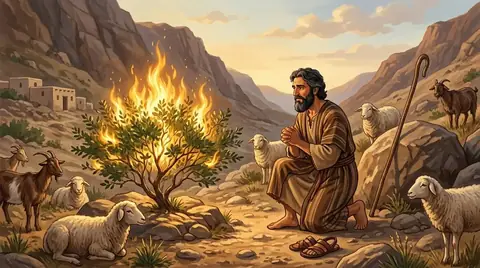 PersonMosesThe man God used to bring Israel out of Egypt, give them his Law at Sinai, and lead them for forty years in the…
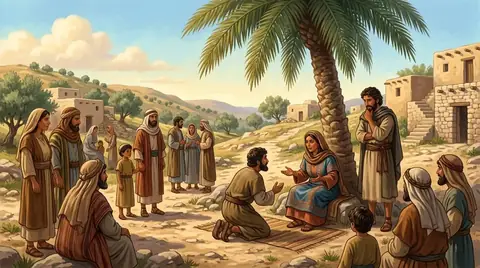 PersonDeborahA prophetess who judged Israel from under a palm tree in Ephraim. She summoned Barak to fight Sisera, went with him to…
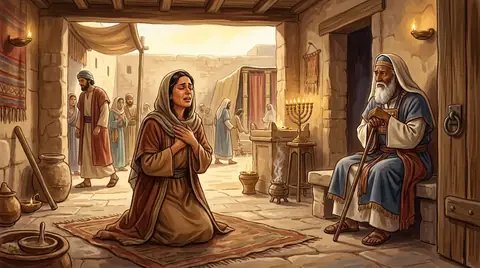 PersonHannahThe childless wife of Elkanah who prayed for a son at Shiloh, promised him to God, and became the mother of the prophet…
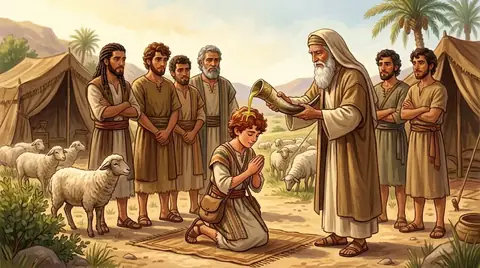 Person · KingDavidThe shepherd boy who killed Goliath and became Israel's greatest king, "a man after God's own heart". He wrote many…
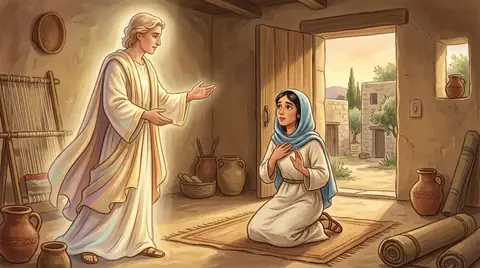 PersonMaryThe young woman of Nazareth chosen to be the mother of Jesus. She believed the angel's word, bore God's Son, and stood…
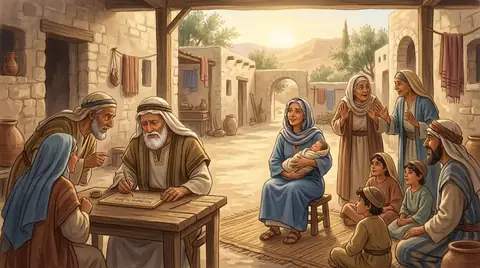 PersonZechariahThe prophet who, with Haggai, urged the returned exiles to rebuild the temple, and whose book foretells the humble King…
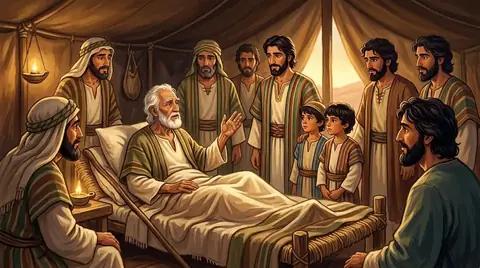 Person · PatriarchSimeonJacob's second son, by Leah. With Levi he massacred the men of Shechem to avenge their sister Dinah, and for that his…
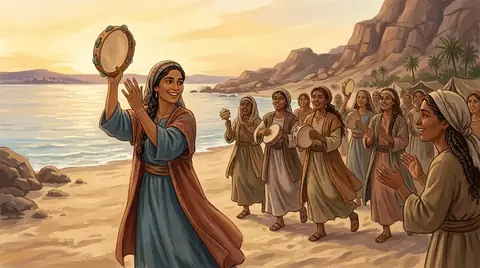 PersonMiriamMoses' older sister, who watched over his basket in the Nile and later led the women of Israel in song at the Red Sea.…
Written for this app in its own words, from the Bible, with the facts checked against Bible dictionaries and encyclopedias: Easton's, Smith's, Fausset's, ISBE, Holman, the New Bible Dictionary, Vine's and the Thompson Chain topics.
