
Thing
Skin
Animal skins were used for clothing, bottles and tent coverings; the first clothes God made were of skin. The Bible also speaks of diseases of the skin, and Job's great hope: "in my flesh shall I see God."
- First clothes
- "Coats of skins" for Adam and Eve (Genesis 3:21)
- Tabernacle
- Covered with rams' skins dyed red and badgers' skins (Exodus 26:14)
- Job's hope
- "Though after my skin worms destroy this body, yet in my flesh shall I see God" (Job 19:26)
How skins were used
When Adam and Eve had sinned, God himself made them coats of skins and clothed them (Genesis 3:21): an animal died to cover their shame. Skins were tanned for clothing, sandals, water and wine bottles, and tents. The tabernacle had coverings of rams' skins dyed red and of tough sea-cow or "badgers'" skins (Exodus 26:14; see Badger skins), and the holy things were wrapped in them when Israel moved camp (Numbers 4:6–14). The skin of the burnt offering went to the priest (Leviticus 7:8).
The skin and its diseases
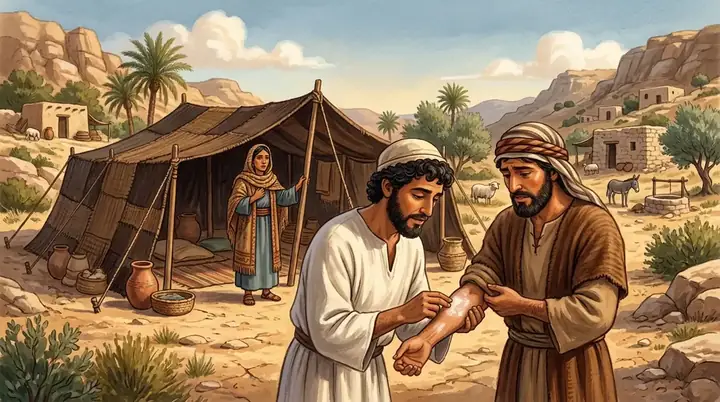
The law gave careful rules for diseases of the skin, which the priest had to examine (Leviticus 13). Job, covered in sores, said his skin was broken and loathsome (Job 7:5). Satan sneered, "Skin for skin, yea, all that a man hath will he give for his life" (Job 2:4).
What it meant
Jeremiah asked, "Can the Ethiopian change his skin, or the leopard his spots?" (Jeremiah 13:23): people cannot change their own hearts. Only God can. And Job believed that even when his skin was gone, he would see his Redeemer with his own eyes (Job 19:25–27).
Key verses
- Genesis 3:21
Unto Adam also and to his wife did the Lord God make coats of skins, and clothed them.
- Exodus 26:14
And thou shalt make a covering for the tent of rams’ skins dyed red, and a covering above of badgers’ skins.
- Job 19:25–26
For I know that my redeemer liveth, and that he shall stand at the latter day upon the earth: And though after my skin worms destroy this body, yet in my flesh shall I see God:
- Jeremiah 13:23
Can the Ethiopian change his skin, or the leopard his spots? then may ye also do good, that are accustomed to do evil.
Read next
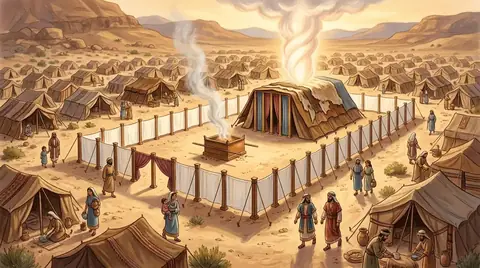 Thing · WorshipThe tabernacleThe holy tent Israel built in the wilderness, by God's own pattern, so that he could dwell in the middle of his people.…Thing · TabernacleBadger skins (tachash)The tough outer covering of the tabernacle and the wrapping for its holy furniture on the march. "Badger" is the King…
Written for this app in its own words, from the Bible, with the facts checked against Bible dictionaries and encyclopedias: Easton's, Smith's, Fausset's, ISBE, Holman, the New Bible Dictionary, Vine's and the Thompson Chain topics.
