
Custom
Shaving
Shaving the head or beard had strong meaning in Bible times: it could mark mourning, cleansing, a new start, or deep disgrace. A Nazarite let his hair grow and must not shave until his vow was done.
- Forbidden
- To Nazarites during their vow (Numbers 6:5); priests not to shave their heads (Ezekiel 44:20)
- Cleansing
- The healed leper and the Levites shaved all over (Leviticus 14:8–9; Numbers 8:7)
- Disgrace
- Hanun shaved half the beards of David's men (2 Samuel 10:4)
What it meant
Israelite men wore beards, so shaving was never just grooming. Joseph shaved before he stood in front of Pharaoh, as the Egyptians did (Genesis 41:14). When the king of Ammon shaved off half the beards of David's messengers, it was such an insult that David told them to stay at Jericho until their beards grew (2 Samuel 10:4–5). In grief, people shaved their heads (Job 1:20; Jeremiah 41:5), though Israel was not to cut themselves or shave in the pagan way for the dead (Deuteronomy 14:1).
In God's law
A Nazarite let no razor touch his head while his vow lasted, then shaved it at the end and burnt the hair on the altar (Numbers 6:5, 18). Samson was a Nazarite from birth (Judges 13:5). The healed leper shaved off all his hair before being declared clean (Leviticus 14:8–9), and the Levites did the same when they were set apart (Numbers 8:7). Paul shaved his head at Cenchrea because of a vow (Acts 18:18).
Key verses
- Numbers 6:5
All the days of the vow of his separation there shall no razor come upon his head: until the days be fulfilled, in the which he separateth himself unto the Lord, he shall be holy, and shall let the locks of the hair of his head grow.
- Numbers 6:18
And the Nazarite shall shave the head of his separation at the door of the tabernacle of the congregation, and shall take the hair of the head of his separation, and put it in the fire which is under the sacrifice of the peace offerings.
- Leviticus 14:8–9
And he that is to be cleansed shall wash his clothes, and shave off all his hair, and wash himself in water, that he may be clean: and after that he shall come into the camp, and shall tarry abroad out of his tent seven days. But it shall be on the seventh day, that he shall shave all his hair off his head and his beard and his eyebrows, even all his hair he shall shave off: and he shall wash his clothes, also he shall wash his flesh in water, and he shall be clean.
- 2 Samuel 10:4–5
Wherefore Hanun took David’s servants, and shaved off the one half of their beards, and cut off their garments in the middle, even to their buttocks, and sent them away. When they told it unto David, he sent to meet them, because the men were greatly ashamed: and the king said, Tarry at Jericho until your beards be grown, and then return.
- Acts 18:18
And Paul after this tarried there yet a good while, and then took his leave of the brethren, and sailed thence into Syria, and with him Priscilla and Aquila; having shorn his head in Cenchrea: for he had a vow.
Read next
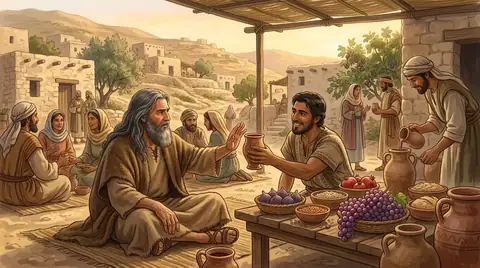 Custom · VowThe NaziriteA man or woman who vowed to belong wholly to God, for a set time or for life, drinking no wine, never cutting their…
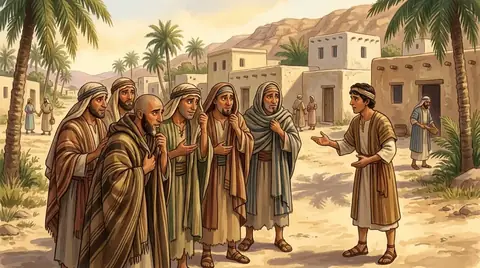 PersonHanunThe king of Ammon who insulted David's envoys, sent to comfort him on his father's death, by shaving their beards and…
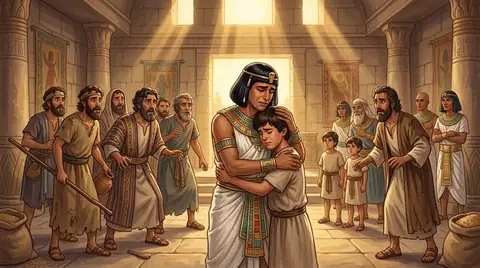 PersonJosephJacob's favourite son, sold by his brothers into Egypt, where he rose from prison to rule the land and saved his family…
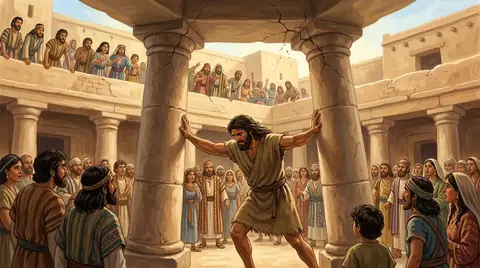 Person · JudgeSamsonThe judge of Israel with superhuman strength from God, a Nazirite from birth. He fought the Philistines single-handed…
Written for this app in its own words, from the Bible, with the facts checked against Bible dictionaries and encyclopedias: Easton's, Smith's, Fausset's, ISBE, Holman, the New Bible Dictionary, Vine's and the Thompson Chain topics.
