
Symbol · Nature
The sea
In the Bible the restless sea is a picture of what is wild, unruly and beyond man's control: the nations in turmoil, evil, and trouble. God alone rules it; in the new creation "there was no more sea".
- Seas named
- The Mediterranean ("the great sea"), the Red Sea, the Dead Sea ("the salt sea"), the Sea of Galilee
- Stands for
- The nations in uproar, chaos, danger, the unsettled heart
The seas of the Bible
Israel's land lies along the Mediterranean, which the Old Testament calls "the great sea". Three other waters are also called seas: the Red Sea, which God parted for Israel; the Dead Sea, "the salt sea", into which the Jordan flows; and the Sea of Galilee, really a freshwater lake, where Jesus taught and calmed the storm. Hebrew can even call a great river like the Nile a sea.
The Israelites were not seafarers. Solomon had ships built with Phoenician help (1 Kings 9:26–27), and Jonah fled by ship from Joppa, but to most Israelites the sea was a strange and frightening place.
What it stands for
God made the sea and set its bounds; it is his, and he "gathereth the waters of the sea together as an heap" (Psalms 33:7). Because it is so vast and never still, the Bible uses it as a picture of everything that heaves and rages beyond human control. The nations in uproar roar "like the roaring of the seas" (Isaiah 17:12). "The wicked are like the troubled sea" that cannot rest (Isaiah 57:20). A doubting man is "like a wave of the sea driven with the wind" (James 1:6). In Daniel's vision the great beasts, the empires of the world, come up out of the sea (Daniel 7:3), and in Revelation the beast rises from the sea as well (Revelation 13:1); the angel explains the waters as "peoples, and multitudes, and nations" (Revelation 17:15).
God's mastery
Against all this the Bible sets God's calm power. He stills "the noise of the seas" (Psalms 65:7). Israel sang of him throwing Pharaoh's army into the sea (Exodus 15). Jesus spoke to a storm and "there was a great calm" (Mark 4:39), and walked on the water (Matthew 14:25), doing what only God does. Before God's throne the sea lies still as glass (Revelation 4:6). And in the new heaven and earth John saw "no more sea" (Revelation 21:1): no more chaos, no more separation, nothing left to threaten God's people.
Key verses
- Psalms 93:3–4
The floods have lifted up, O Lord, the floods have lifted up their voice; the floods lift up their waves. The Lord on high is mightier than the noise of many waters, yea, than the mighty waves of the sea.
- Isaiah 57:20
But the wicked are like the troubled sea, when it cannot rest, whose waters cast up mire and dirt.
- Daniel 7:2–3
Daniel spake and said, I saw in my vision by night, and, behold, the four winds of the heaven strove upon the great sea. And four great beasts came up from the sea, diverse one from another.
- Mark 4:39
And he arose, and rebuked the wind, and said unto the sea, Peace, be still. And the wind ceased, and there was a great calm.
- Revelation 21:1
And I saw a new heaven and a new earth: for the first heaven and the first earth were passed away; and there was no more sea.
Read next
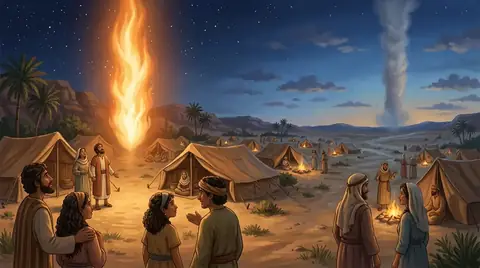 PlaceRed SeaThe sea God parted so Israel could escape from Egypt on dry ground, and then closed over Pharaoh's army. Its crossing…
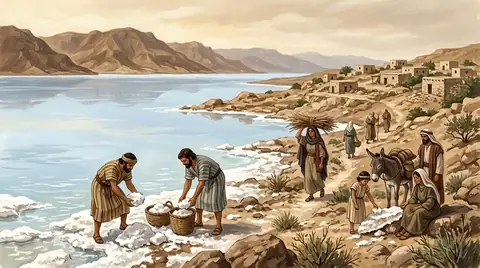 PlaceSalt SeaThe Bible's name for the Dead Sea, the great salt lake at the end of the Jordan River. It is the lowest place on the…
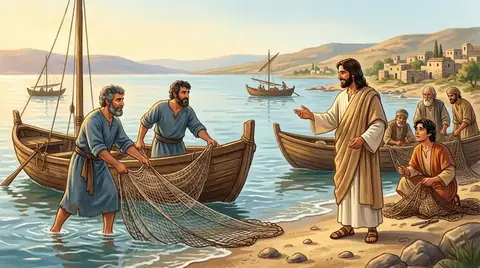 Place · LakeSea of GalileeThe freshwater lake in northern Israel where Jesus spent much of his ministry. Here he called fishermen to follow him…
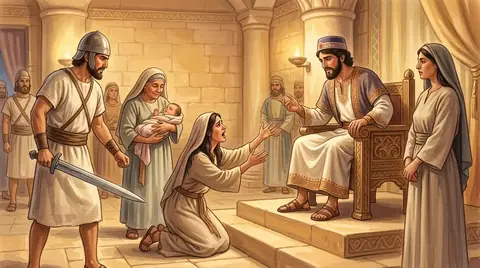 Person · KingSolomonDavid's son and Israel's third king, who asked God for wisdom and received riches and fame as well. He built the temple…
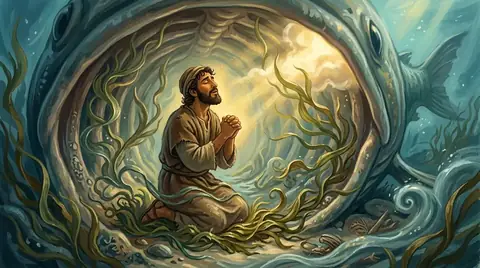 PersonJonahThe prophet who ran from God's call to preach at Nineveh, was swallowed by a great fish, and then sulked when the city…
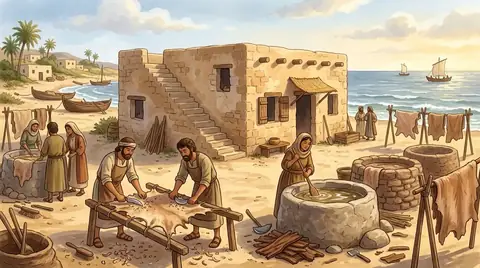 Place · CityJoppaThe old seaport on the coast of Israel, where Jonah took ship to run from God, and where Peter raised Dorcas and saw…
Written for this app in its own words, from the Bible, with the facts checked against Bible dictionaries and encyclopedias: Easton's, Smith's, Fausset's, ISBE, Holman, the New Bible Dictionary, Vine's and the Thompson Chain topics.
