
Teaching · Speech
Sarcasm
Saying the opposite of what you mean in order to mock or wound. The Bible records much of it, from Cain's "Am I my brother's keeper?" to the soldiers' "Hail, King of the Jews."
- Examples
- Cain (Genesis 4:9); Israel to Moses (Exodus 14:11); Elijah to the prophets of Baal (1 Kings 18:27); Sanballat (Nehemiah 4:2–3); the soldiers to Jesus (Matthew 27:29)
In the Bible
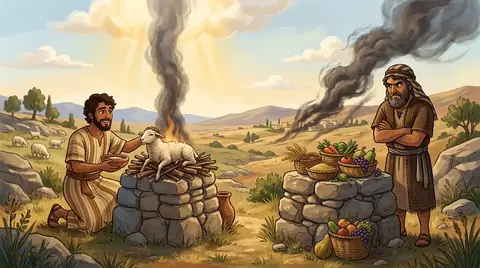
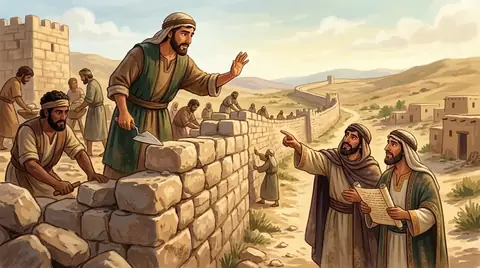
Sarcasm is often the voice of pride. Cain met God's question with "Am I my brother's keeper?" (Genesis 4:9). The frightened Israelites asked Moses whether there were no graves in Egypt that he had brought them to die in the desert (Exodus 14:11). Eliab sneered at David for leaving his few sheep (1 Samuel 17:28). Sanballat laughed at the "feeble Jews" rebuilding the walls (Nehemiah 4:2–3). Soldiers knelt before Jesus in a crown of thorns, mocking him as King (Matthew 27:28–29).
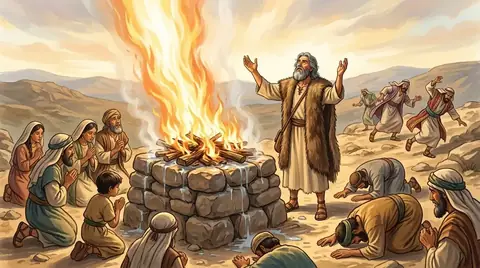
Yet it can expose folly. Elijah told Baal's prophets to shout louder: perhaps their god was asleep or away on a journey (1 Kings 18:27). And Ahab answered Ben-hadad's boast with a proverb: let not him that puts on his armour boast like him that takes it off (1 Kings 20:11).
For us
Words that cut can be clever and still be cruel. Believers are to let their speech be "with grace, seasoned with salt" (Colossians 4:6).
Key verses
- Genesis 4:9
And the Lord said unto Cain, Where is Abel thy brother? And he said, I know not: Am I my brother’s keeper?
- 1 Kings 18:27
And it came to pass at noon, that Elijah mocked them, and said, Cry aloud: for he is a god; either he is talking, or he is pursuing, or he is in a journey, or peradventure he sleepeth, and must be awaked.
- Matthew 27:28–29
And they stripped him, and put on him a scarlet robe. And when they had platted a crown of thorns, they put it upon his head, and a reed in his right hand: and they bowed the knee before him, and mocked him, saying, Hail, King of the Jews!
- Colossians 4:6
Let your speech be alway with grace, seasoned with salt, that ye may know how ye ought to answer every man.
Read next
 PersonCainThe first child born into the world, and the first murderer. Jealous because God accepted his brother Abel's offering…
 PersonElijahThe fiery prophet who stood alone against King Ahab and the prophets of Baal, called down fire on Mount Carmel, and was…
 PersonSanballatA powerful leader in Samaria who did all he could to stop Nehemiah rebuilding the walls of Jerusalem: mockery, threats…
Written for this app in its own words, from the Bible, with the facts checked against Bible dictionaries and encyclopedias: Easton's, Smith's, Fausset's, ISBE, Holman, the New Bible Dictionary, Vine's and the Thompson Chain topics.
