
Teaching
Reproof
Telling someone plainly that they have done wrong. Proverbs says the wise love it and the foolish hate it; Nathan rebuked David, Paul rebuked Peter, and believers are to speak the truth in love.
- Proverb
- "Faithful are the wounds of a friend" (Proverbs 27:6)
- Examples
- Nathan to David (2 Samuel 12:1–9); Elijah to Ahab (1 Kings 21:20); Paul to Peter (Galatians 2:11–14)
What the Bible says
God's law said, "thou shalt in any wise rebuke thy neighbour, and not suffer sin upon him" (Leviticus 19:17): to keep silent was a kind of hatred. Proverbs returns to it again and again. "Rebuke a wise man, and he will love thee" (Proverbs 9:8); "he that hateth reproof is brutish" (Proverbs 12:1); "open rebuke is better than secret love" (Proverbs 27:5). The psalmist welcomed it: "Let the righteous smite me; it shall be a kindness" (Psalms 141:5).
In the Bible
Nathan told David a story about a rich man who stole a poor man's lamb, then said, "Thou art the man" (2 Samuel 12:1–9). Elijah confronted Ahab over Naboth's vineyard (1 Kings 21:20), and Micaiah would only speak what the LORD said, though it put him in prison (1 Kings 22:14–28). John the Baptist rebuked Herod (Luke 3:19). Paul opposed Peter to his face when he drew back from Gentile believers (Galatians 2:11–14).
For us
Jesus taught: if your brother sins, tell him his fault between you and him alone (Matthew 18:15), and if he repents, forgive him (Luke 17:3). Reproof is to be given in love and gentleness (Ephesians 4:15; Galatians 6:1), and received with humility. Scripture itself is profitable "for reproof, for correction" (2 Timothy 3:16).
Key verses
- Leviticus 19:17
Thou shalt not hate thy brother in thine heart: thou shalt in any wise rebuke thy neighbour, and not suffer sin upon him.
- Proverbs 9:8
Reprove not a scorner, lest he hate thee: rebuke a wise man, and he will love thee.
- Proverbs 27:5–6
Open rebuke is better than secret love. Faithful are the wounds of a friend; but the kisses of an enemy are deceitful.
- Matthew 18:15
Moreover if thy brother shall trespass against thee, go and tell him his fault between thee and him alone: if he shall hear thee, thou hast gained thy brother.
- Ephesians 4:15
But speaking the truth in love, may grow up into him in all things, which is the head, even Christ:
Read next
 PersonNathanThe prophet who told David that his son, not he, would build the temple, who confronted him over Bathsheba with the…
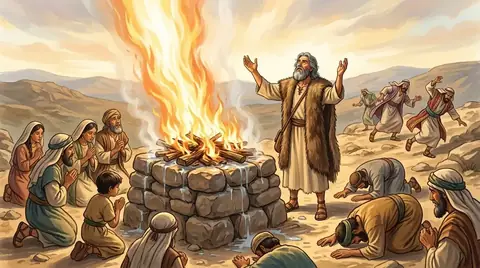 PersonElijahThe fiery prophet who stood alone against King Ahab and the prophets of Baal, called down fire on Mount Carmel, and was…
 PersonMicaiahThe one prophet who dared to tell King Ahab the truth when four hundred others promised victory. He foretold Ahab's…
Written for this app in its own words, from the Bible, with the facts checked against Bible dictionaries and encyclopedias: Easton's, Smith's, Fausset's, ISBE, Holman, the New Bible Dictionary, Vine's and the Thompson Chain topics.
