
Teaching
Remorse
The pain of guilt over wrong done. Remorse can lead to true repentance, as with David and Peter, or to despair, as with Judas, who regretted his betrayal but did not turn back to God.
- Examples
- David (Psalms 51); Peter (Matthew 26:75); Judas (Matthew 27:3–5)
What it is
A guilty conscience is heavy. David said that while he kept silent about his sin, his bones wasted away and God's hand was heavy on him day and night (Psalms 32:3–4; Psalms 38:2–6). Isaiah, seeing God's holiness, cried, "Woe is me! for I am undone" (Isaiah 6:5). When Peter preached at Pentecost, the crowd "were pricked in their heart" and asked what they should do (Acts 2:37). "The wicked flee when no man pursueth" (Proverbs 28:1); "there is no peace, saith my God, to the wicked" (Isaiah 57:21).
Two ways
Remorse can go two ways. Peter, after denying Jesus three times, went out and wept bitterly, and was later restored (Matthew 26:75; John 21:15–17). David poured out his guilt in Psalm 51 and asked for a clean heart. But Judas, seeing Jesus condemned, was sorry, brought back the silver, said "I have sinned", and went and hanged himself (Matthew 27:3–5). See regret.
For us
Paul draws the line: "godly sorrow worketh repentance to salvation not to be repented of: but the sorrow of the world worketh death" (2 Corinthians 7:10). Remorse is meant to drive us to God, who is greater than our heart (1 John 3:20).
Key verses
- Psalms 32:3–5
When I kept silence, my bones waxed old through my roaring all the day long. For day and night thy hand was heavy upon me: my moisture is turned into the drought of summer. Selah. I acknowledged my sin unto thee, and mine iniquity have I not hid. I said, I will confess my transgressions unto the Lord; and thou forgavest the iniquity of my sin. Selah.
- Matthew 26:75
And Peter remembered the word of Jesus, which said unto him, Before the cock crow, thou shalt deny me thrice. And he went out, and wept bitterly.
- Matthew 27:3–5
Then Judas, which had betrayed him, when he saw that he was condemned, repented himself, and brought again the thirty pieces of silver to the chief priests and elders, Saying, I have sinned in that I have betrayed the innocent blood. And they said, What is that to us? see thou to that. And he cast down the pieces of silver in the temple, and departed, and went and hanged himself.
- 2 Corinthians 7:10
For godly sorrow worketh repentance to salvation not to be repented of: but the sorrow of the world worketh death.
- 1 John 3:20
For if our heart condemn us, God is greater than our heart, and knoweth all things.
Read next
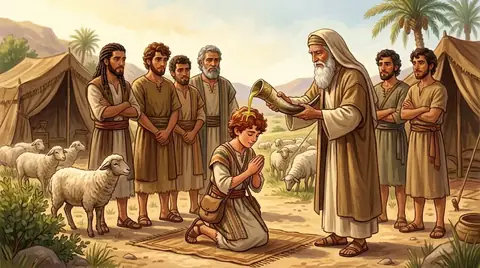 Person · KingDavidThe shepherd boy who killed Goliath and became Israel's greatest king, "a man after God's own heart". He wrote many…
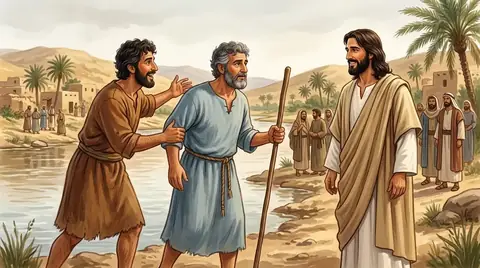 PersonPeterA Galilean fisherman who became the leader of the twelve apostles. Bold and impulsive, he confessed Jesus as the…
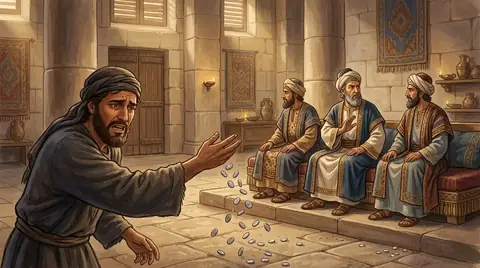 PersonJudasThe disciple who sold Jesus to the priests for thirty pieces of silver and pointed him out with a kiss. Full of…Word · GreekRepented: metamelomai, regretThe Greek word behind "repented" in a few verses means to feel regret or be sorry afterwards. It is the word used of…
Written for this app in its own words, from the Bible, with the facts checked against Bible dictionaries and encyclopedias: Easton's, Smith's, Fausset's, ISBE, Holman, the New Bible Dictionary, Vine's and the Thompson Chain topics.
