
Custom
Reading
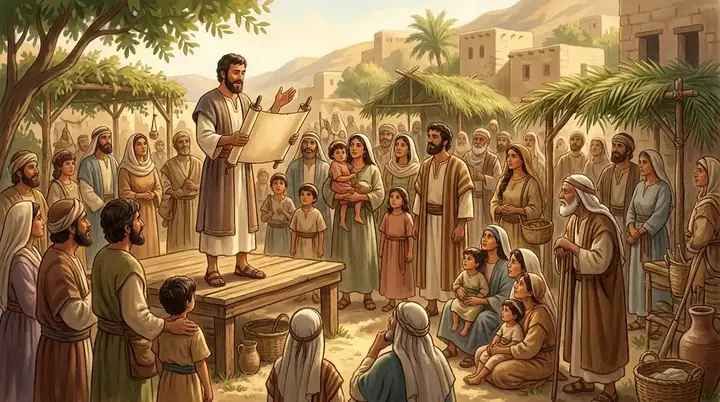
Israel was told to write God's words on their doorposts and gates, so that they would be read, and the law was read aloud to all the people. Jesus read the Scriptures in the synagogue, and Paul told Timothy to give attention to public reading.
- Public readings
- Moses' command (Deuteronomy 31:10–13); Josiah (2 Kings 23:2); Ezra (Nehemiah 8:1–8)
In the Old Testament
God told Israel to write his words on the doorposts of their houses and on their gates (Deuteronomy 6:9; Deuteronomy 11:20), a command that assumes people would read them. Every seventh year, at the Feast of Tabernacles, the law was to be read aloud to everyone, men, women, children and strangers, so that they would hear, learn and fear the LORD (Deuteronomy 31:10–13). The king was to copy the law and read it all his life (Deuteronomy 17:18–19). Josiah read the rediscovered book of the covenant to all Judah (2 Kings 23:2), and Ezra read the law from morning till noon while the Levites explained it (Nehemiah 8:1–8).
In the New Testament
In the synagogue at Nazareth, Jesus stood up to read and was handed the scroll of Isaiah (Luke 4:16–21). Moses and the Prophets were read every sabbath (Acts 13:15; Acts 15:21). The Ethiopian official was reading Isaiah in his chariot when Philip asked, "Understandest thou what thou readest?" (Acts 8:30). Paul told Timothy, "give attendance to reading" (1 Timothy 4:13), and Revelation begins, "Blessed is he that readeth" (Revelation 1:3).
Key verses
- Deuteronomy 31:11–12
When all Israel is come to appear before the Lord thy God in the place which he shall choose, thou shalt read this law before all Israel in their hearing. Gather the people together, men, and women, and children, and thy stranger that is within thy gates, that they may hear, and that they may learn, and fear the Lord your God, and observe to do all the words of this law:
- Nehemiah 8:8
So they read in the book in the law of God distinctly, and gave the sense, and caused them to understand the reading.
- Luke 4:16
And he came to Nazareth, where he had been brought up: and, as his custom was, he went into the synagogue on the sabbath day, and stood up for to read.
- 1 Timothy 4:13
Till I come, give attendance to reading, to exhortation, to doctrine.
- Revelation 1:3
Blessed is he that readeth, and they that hear the words of this prophecy, and keep those things which are written therein: for the time is at hand.
Read next

Written for this app in its own words, from the Bible, with the facts checked against Bible dictionaries and encyclopedias: Easton's, Smith's, Fausset's, ISBE, Holman, the New Bible Dictionary, Vine's and the Thompson Chain topics.
